

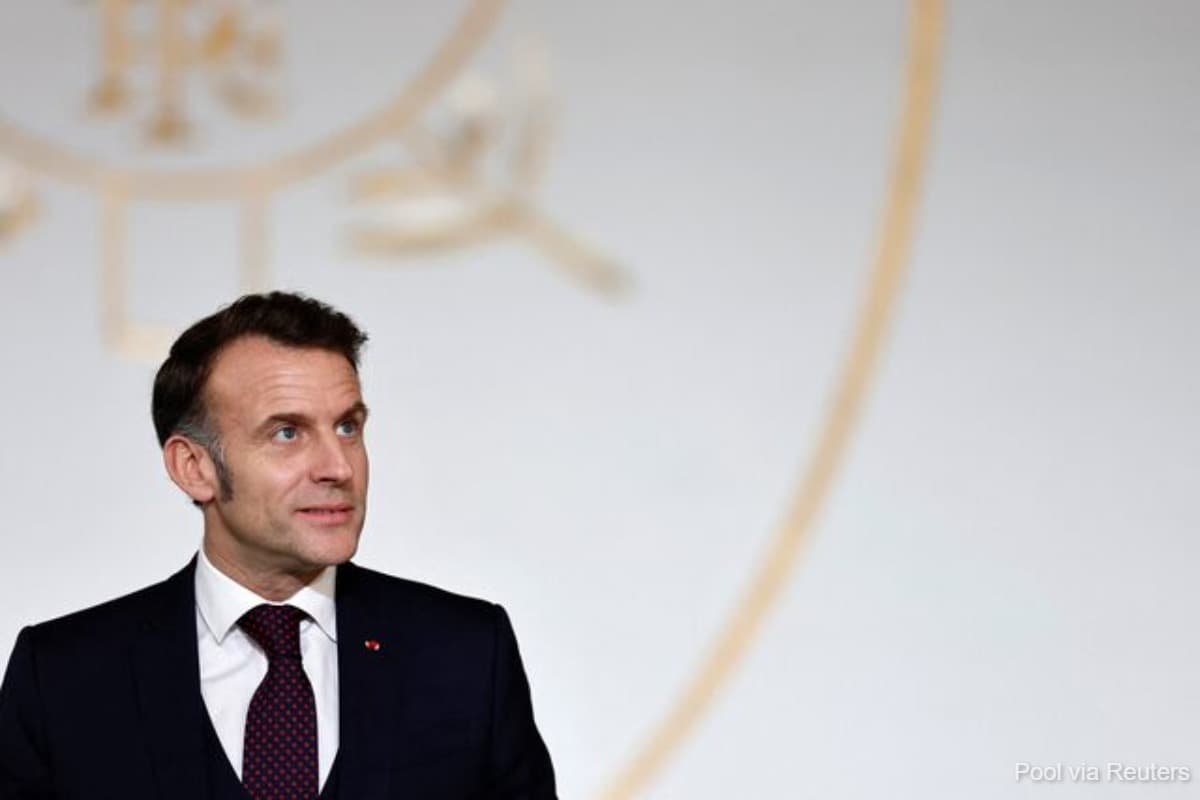
PRESIDENT Emmanuel Macron will pay an official visit to Malaysia on Nov 16 and 17, as our countries prepare to mark seventy years of diplomatic relations in 2027.
The visit will be an opportunity to take our relationship to a new level, reflecting a shared ambition to deepen cooperation in several key sectors and, by so doing, strengthen our ability to shape our own futures.
Two Indo-Pacific partners with converging interests
France is an Indo-Pacific nation: nearly two million French citizens live in the region, more than 90% of our exclusive economic zone lies there, and over 8,000 military personnel are permanently stationed across it. Our 2025 Indo-Pacific strategy reaffirms our commitment to international law, freedom of navigation and national sovereignty, as well as to an open, stable and rules-based region with Asean centrality at its heart.
Malaysia is central to this vision. It sits astride the Strait of Malacca, a vital artery of global trade, and is a founding member and active voice of Asean. It is also an increasingly important link in strategic supply chains, from critical minerals to semiconductors, and a growing digital hub for Southeast Asia.
Our partnership already rests on solid foundations. Bilateral trade reached RM22.4 billion in 2025, up 11% from the past year. More than 300 French subsidiaries operate in Malaysia, including three-quarters of France's largest listed companies, supporting around 30,000 jobs. French investment has grown nearly fivefold since 2016. But trade and investment alone are not enough. What matters is our ability to produce, protect and innovate together.
Sovereignty partnerships
This ambition rests on five interconnected sovereignty partnerships spanning security, critical resources, energy, aerospace and digital technologies. Together, they will strengthen our industrial and technological capabilities, secure strategic supply chains and preserve our capacity to make independent choices.
The first is security and defence. Malaysia's security is inseparable from the stability of the sea lanes along its coasts, and France has long stood alongside the Malaysian armed forces. We are ready to deepen cooperation in a wide array of sectors, from industrial partnerships to the countering of emerging hybrid threats such as cyberattacks and disinformation.
The second is critical minerals. France's Carester and Malaysia's Malaco Mining are working together to develop separation capacity in Malaysia. France will be the first country to transfer this technology, enabling Malaysia to master the value chain from extraction to separation while meeting the highest possible environmental standards.
The third is the energy transition. The 1973 oil shock taught France that domestically produced energy can shield us from crises abroad. We chose to invest in nuclear power, and today 95% of our electricity is low-carbon. Malaysia has committed to net-zero emissions by 2050 and plays a leading role in the Asean Power Grid. France stands ready to support its transition.
The fourth is aeronautics and space. France is Malaysia's second-largest aerospace supplier, with a 19% market share; aerospace accounted for 44% of French exports to Malaysia in 2025. Malaysia is also Airbus's third-largest market in Asia, after China and India. The company is well established in the country, with partnerships with numerous Malaysian suppliers, extending to sustainable aviation fuel and maintenance, repair and overhaul. Safran's recently expanded carbon brake plant in Sendayan, a regional hub for Asia, supports more than 100 companies across the region.
The fifth is digital technology. Malaysia is a world-leading semiconductor producer and a rapidly growing data-centre hub. Our research centres and universities are drawing closer to help Malaysia move from advanced packaging towards chip design. This visit will open a new chapter, with the adoption of a funding mechanism to support research, talent development and innovation in semiconductors and other critical technologies.
'A coalition of independents'
These five partnerships express a broader conviction: in a world fraught with division, independent nations can stand together without standing against anyone.
Malaysia’s active, independent foreign policy, which engages with all while remaining dependent on none and refusing to be drawn into the rivalries of others, resonates with the spirit of the “coalition of independents” promoted by President Macron during the Shangri-La Dialogue last year. These independent nations are open to cooperation while reinforcing their own strategic autonomy. They want to be more resilient and preserve their freedom of action in an international environment beset by geopolitical tensions, trade fragmentation and technological competition.
This autonomy must go hand in hand with a consistent commitment to international law and the principles that protect all nations, large and small. France rejects double standards: whether in Ukraine or Gaza, respect for international law and the protection of civilian lives must remain our compass. France's recognition of the State of Palestine in September 2025 and its continued support for a two-state solution reflect this conviction.
The significance of France’s partnership with Malaysia lies not only in what our countries achieve together, but in demonstrating that nations from different regions and with different perspectives can build meaningful partnerships based on trust, shared interests and mutual respect.
Ultimately, this is also a partnership for the generations to come: for the engineers who will design tomorrow's chips, the researchers who will power the energy transition, and the students who will carry our friendship forward. It is with this conviction, and with deep friendship for the Malaysian people, that President Macron comes to Malaysia.