

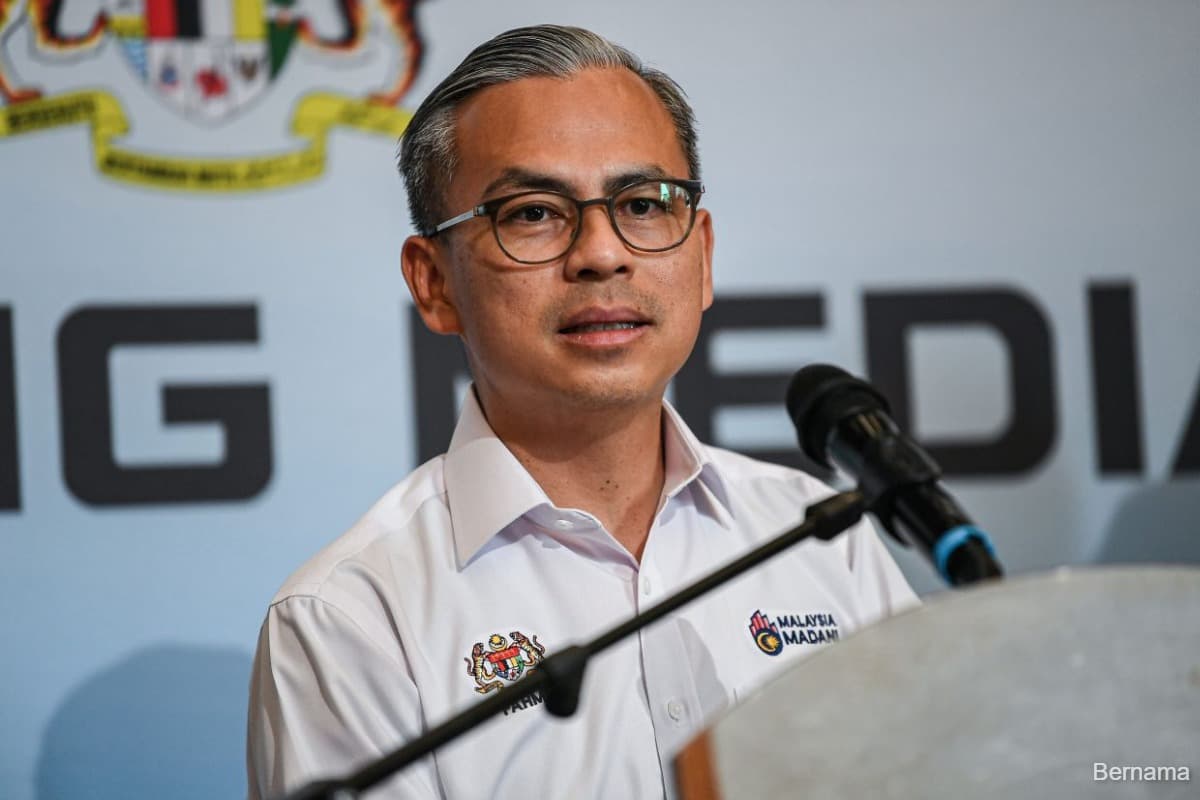
DOHA (Nov 11): The rapid advancement of artificial intelligence (AI) risks creating a new global divide in computing power, potentially widening inequalities between developed and developing nations, particularly those in the Global South, Communications Minister Datuk Seri Fahmi Fadzil said.
He said the emerging "compute divide" was becoming an increasingly pressing concern as countries raced to harness AI technologies while facing unequal access to the computing resources needed to support their development.
Fahmi said the issue went beyond the traditional digital divide, which largely focused on access to internet connectivity and digital services.
"One of the messages that we heard is particularly interesting, that we're not only talking about connectivity divide or digital divide. It's really becoming a compute divide.
"...this is very challenging and if many countries, especially in the Global South, are not at pace and there's no mechanism for us to balance this out, then you will have a widening divide between those who have and those who do not," he said.
Fahmi said this in an interview on the sidelines of the International Telecommunication Union (ITU) Plenipotentiary Conference 2026 (PP-26) here on Tuesday (Nov 10).
He said another major challenge facing governments was ensuring that regulatory frameworks kept pace with the unprecedented speed of technological advancements, particularly AI.
Fahmi said ITU secretary-general Doreen Bogdan-Martin had highlighted how significantly AI could evolve within just a year, underscoring the urgency for governments to prepare for emerging risks.
He said governments must strike a balance between encouraging technological innovation and putting in place adequate safeguards to protect businesses, markets and the public.
"One of the biggest challenges is making sure that regulation is at pace with the kind of technological progress that we see.
"We don't want to stop innovation and the kind of technological progress, but it must come with some balance," he said.
Fahmi said the rise of agentic AI, which enables AI systems to perform tasks and make decisions with greater autonomy, presented both significant opportunities and potential risks.
"The biggest fear and the biggest opportunity really lies in what agentic AI can do, what it should not do and how is it that governments can play a role to engage with industry, to build some guardrails to ensure that the use of AI technology will be beneficial to mankind," he said.
Meanwhile, Fahmi said Malaysia was seeking re-election to the ITU Council to continue contributing its experience and perspectives, particularly those of Southeast Asia and the Global South, to international telecommunications discussions.
He said Malaysia, an ITU member since 1958, had valuable experience to share in areas such as technical standards, digital trust and interoperability.
Fahmi said participation in the ITU provided an important platform for countries to strengthen cooperation and develop solutions to increasingly complex challenges in the global telecommunications landscape.
On Qatar's hosting of ITU PP-26 alongside the Mobile World Congress Doha 2026, he praised the arrangement for providing opportunities to explore emerging technologies and engage with ministers and telecommunications regulators from various countries.
He said the events enabled participants to better understand shared challenges and explore practical solutions through international cooperation.
Uploaded by Liza Shireen Koshy