

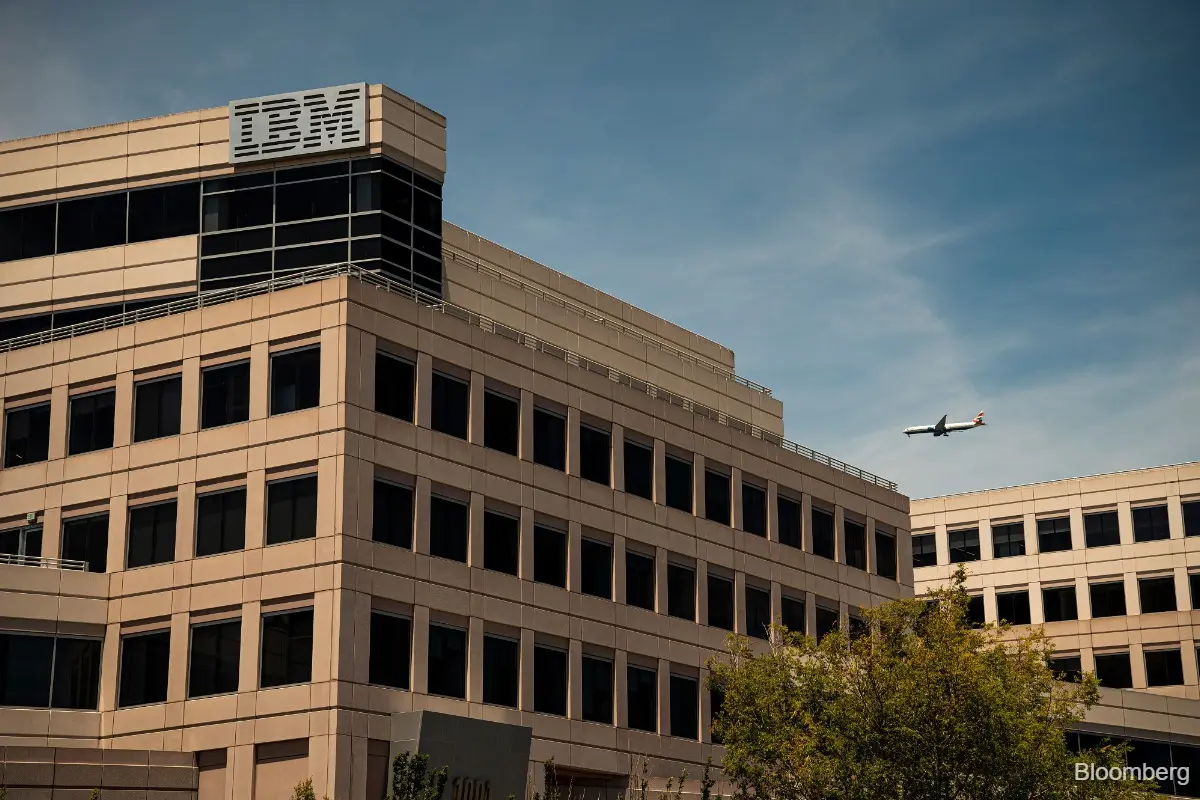
(Nov 11): International Business Machines Corp (IBM) is ending immigration sponsorship for some roles in its largest division following a crackdown by the Trump administration on a visa programme that’s been a talent pipeline for the tech industry.
“We have opted to discontinue visa and green card sponsorship for the majority of such roles in IBM Consulting,” an IBM spokesperson said.
Impacted workers can continue working with IBM outside the US, or leave the company at the end of the year, according to a document shared with managers this week in that division seen by Bloomberg. Consulting is by far IBM’s largest division, with over 150,000 workers, according to its website.
The company’s shares dipped about 1% Tuesday morning.
The technology industry’s reliance on foreign workers has long been a flashpoint in the debate over immigration. Since President Donald Trump’s return to office last year, the administration has seized on those concerns and pressed tech giants to do more to train and hire US workers.
As part of that effort, Trump has moved to make it harder for companies to use H-1B visas to attract foreign talent. The changes have included proposals for US$100,000 (RM405,716) filing fees for most candidates and tightening the rules of how the H-1B visas are awarded in an annual lottery, giving priority to companies offering the highest salaries.
Last month the administration accused Microsoft Corp, Adobe Inc and a half-dozen other companies of abusing a US worker visa programme and suspended them indefinitely from using it.
The affected IBM division participated “US high-skilled visa programmes” to address skill shortages, the spokesperson said. But participation has been declining for a number of years and skill availability and client need have evolved, the spokesperson said.
Big Blue has refashioned itself as a high-growth software company through major acquisitions of Red Hat, HashiCorp and Confluent. At the same time, its consulting business has lagged — the division’s growth has been largely flat since 2024.
Uploaded by Felyx Teoh