

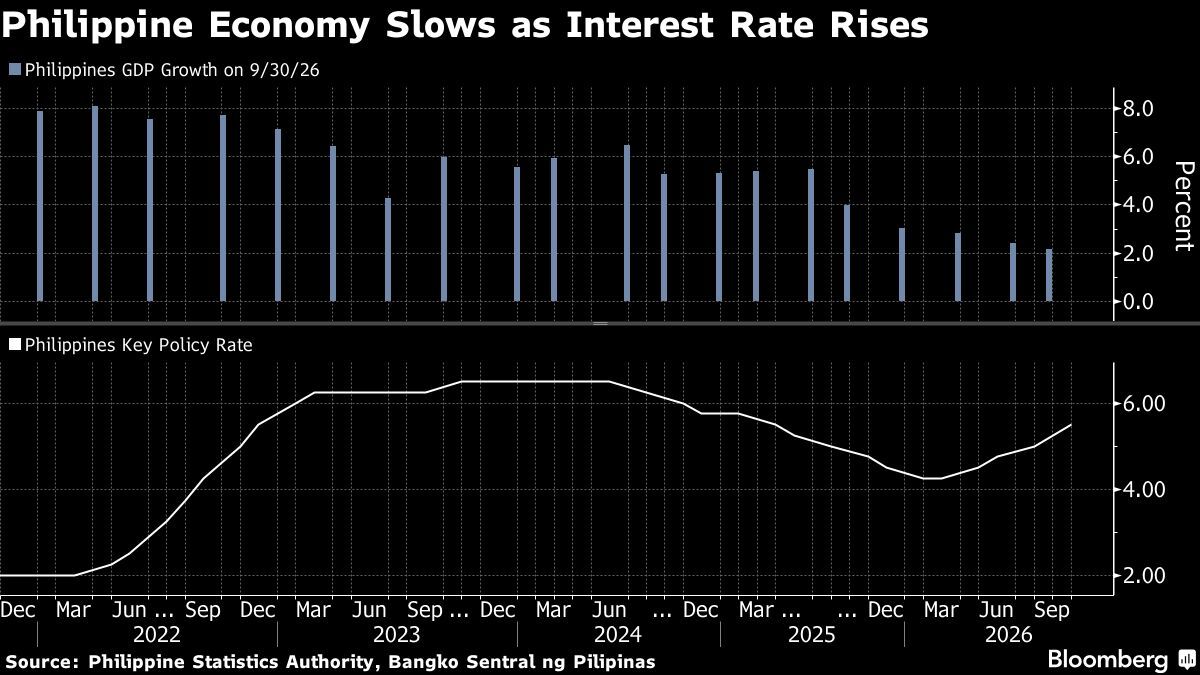
(Nov 10): A surprise slowdown in the Philippine economy has triggered calls for the central bank to go easy on interest rate increases and for Philippine President Ferdinand Marcos Jr to do more to revive growth.
Economists from China Banking Corporation, Metropolitan Bank & Trust Co, Union Bank of the Philippines and Pantheon Macroeconomics have raised the possibility that the Bangko Sentral ng Pilipinas will pause its rate hikes after economic growth last quarter decelerated to the weakest since the pandemic.
“It sure doesn’t make much sense to slam hard on the brakes if we’re driving uphill on rocky terrain,” Metropolitan Bank chief economist Nicholas Mapa said.
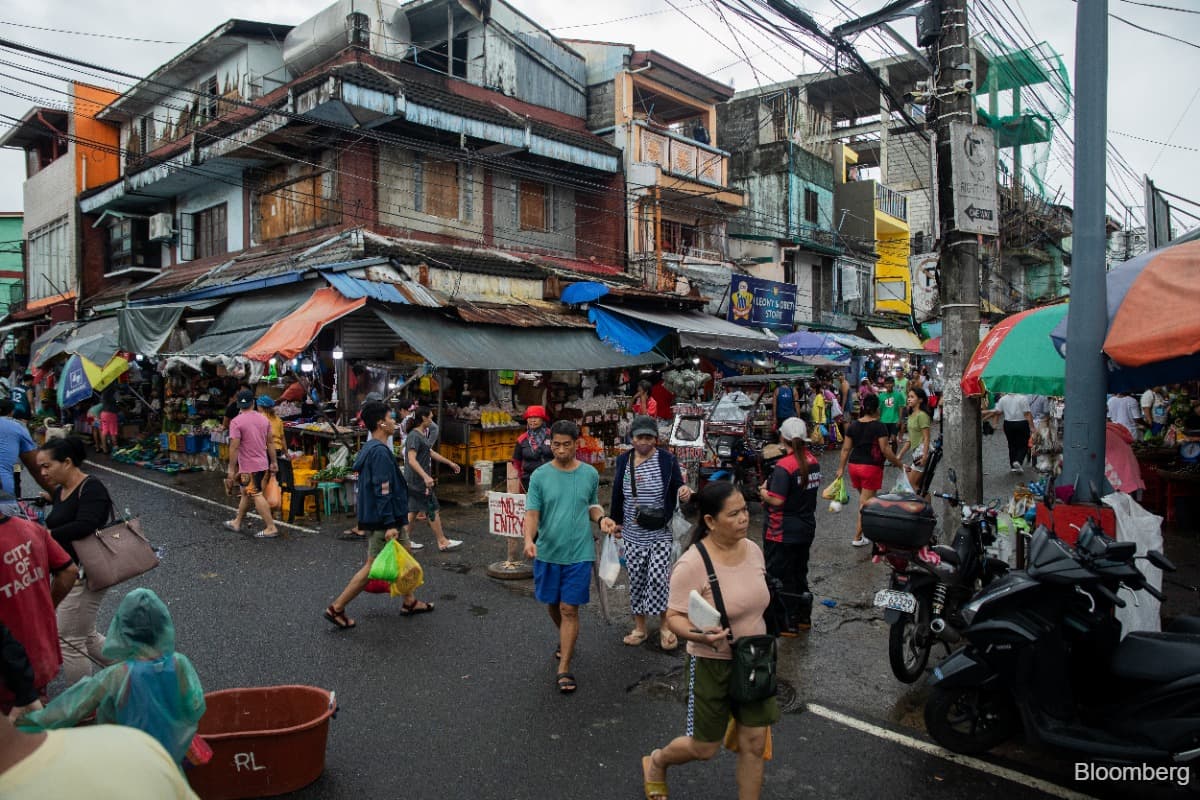
Resurgent inflation due to the protracted Iran war and farm damage from monsoon rains have further strained the consumption-driven, import-dependent economy that is already falling behind most of its Southeast Asian neighbours. Household spending, a key economic pillar, remained tepid and weighed on a swathe of industries from retail to real estate.
Reacting to the poor data, Marcos’ office on Tuesday (Nov 10) said it is working to stabilise prices of basic goods and ensure a sufficient supply of food and fuel. “We are doing everything we can. The government is not neglecting its duties,” his press officer Claire Castro said at a briefing.
The central bank has said fiscal measures are expected to help the economy recover after it surprised markets with an outsized half-point increase last month. Governor Eli Remolona last week said the BSP remains in a tightening cycle as it fights persistent price pressures.
Inflation accelerated to a higher-than-expected 7.8% in October, well above its 3% target, and Remolona last week said it will take “a few more months” to peak.
The growth outlook for this quarter, meanwhile, remains gloomy, despite a typical consumption boost during the Christmas holidays. El Niño, which alters rainfall patterns and can fuel drought, is threatening to inflict more pain on the agriculture sector, which already suffered a record slump last quarter.
“Looking ahead, economic growth is likely to remain subdued through the fourth quarter before recovering toward the 4%–5% range by the first quarter of 2027,” said Domini Velasquez, chief economist at Manila-based China Banking. “Demand conditions remain clearly weak, with a sizable negative output gap.”
But Bloomberg Economics and Bank of America said the BSP is likely to stay on course with its monetary tightening cycle despite weaker growth, with looming risks to inflation including El Niño.
Complicating any shift in the central bank’s tightening policy is the peso, which has declined almost 7% this year to be Asia’s second-worst-performing currency against the dollar. The peso strengthened 0.65% on Tuesday, recovering losses from the previous day and moving in line with gains in other regional currencies.
With weak economic growth constraining the central bank’s room for rate increases, the government “must do the heavy lifting", according to Jonathan Ravelas, a senior adviser at Reyes Tacandong & Co in Manila. Officials should, in particular, increase food supply by rebuilding local production to lower prices, he said.
The worsening economic slump has also prompted businesses to call on the Marcos administration to act. The Makati Business Club — which counts senior executives of the nation’s biggest companies as members — said the government should continue to restore business confidence and accelerate infrastructure projects.
“The policy response must go beyond stimulating economic activity and attracting investments,” MBC executive director Julia Abad said in a statement. “It must strengthen governance, institutions and policy execution.”
Uploaded by Arion Yeow