

KUALA LUMPUR (Nov 10): PETRONAS could tap into the massive power demand from data centres by supplying gas for dedicated power generation, a minister said on Tuesday.
If successful, the national oil-and-gas company officially known as Petroliam Nasional Bhd may secure longer-term customers at market prices, rather than provide subsidised energy to data centres, said Minister of Investment, Trade and Industry Datuk Seri Johari Abdul Ghani.
The boom in data centres presented an opportunity for Malaysia's gas industry to develop an additional domestic market, he said.
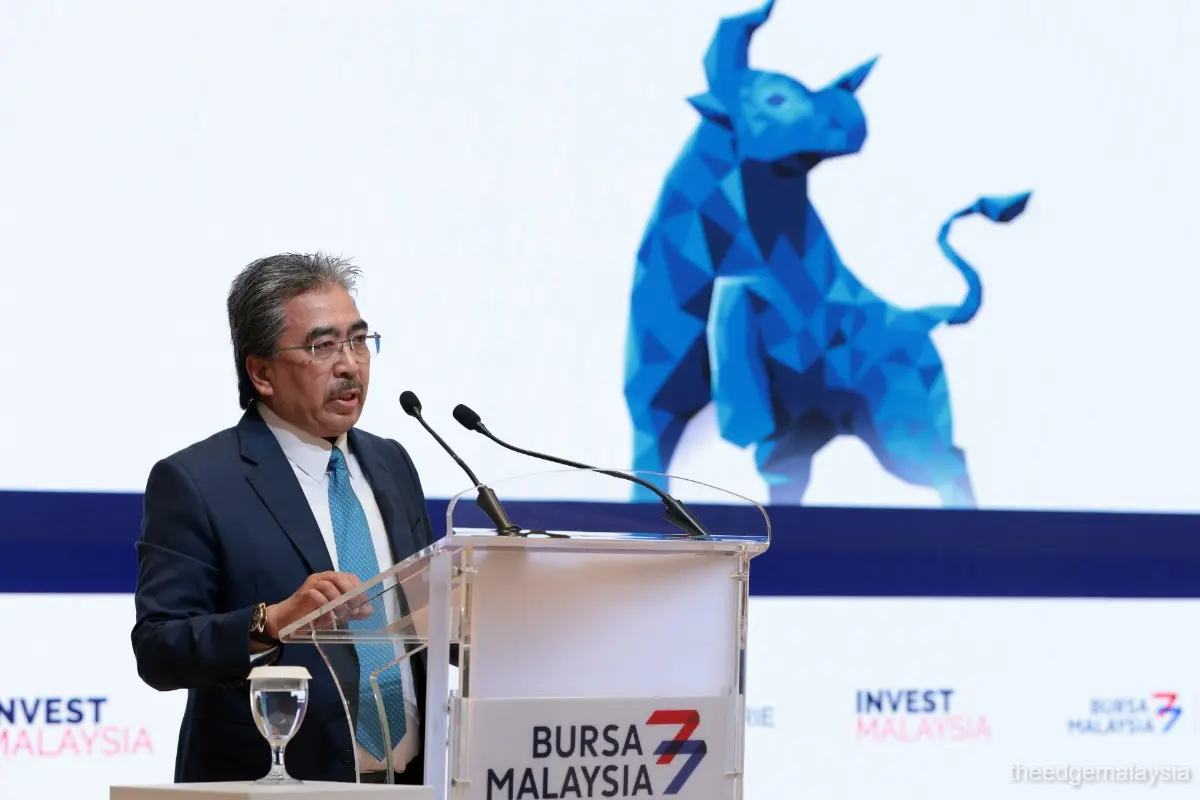
Johari was delivering his keynote address at Bursa Malaysia's Sectoral Series: Powering the AI Era — Watt Next? The remarks come as a wave of energy-intensive data centres has been surging across Malaysia amid a global boom in artificial intelligence.
Tenaga Nasional Bhd (KL:TENAGA), the country’s national electric utility firm, is now supplying power to 36 data centres with dozens more in the pipeline.
Malaysia could explore supplying gas to data centres through dedicated power generation, alongside other energy sources such as solar, rather than relying solely on electricity from the national grid, Johari said.
He highlighted the potential to redirect some of the country's gas resources towards domestic power generation, subject to existing export commitments and domestic energy requirements.
Longer-term supply arrangements could provide energy producers with greater certainty over demand, while allowing data centre operators to secure the power needed for their operations, Johari noted.
Finite resources
Gas resources are finite and any supply arrangements would need to be priced transparently, taking into account market conditions and existing commitments, Johari said, stressing that existing long-term export contracts and infrastructure policy will be honoured in the meantime.
The growing electricity requirements of data centres could also support investment in other parts of the energy sector, including power generation, battery energy storage and grid infrastructure, he added.
Malaysia is seeking to develop the infrastructure needed to support the country's digital economy while ensuring that the investments also create opportunities for the domestic energy industry and wider supply chain.
The government wants data centre investors to bear the cost of transmission upgrades required by their projects rather than pass it on to the locals. Operators would also be charged for capacity committed even if they did not fully use it, to prevent the allocations from being tied up without compensation.