

(Nov 9): A senior official at Australia’s central bank said surging investment in areas related to artificial intelligence will further fuel demand in the economy, at a time when policymakers are already aggressively raising interest rates to combat inflation.
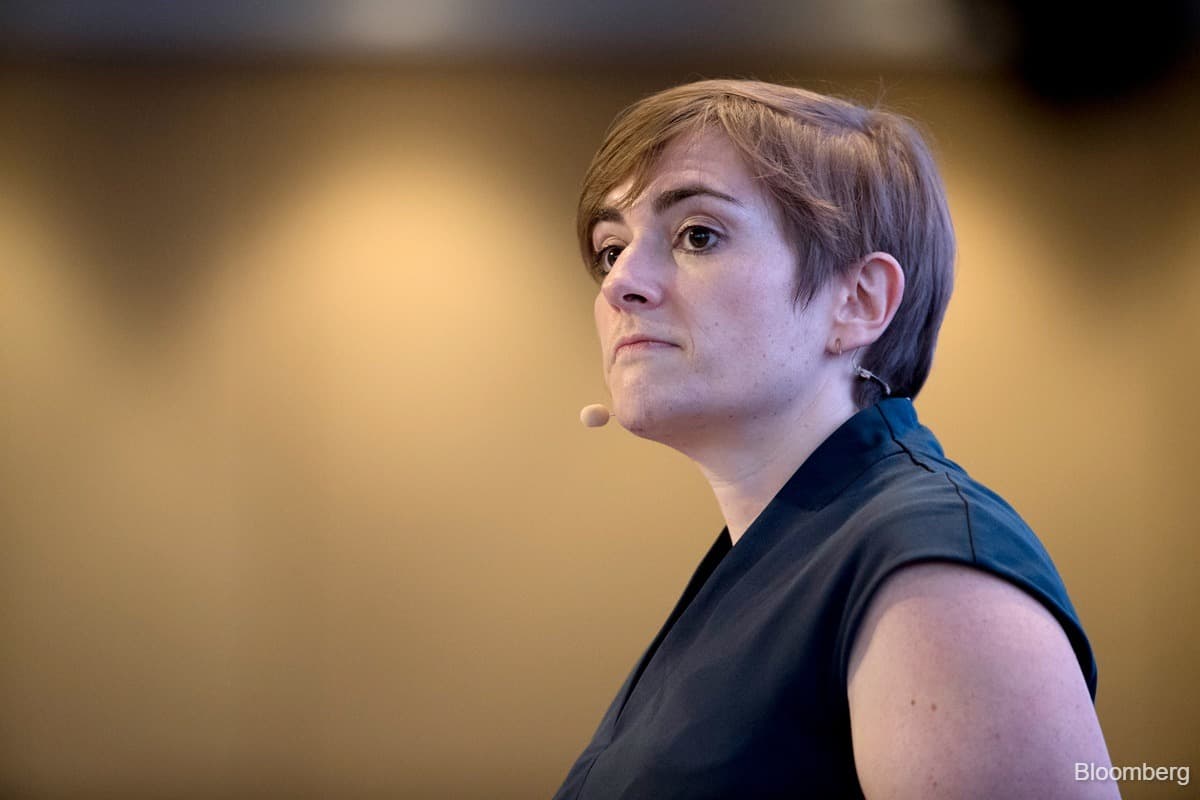
In a speech on the potential impact of AI, Reserve Bank assistant governor Sarah Hunter on Monday called it among “the most significant technological developments of our time,” one already beginning to reshape the economy.
“In the near term, the positive shock to aggregate demand set against the economy’s current supply capacity will put some upward pressure on inflation,” she said. “Some liaison contacts are reporting that data centre construction is adding to demand for some already-stretched construction skilled trades.”
Rising construction costs are one channel AI demand is feeding through to the consumer price index, Hunter said during a Q&A after her speech. To a lesser extent, price rises for newer mobile phones and game consoles are also boosting the CPI, she added.
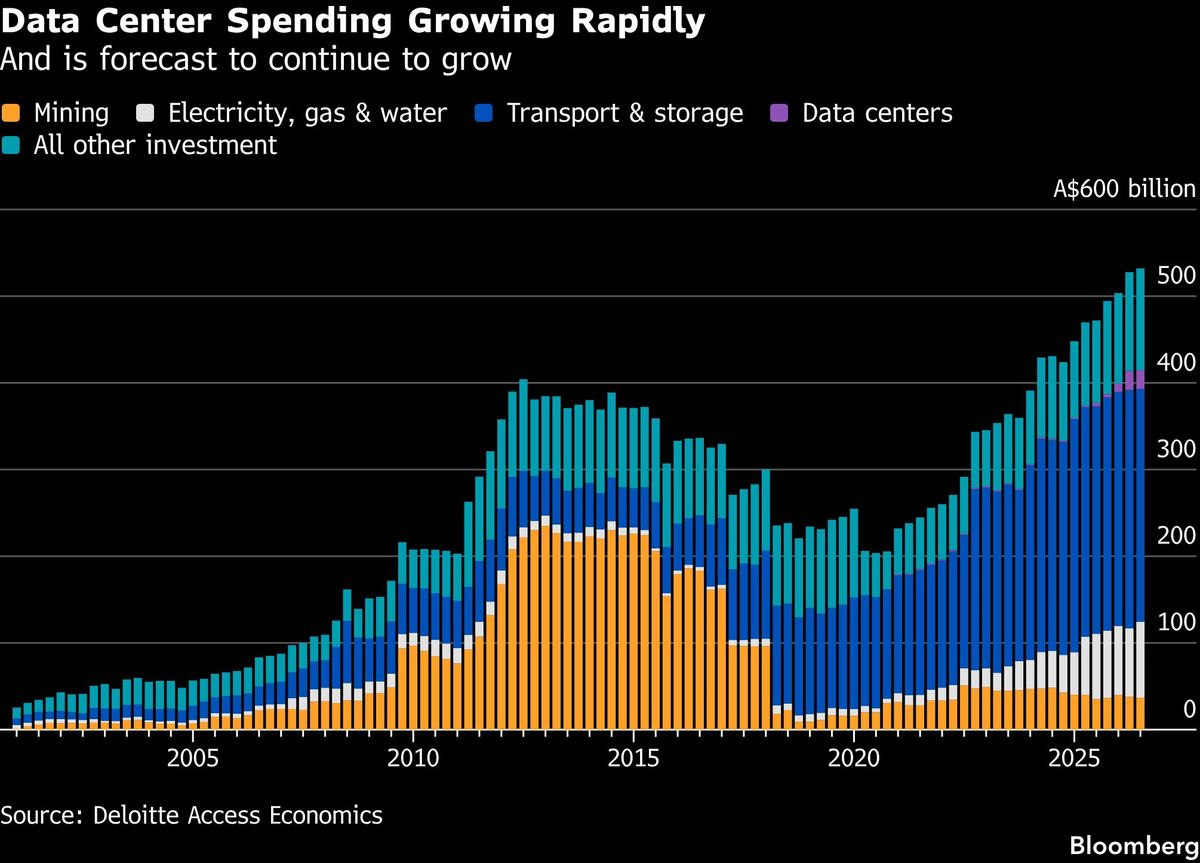
Australia’s construction project pipeline reached a record A$1.4 trillion through September and may end up double the scale of the mining boom, according to Deloitte Access Economics. Both the RBA and government have pointed out the surprising strength of business investment, even as the US-Iran war has pushed energy prices higher and weighed on households.
Still, risks to the AI project pipeline are “balanced,” Hunter said in response to a question, pointing out that potential changes to regulation could crimp some developments.
The RBA has raised interest rates five times this year to 4.85%, an 18-year high, as it struggles to regain control over inflation.
On the upside, once initial bottlenecks are overcome, AI is expected to boost productivity because economies will be able to produce more with the same inputs. That suggests the initial inflationary pressures will dissipate in time, Hunter said in her speech, while acknowledging high uncertainty over the scale of gains.
“Current estimates for the impact of AI on annual productivity growth over the next decade range from over 2% to just 0.1%,” she said.
While Hunter said AI is likely to change the labour market significantly in time, to date it has been fairly muted.
“Contacts in the RBA’s liaison program indicate that AI has not yet impacted most firms’ headcount and is not expected to over the next year,” Hunter said.
“However, there are tentative signs of adjustment, through weaker job ad posting and employment outcomes in more AI-exposed occupations, and stronger growth in areas where the technology has had less of an impact, particularly for younger workers,” she said.
Global financial markets were whipsawed last week after the Democratic Party’s sweep of Congress in the US midterm elections, which stoked fear among investors about tighter regulation of the data center industry.
Hunter said the exposure of financial market participants to the AI investment boom is increasing at a time when investors are demanding very little compensation for taking on risky assets.
“If the returns to AI investment disappoint, some asset prices, including equities and corporate debt, will be exposed to sharp repricing and possibly disorderly adjustments,” she said.
Uploaded by Liza Shireen Koshy