

THERE are around 137 living languages spoken in Malaysia, depending on how you count them.
The country ranks 14th in the world for the sheer number of tongues in daily use.
Bahasa Malaysia is the one everyone shares. But English, Mandarin and Tamil are spoken across the country, alongside Cantonese, Hokkien, Iban, Kadazandusun and dozens of regional Malay varieties that can sound unrecognisable three states over.
A single Malaysian sentence can hold two or three languages before it reaches a full stop.
Nobody plans this. It simply happens, dozens of times a day, in offices from Bangsar to Kota Kinabalu. It is something close to a miracle that anything gets done at all, and yet the miracle happens every day, in every meeting room in the country.
Here is the part that should give the technology industry pause. Malaysia ranked first in Asia in the 2025 EF English Proficiency Index, scoring 581 and placing 24th globally. And still, almost no meeting in this country runs entirely in English.
High proficiency in several languages does not produce clean single-language conversation. It produces blending.
The problem this creates for technology
Nearly every productivity tool that reaches Malaysia was designed, trained and tested somewhere that speaks one language at a time. Transcription software, AI note-takers, voice assistants: most assume a speaker picks a language and stays in it.
Malaysian professionals do not. Not out of carelessness, but because switching is faster, warmer and more precise than staying put.
What happens next is subtler than a breakdown. The transcript still holds together. Common fillers like la, leh, or aiya get set aside. They soften an instruction or sharpen a complaint, but they don't change what the sentence actually says. The real trouble is with the more distinctive turns of phrase, the ones doing real work in the sentence. That’s where a system is most likely to reach for the nearest plausible word instead of the right one.
Nothing looks broken. But a transcript can read perfectly cleanly and still have quietly rounded off the part that mattered.
The wrong benchmark
The industry measures transcription accuracy against clean, single-language dictation. One speaker, one language, minimal background noise. That is the easiest available version of the problem, and it looks nothing like an actual Malaysian meeting.
Part of the reason is that most of these systems learned from produced audio, where speakers take turns and cross-talk is edited out long before the model hears it. A real meeting is none of that, and scoring well on the easy test does not close the gap.
Consider an ordinary sentence in a Kuala Lumpur boardroom. It opens in English, drops a Malay clause in the middle, and ends on a lah that no one in the room notices. Everyone in the meeting understands it. Most could not tell you afterwards which languages were involved because the switching is so natural that it barely registers.
The real question is not whether a system transcribed every syllable, but whether it kept what the sentence meant.
That is the real benchmark for this region, not laboratory dictation. And it makes Malaysia one of the more demanding test cases in Southeast Asia.
What actually matters here?
The instinctive response to a multilingual market is to promise perfect verbatim transcription in every language present. But that is an enormous engineering problem with limited practical return. Nobody goes back and reads a full meeting transcript. They never did.
What professionals want to know is what was decided, who owns the next step, and why the client said no.
That makes it a comprehension problem, not a capture problem. Switching languages changes the words, not what the speaker meant.
In practice, consider a sales meeting where the pricing discussion happens in English, the objection is raised in Malay, and the agreement is confirmed in Mandarin. What comes out is not four columns of parallel text. It is a summary stating that the client accepted the revised terms, with a follow-up owed by Thursday.
The languages were never the point. They were the obstacle between the conversation and a usable record of it.
There is a second cost to a multilingual meeting that is easy to overlook. The person taking notes is translating while listening, and translating while listening means something gets lost. A device capturing discussions in the background means nobody in the room is doing that job.
Everyone stays in the conversation, and the summary notes are written once afterwards, instead of badly while the meeting is still happening.
Where it still falls short
It would be dishonest to present this as a solved problem.
Heavily localised varieties remain difficult. Terengganu Malay is a genuine challenge, and so is Penang Hokkien mixed with English, where generations of contact have woven Malay and English vocabulary into everyday speech. That is not simply one language borrowing from another. It is several braided into one.
Another hard case will be familiar to many working Malaysians: Mandarin, English and Malay in the air at once, three people talking over one another, the discussion getting sharper by the minute, nobody finishing a sentence. Accuracy degrades in those conditions, even for a human taking minutes.
Proper nouns crossing between scripts are a persistent challenge. Malaysian names especially can be difficult, where a single vowel or a transliteration choice changes who is being referred to.
Naming these limits is not a concession. It is the argument. Any company claiming flawless performance across 137 languages is telling you, without meaning to, that it has never seriously tested in Malaysia.
The direction of travel
Malaysia has always chosen to be plural rather than singular. It is not a nation that happened to contain difference, but one built deliberately from it.
The language question is simply the everyday expression of that diversity. It shows up not in ceremony but in an ordinary Tuesday morning meeting, where three languages can be used in the same conversation.
Technology is only now catching up with that reality. For most of the past decade, the tools asked Malaysians to accommodate them: to speak more slowly, more clearly, and preferably in one language at a time.
That was always the wrong direction of travel.
The tools that work best here are the ones built for how Malaysians actually speak. Anything else is asking a country to be less like itself just to be understood by a machine.
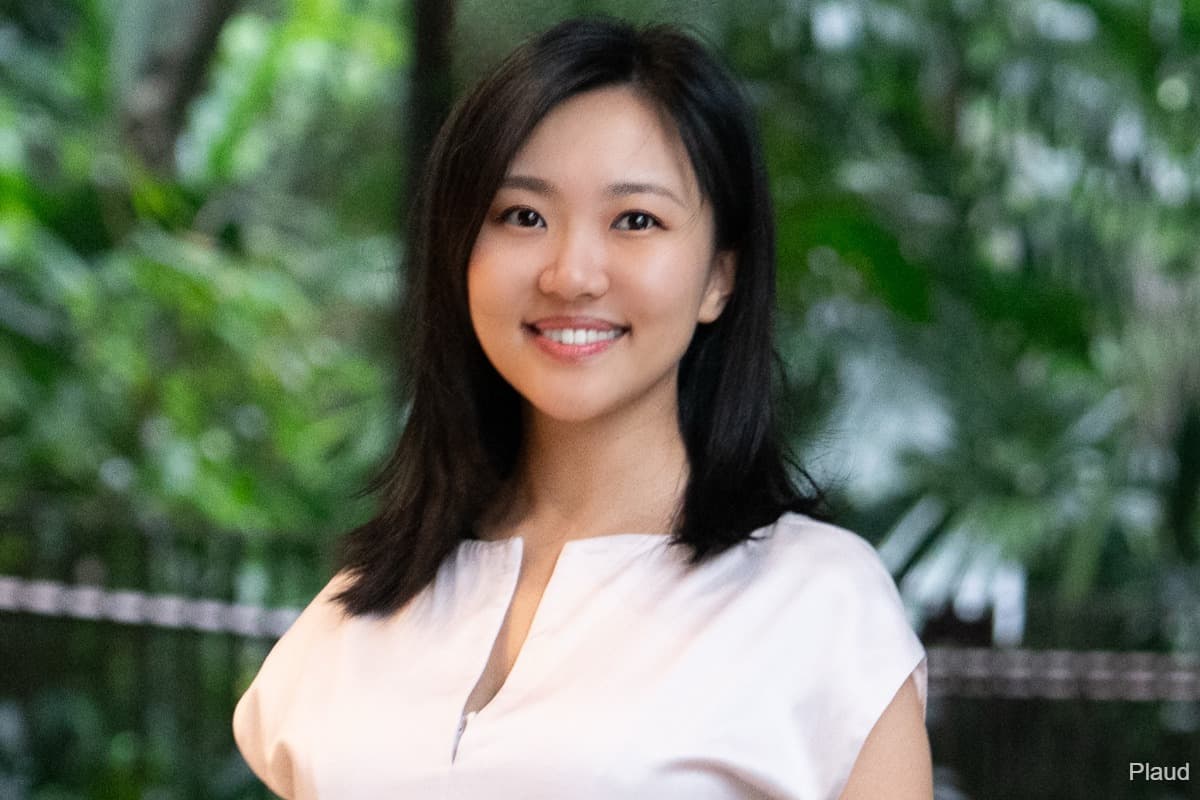
Megumi Yoshinaga is Head of APAC & MEA Growth at Plaud, a technology company building real-world AI interfaces for professionals that amplify intelligence and elevate productivity and performance.