

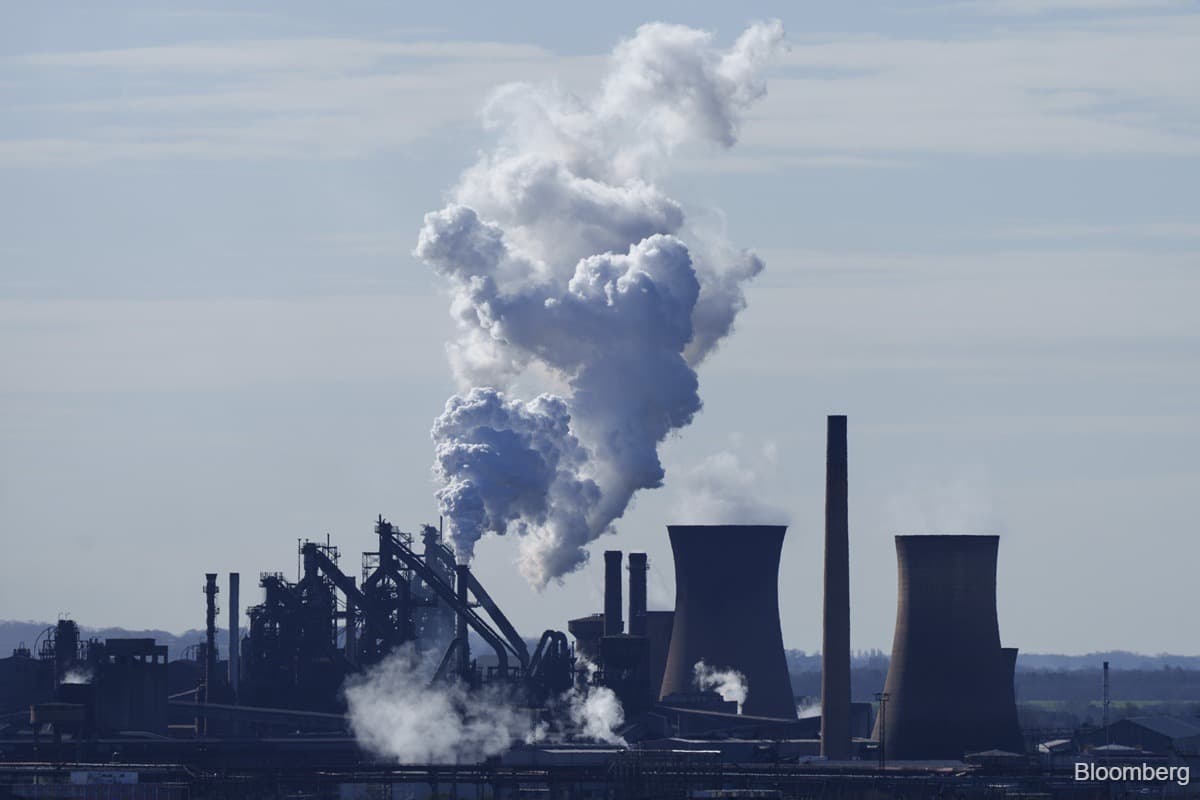
(Nov 8): The European Union and the UK are in the final stages of a deal to link their emissions markets, a move that would boost liquidity and eventually save companies millions of euros in carbon border taxes.
The agreement, to be announced at a key summit later this month, would enable carbon permits to be traded across the two emissions systems, almost six years after Britain started its own cap-and-trade programme in the wake of Brexit. Negotiators have already ironed out details on emissions caps, supply controls and free permits, according to people with knowledge of the matter. The treatment of financial derivatives is the only outstanding issue.
The EU’s carbon market is the region’s key way to meet its carbon reduction goals. Started in 2005, the market imposes gradually shrinking emissions limits on around 10,000 facilities in sectors from steel and cement to fertilisers, power production and aviation. Once linked, it will allow mutual recognition of permits from both markets for compliance, helpful for companies with operations in both regions.
The linkage deal is set to be one of the main deliverables at the Nov 20 meeting of UK and EU leaders, alongside matching university tuition fees for students travelling between the two. Other areas of agreement include committing to minimising the effect of their trade measures on vulnerable sectors like steel and electric cars, and deepening cooperation on cyber threats, Bloomberg reported last month.
The European Commission declined to comment on the agreement, in line with its long-standing policy of not commenting on draft documents.
The agreement will not automatically exempt the parties from their respective Carbon Border Adjustment Mechanisms (CBAM), which put emissions costs on certain imported products to shield local producers against competitors from regions with laxer climate rules. Instead, it will pave the way for a waiver once the parties fulfill certain condition embedded in their domestic laws, the people said.
The EU law sets two requirements for such a move: full linkage with its ETS and effective carbon pricing without preferential rebates. Once those are met, the EU will add the UK to a list of countries outside of the CBAM regulation scope via a delegated act.
While the EU carbon border tax became operational this year, with the first compliance deadline set for September, the UK mechanism is to kick off at the start of 2027.
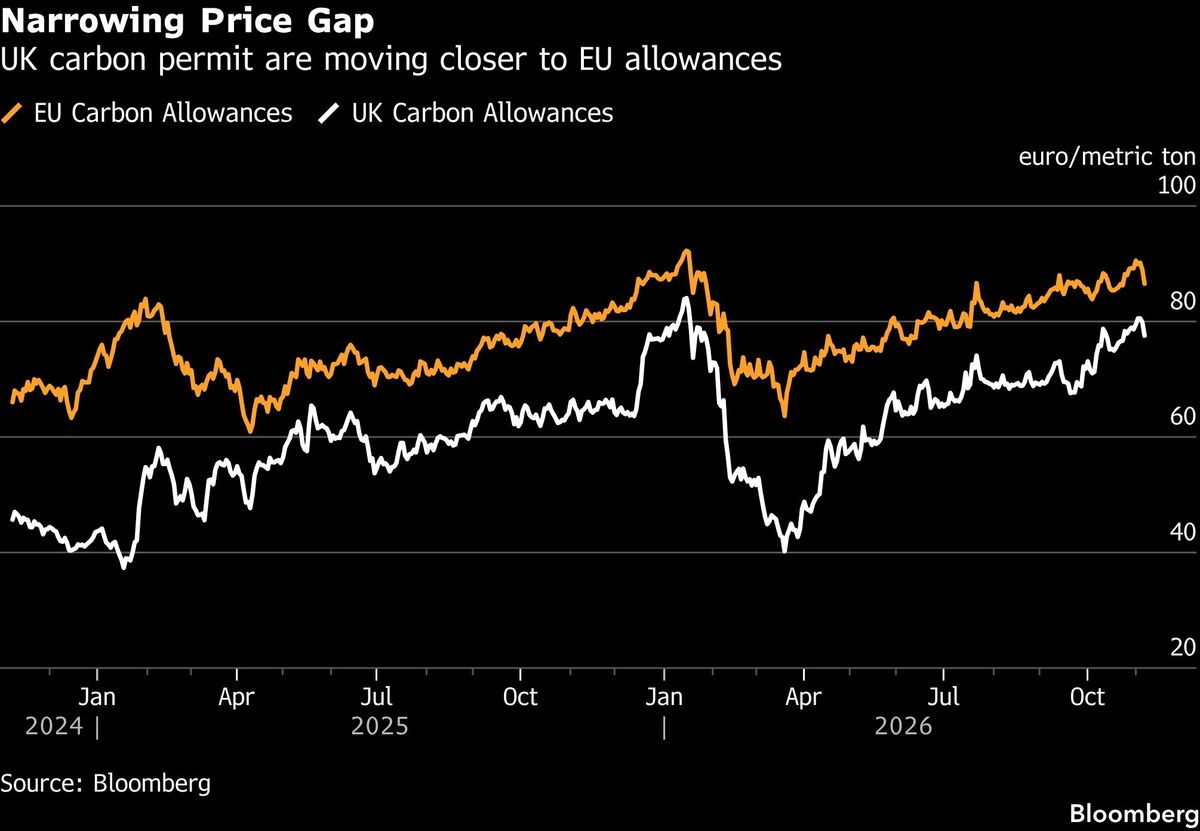
UK carbon prices have already narrowed their discount to the EU ETS market since the two parties committed last year to establishing a link. The UK carbon contract for December closed at a £64.81 per ton on Friday, while benchmark EU allowances were at €86.55.
The price gap could shrink further over the next two years, as UK allowances move closer to EU permits, Moutaz Altaghlibi, senior energy economist at ABN Amro wrote in a note on Nov 5. That would mean UK firms having to pay more for permits.
“Linking the systems should also improve liquidity, make carbon prices more consistent across Europe, and reduce CBAM-related costs and paperwork for trade between the UK and EU,” he said.
Although the idea of re-linking carbon markets has been discussed for years, Britain’s current Prime Minister Andy Burnham is also working to bring the UK closer to Europe on a broader level.
A key parameter in the agreement will be the cap on emissions in the UK ETS. The EU is set to recognise emissions caps in the British system in the 2028-2030 period, according to people with knowledge of the issue. From 2031, the annual UK issuance will be capped at 7.1% of permits to be issued in the EU ETS.
The UK will also create its own Market Stability Reserve (MSR), a mechanism that the EU has had for more than a decade to automatically control the supply of carbon permits and alleviate a glut of allowances that emerged and weighed on prices. It will start with at least 29.5 million allowances when the deal enters into force.
Before the start of 2030, a decision will be taken on adjustments to ensure that the amount of permits in the UK MSR corresponds to at least 6.7% of allowances in the EU ETS reserve in 2029.
As part of the draft deal, negotiators have also agreed to keep rules aligned over time, with Britain obliged to integrate European rules into its law.
The deal will need to be ratified by both the UK and the EU, in a procedure that involves the European Parliament and member states in the EU Council. It will enter into force a month after the last notification regarding the two other deliverables of the upcoming summit: an SPS agreement on sanitary and phytosanitary standards and a solution on a youth mobility scheme, known as YES.
The parties may also choose to apply the deal on a provisional basis before its entry into force.
Uploaded by Liza Shireen Koshy