

(Nov 8): Selling billions of dollars of corporate bonds on Election Day seemed like a real gamble.
But to Meta Platforms Inc, waiting seemed like an even bigger one.
The Facebook parent aimed to sell US$25 billion of bonds this quarter, and took the unusual step of launching the offering on Tuesday Nov 3, as US voters went to the polls. Breaking with convention may have been the right move, however, as a sweeping victory by Democrats in the midterms now threatens to make financing artificial intelligence investment more difficult and expensive.
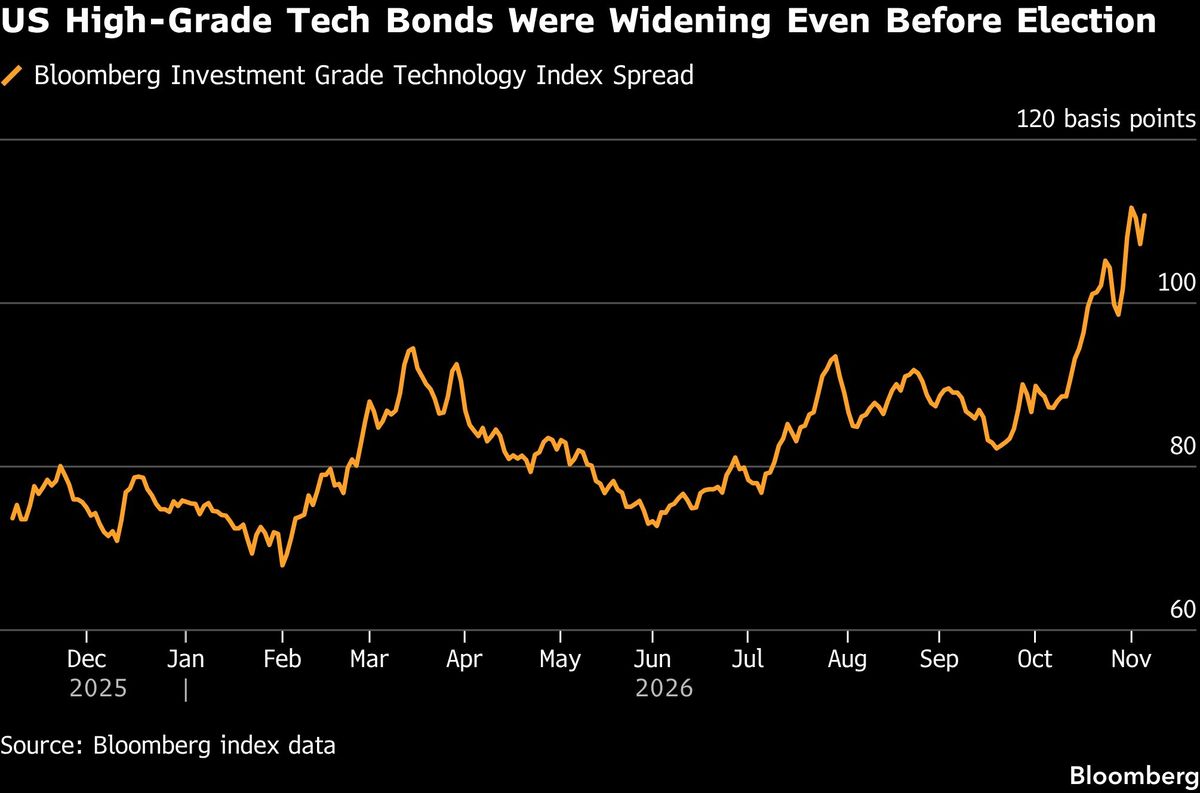
The fear is that a Democratic majority in Congress will slow the pace of AI development, cutting into cash flow for companies expecting their data centre projects to generate income. US equities dropped on Thursday, and risk premiums on tech bonds climbed over the week.
Even before Election Day, money managers had become more wary of the amount of bonds that big tech companies known as hyperscalers have sold. As fund managers grow more concerned about the debt, firms looking to borrow have started using the kind of careful timing and communication that is more common in junk debt markets.
“Investors are demanding a higher premium and much greater clarity on how enormous AI capital expenditure will translate into revenue and free cash flow,” said Jack Daley, a portfolio manager at TwentyFour Asset Management. “Hyperscalers have started to guide the market more on the timings of deals and on when positive free cash flow will return,” added Daley.
Oracle Corp, for example, assured investors on Monday that it was only borrowing US$10 billion, a figure that wouldn’t grow, and that it was selling a similar amount of equity. It had to pay yields a hefty 0.35 percentage point above levels on its existing debt.
Meanwhile, Meta had been looking to borrow in late October or early November to fund its artificial intelligence investments after being largely cut out of the market earlier due to a quiet period before earnings. Later in October, a US$25 billion bond sale from Microsoft Corp complicated its plans by absorbing a large amount of investor capital. On Monday, Alphabet sold €6 billion (US$6.7 billion) of notes, the same day that Oracle borrowed in the US.
But there was a possible window for a bond sale on Tuesday, Nov 3. Election Day tends to be quiet for markets, as money managers often focus on early election returns and fear taking too much risk shortly before prices might drop.
The tech giant huddled with bankers at Citigroup Inc and Morgan Stanley to debate timing, according to people familiar with the matter. They decided to sell the debt on Tuesday in the US, even if it was unconventional, and then finish the euro deal on Wednesday.
Representatives for Meta, Citigroup and Morgan Stanley declined to comment.
500 investors
On Monday, Meta began an intensive two-day push where its bankers pitched roughly 500 institutional investors on calls across the US and Europe, the people familiar said, a relatively high number. Meta’s chief financial officer Susan Li personally joined some calls.
The company told investors it didn’t plan to come back to the market for unsecured debt deals until at least the second quarter next year, said the people, who asked not to be identified discussing private information.
Meta also laid out strategies to diversify the company’s funding base and addressed questions on how AI investments would generate returns, according to the people.
The timing may have worked well, but that’s not to say that Meta borrowed cheaply. The notes due in 2056 — the longest of the five tranches sold — priced at a yield premium of 2.2 percentage points above Treasuries, almost 0.9 percentage point wider than a comparable note sold by Meta in April.
The dollar deal was one leg of a broader fundraising push to help finance its AI ambitions. The firm sold US$25 billion of common stock and raised US$12.5 billion from an offering of preferred shares late last month. Morgan Stanley and Goldman Sachs Group Inc led Meta’s share offerings. The firm also planned to raise as much as US$60 billion through an at-the-market share sale programme, which allows companies to periodically sell shares in the open market.
By Wednesday, Meta had raised another €9 billion in its first euro debt bond sale after drawing a record €53 billion of orders — the most for any corporate deal in Europe.
Questions over AI profitability and the risk of excessive spending have cast a shadow over the technology sector in recent weeks. In late October, S&P Global Ratings revised the outlook on Meta’s AA- credit grade to negative, a first step toward potentially downgrading the company’s debt ratings within the next two years. S&P cited uncertainty around its elevated spending and the impact it will have on leverage.
S&P’s move complicated Meta’s debt sale, delaying a final approval as the company and its bankers waited to assess the impact on Meta’s bond prices, the people said. In the end, the effect was minimal.
The obstacles that companies are increasingly facing with borrowing are a shift from earlier this year. In March, Amazon.com Inc looked to sell between US$25 billion and US$30 billion of bonds in the US as part of a bigger debt offering. It ended up selling US$37 billion of US notes, plus the equivalent of another US$17 billion in euros.
Now, companies are deliberately keeping offerings smaller. Meta’s and Oracle’s latest US dollar sales were below the US$25 billion-plus deals that had become standard.
Blue wave
Democrats notched victories across the country on Tuesday, even in states like Texas that have long been viewed as Republican strongholds. With the House of Representatives and the Senate both turning blue, and governors taking over in states including Ohio, Georgia, Pennsylvania, and Texas, around half of AI data centre additions in the US are vulnerable to stricter local scrutiny and pushback.
It’s unclear how this will ultimately affect hyperscalers. The companies’ bonds broadly rallied on Wednesday as investors prepared for the political pressure on data centres to slow their development of the facilities, and the pace of their corporate spending. That could lead to less borrowing, potentially providing some relief to debt investors.
But on Thursday, tech company bond spreads widened as money managers feared that investments could end up taking longer to pay off in a more difficult regulatory environment. As of Friday’s close, average spreads for tech companies were wider for the week.
The companies’ debt binge remains historic. In the investment-grade market globally, firms and projects have borrowed more than US$415 billion this year, according to data compiled by Bloomberg.
And more deals are in the works: Goldman Sachs Group Inc and Apollo Global Management Inc are in talks with investors to start selling portions of a roughly US$40 billion chip financing deal for SpaceX, which is comprised of a loan and bonds.
Uploaded by Liza Shireen Koshy