

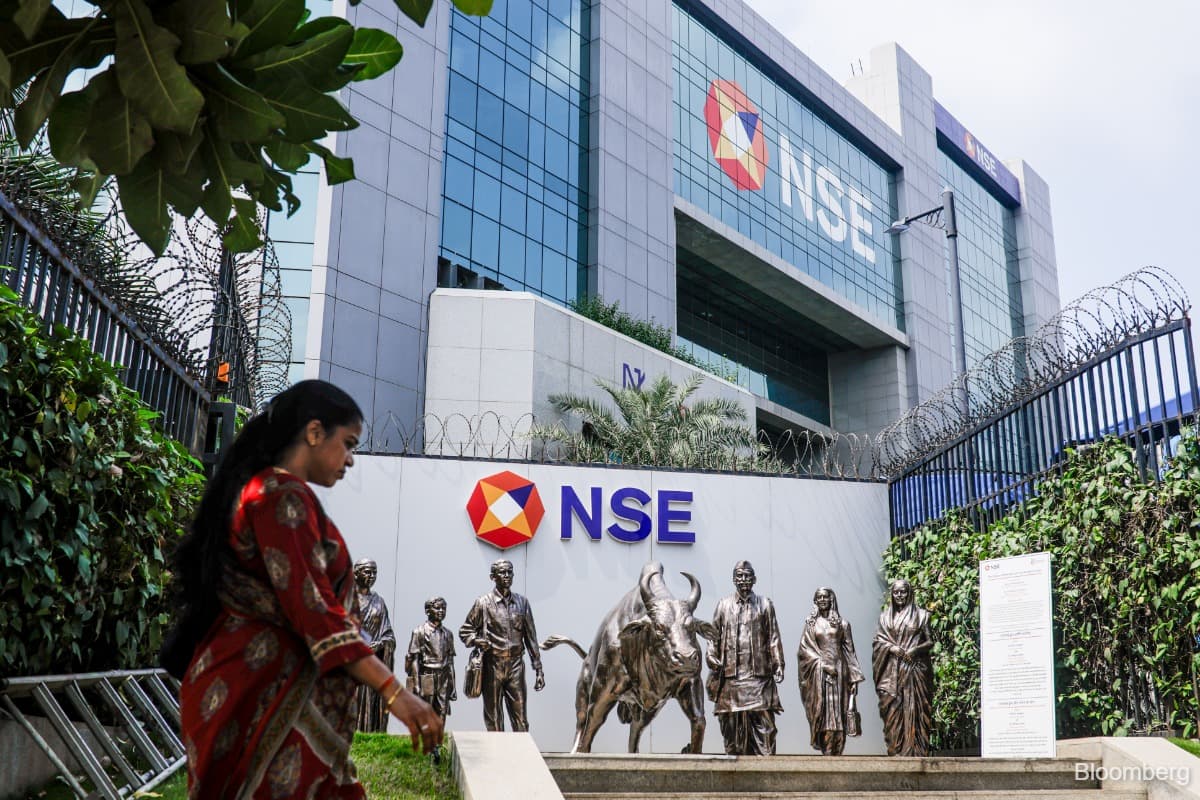
(Nov 6): For months, investors touted Indian equities as a place to hide if the global artificial-intelligence trade unravelled. This week, that thesis has played out.
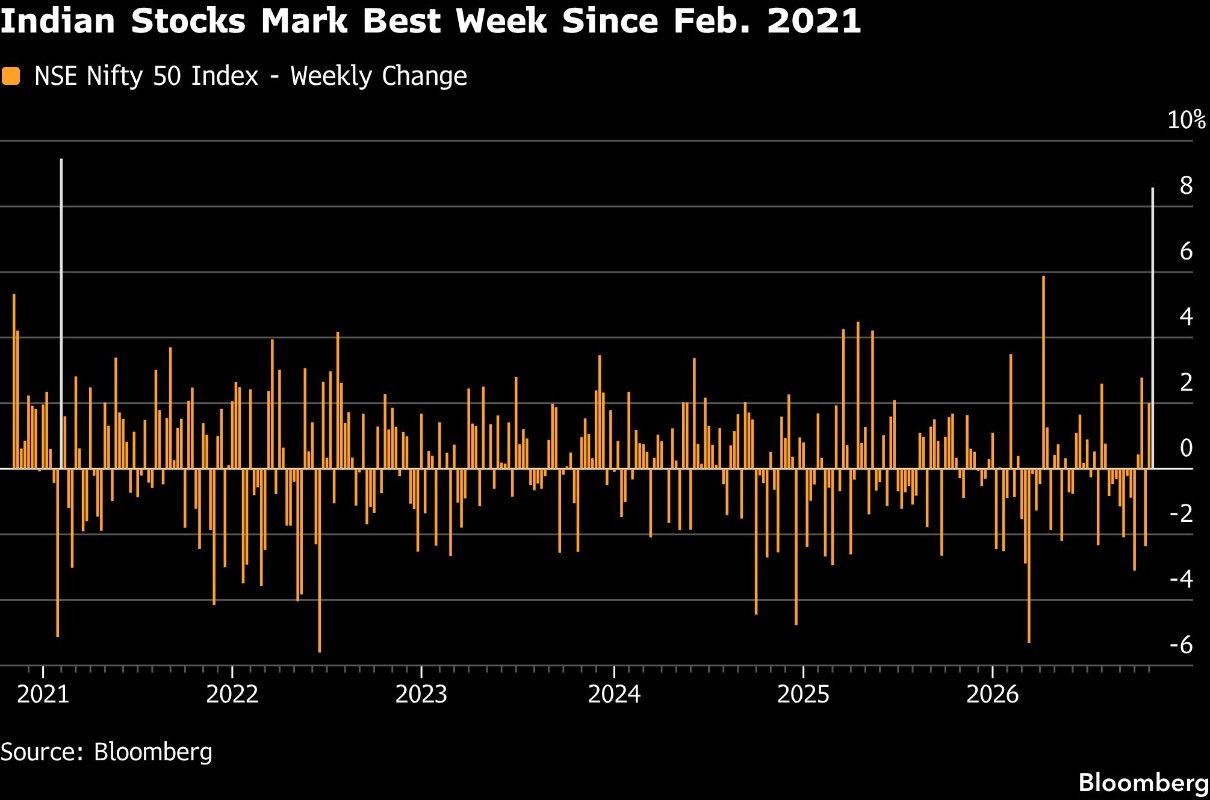
The NSE Nifty 50 Index jumped 2% on Friday, bucking a selloff that left most major Asian markets in the red. As investors slashed exposure to AI stocks on fears of tighter regulation following a Democratic sweep in the US midterm elections, Indian equities headed for their biggest weekly gain in more than five years.
It’s a striking reversal for the US$5.3 trillion (RM21.5 trillion) market in less than two weeks. India’s relative lack of exposure to the AI trade had helped make its stocks among Asia’s worst performers. Now, as the once-high-flying trade unravels, that weakness has quickly turned into a blessing. Global funds are returning, helping narrow year-to-date losses, while plunging oil prices and an improving earnings outlook lift the market’s appeal.
There’s “very high possibility that India market will outperform other Asia markets in the short term,” said Charlie Hong, founder and chief investment officer at LOGOS Asset Management. “The trend will sustain for the medium term only if earnings continue to recover.”
Overseas investors have plowed a net US$1.9 billion into local shares this week through Wednesday, while provisional data for Thursday showed a net inflow of US$1.6 billion. They’re also slashing their bearish wagers — short positions on index futures on the National Stock Exchange of India fell by more than 100,000 contracts this week.
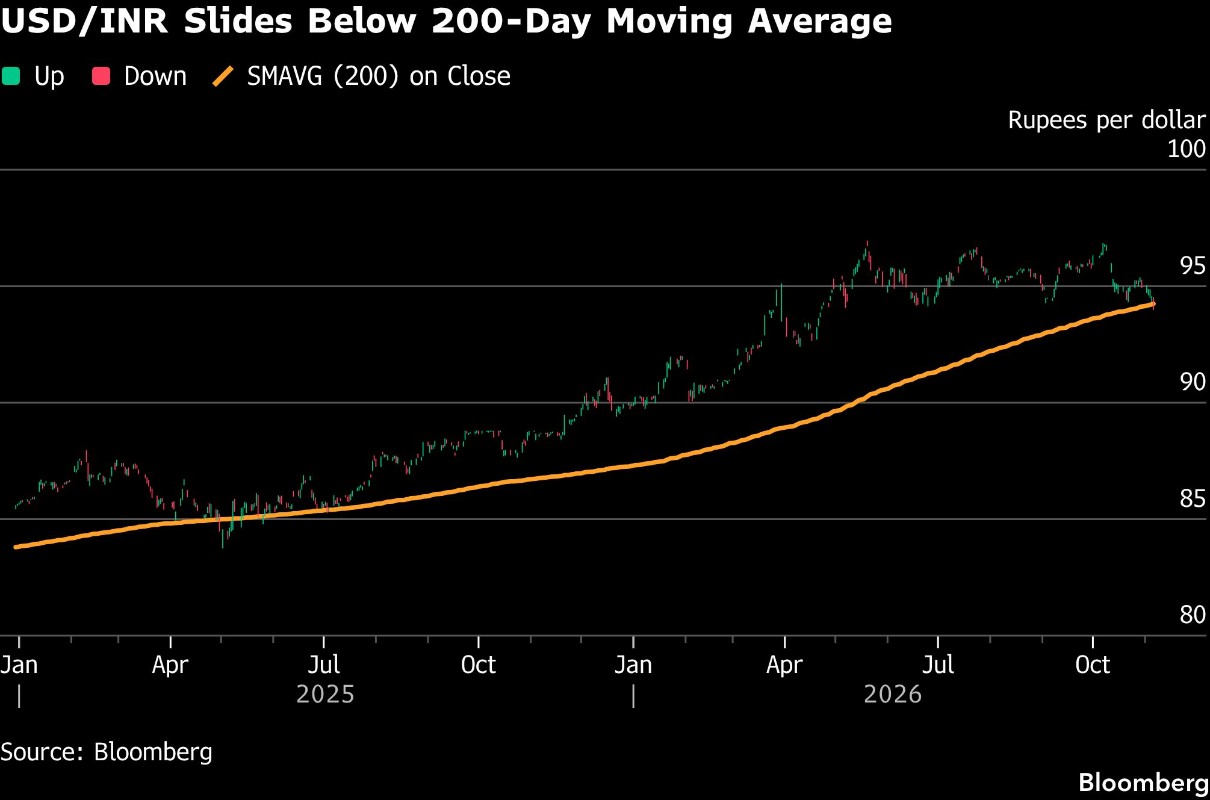
The sudden gush of inflows helped propel Indian equities into the ranks of the world’s best performers this week and strengthened the rupee, which neared a record low last month. The currency climbed 0.6% to 93.9175 per dollar, the strongest since April. The dollar-rupee rate has also broken below its 200-day moving average for the first time since 2025.
“Unless the war in West Asia re-escalates, this Goldilocks situation could continue for the rupee,” said Anindya Banerjee, head of research, commodity and currency derivatives at Kotak Neo. “In that situation, once 94 per dollar breaks, we will see a breakout from a range that has held since April and then a lot of panic dollar-selling could happen from exporters.”
Still, Indian shares remain on track for their first annual losses in 11 years, while the rupee is among Asia’s weaker currencies and foreign outflows are still at a record for the year. Energy costs remain elevated, and earnings growth continues to lag peers in North Asia.
The rally has been accompanied by a rise in volatility. A gauge of implied stock swings on the NSE soared 13%, the most since late September.
For now, the plunge in oil prices and improving earnings could provide another tailwind by boosting the appeal of Indian assets. Profit growth at roughly two-thirds of BSE 100 companies that have reported results was the fastest in at least five quarters and beat estimates, according to Citigroup Inc.
“Interest from foreign clients have gone up recently,” said Rajat Agarwal, an Asia strategist at Societe Generale SA. “India is standing out amid a sea of red.”
Uploaded by Evelyn Chan