


(Nov 6): Japan’s Government Pension Investment Fund (GPIF) kept its allocations to domestic bonds and equities close to its 25% targets, signalling little change in its investment stance.
Speculation has been rife for months that the ¥314.4 trillion (US$2 trillion or RM8.1 trillion) fund, one of the world’s largest public pension investors, may shift more money into its home market, potentially boosting Japanese stocks and bonds.
Japanese Prime Minister Sanae Takaichi’s suggestion in July that GPIF could buy more domestic assets fuelled the speculation, as did a surprise management meeting in August. The latest results, however, showed the fund sticking to the status quo, potentially damping expectations of an imminent shift.
GPIF allocated 26.49% of its portfolio to Japanese bonds and 24.80% to domestic stocks. Both remain within the tight ranges the fund has stuck to in recent years, even though it is allowed to deviate from those 25% targets by five to six percentage points.
While its allocation to Japanese bonds rose to 26.49% from 25.59% in June, the share tends to increase in March and September because of seasonal patterns in cash management of the country’s pension system.
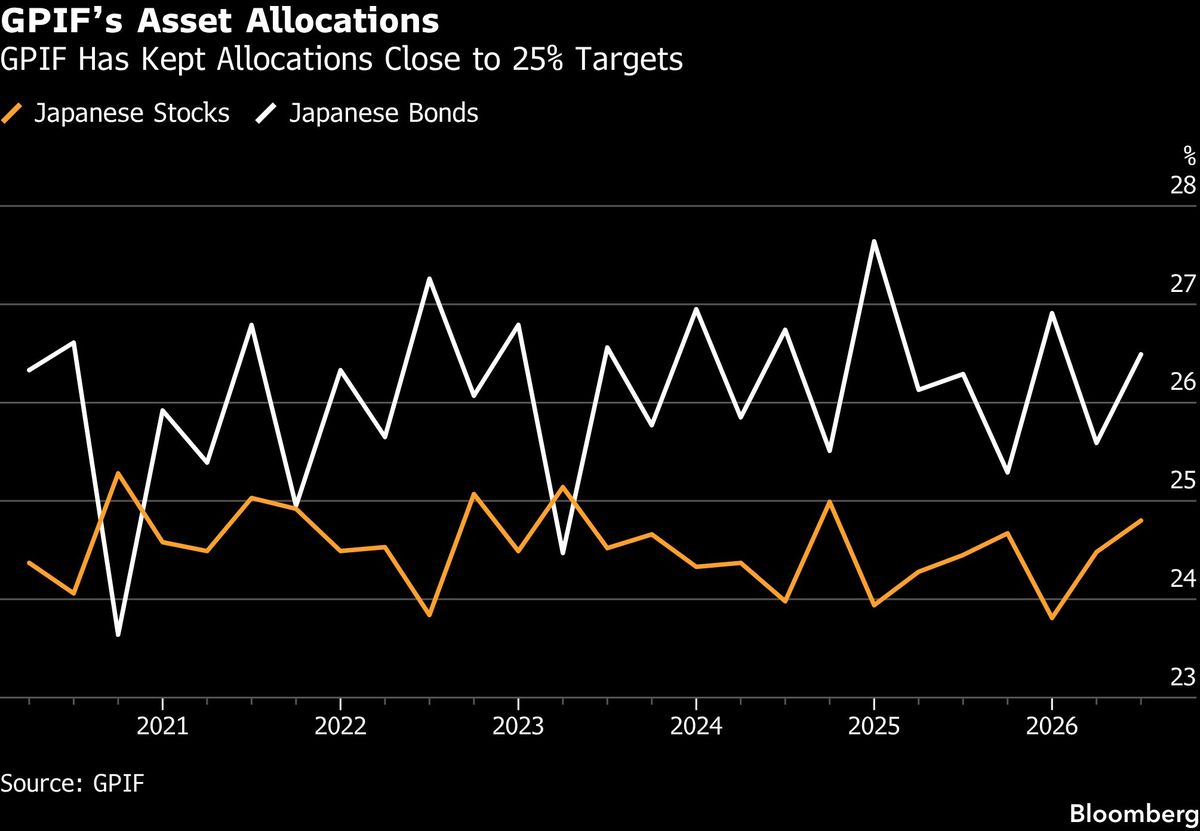
“It appears GPIF is barely making use of the permitted deviation ranges from its model portfolio. As of the end of September, it seems to be rebalancing its portfolio toward the 25% targets, as it has done in the past,” said Koji Okuda, an executive researcher at Daiichi Life Research Institute. “Judging from these results alone, there is no sign that GPIF is moving towards changing its model portfolio.”
Buying domestic assets could support Takaichi’s agenda by helping curb yen weakness and lower Japanese government bond yields as she seeks to boost fiscal spending to stimulate growth.
For GPIF, however, the bar for changing its allocations is high. The fund has stressed that its sole goal is to secure pension benefits for future generations.
Market participants have said the GPIF is unlikely to shift its holdings without a clear investment rationale, though they have not ruled out changes given the influence of Japan’s Health Ministry, which oversees the fund, in setting its target returns.
In the three months through September, the fund suffered its first quarterly loss in six quarters, declining 1.7% as global bond prices fell and the yen strengthened. Still, it outperformed its benchmarks by five basis points in domestic bonds and 13 basis points in foreign bonds, while Japanese stocks underperformed by eight basis points. Foreign stocks performed in line with their benchmark.
Uploaded by Tham Yek Lee