

This article first appeared in Digital Edge, The Edge Malaysia Weekly on November 9, 2026 - November 15, 2026
Selangor is building a common digital architecture to connect its 12 local councils and state agencies for seamless data sharing. This follows an expenditure of about RM118 million on 60 smart city initiatives over the past five years.
The initiatives span four domains under the Smart Selangor agenda, namely smart government, smart economy, smart community and smart infrastructure.
The spending forms part of the state’s broader digitalisation efforts, which received a five-year allocation totalling RM369 million under the Smart State initiative announced by Selangor Menteri Besar Datuk Seri Amirudin Shari in April 2021.
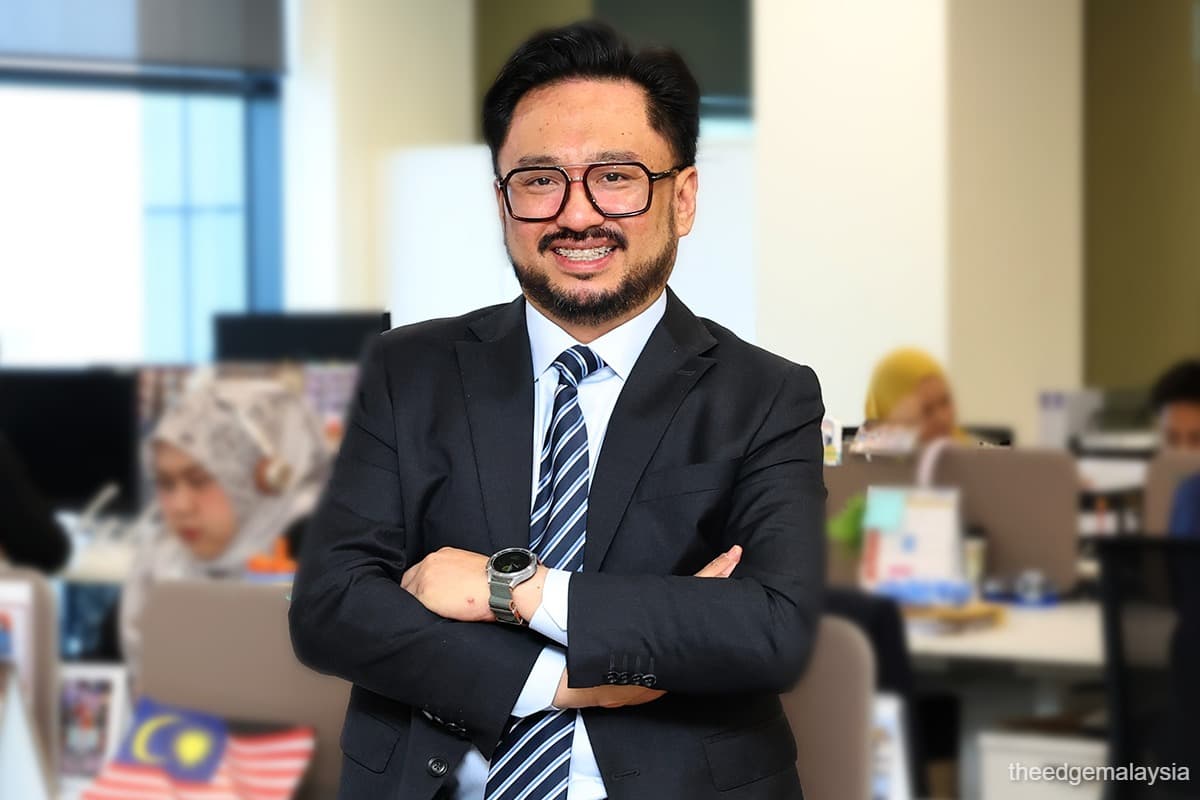
Muhammad Gaddafi Musli, CEO of Smart Selangor Delivery Unit (SSDU), or SSDU Innovations Sdn Bhd, says the menteri besar announced the funding then as the state’s total commitment to the Smart Selangor initiative.
“This amount went to hybrid data centres, cloud infrastructure projects, other programmes and the agencies or GLCs (government-linked companies) that ran them. For scale, SSDU itself received close to RM5.75 million in state development grants across 2024 and 2025,” he adds.
Muhammad Gaddafi says the state is now moving beyond pilot projects towards establishing shared digital infrastructure that enables government agencies and local councils to integrate their systems and share data.
“The most important thing is that as one of the most digitally advanced states, Selangor has moved past merely executing pilot projects, but we are now looking into establishing a shared operating backbone in terms of government agencies and also all the local councils in Selangor,” he says.
SSDU, a wholly-owned subsidiary of Menteri Besar Selangor Incorporated (MBI Selangor), was established in May 2016 and is mandated by the state government to spearhead the implementation of smart initiatives. These initiatives use digital technology, data and connectivity to improve how cities operate and how residents access services.
Examples include installing sensors in public rubbish bins to alert collection crews when they are full, using smart meters to monitor water consumption and detect leaks, and equipping buildings with automated systems that adjust lighting and air conditioning to reduce energy use.
Cities can also introduce digital platforms that allow residents to report damaged public facilities, access government services online or receive real-time updates on public transport, making urban services more efficient while improving public safety and residents’ quality of life.
The RM118 million was primarily allocated to infrastructure development as Selangor intensified its smart city efforts from 2021, when existing infrastructure remained inadequate, says Muhammad Gaddafi.
Part of the allocation went towards acquiring CCTVs, as well as the licences and software required to run CCTV analytics.
One example is the Shah Alam City Council (MBSA), which has emerged as a leading local council in the state’s digitalisation efforts.
“When we talk about CCTV analytics, MBSA is the leading local council in terms of digitalisation as a Level 2 smart city. It is the only local council in Selangor that has achieved Level 2 (Developing Smart City) under the Malaysian Smart City Rating,” says Muhammad Gaddafi.
Under PLANMalaysia’s Malaysia Smart City Rating Programme (Penarafan Bandar Pintar), Level 2 indicates a developing smart city that has moved beyond planning and begun implementing its smart city initiatives.
At this level, a city must have implemented at least 50% of its smart city action plan, established an active smart city committee, set up a functioning Integrated Command Centre (ICC) and met 35 indicators under the MS ISO 37122:2019 standard.
“[MBSA] has utilised CCTV analytics very well, especially in terms of traffic management. I think traffic is a big issue to the people and when we incorporate digitalisation in managing traffic, it has, of course, improved the livelihood of the people,” says Muhammad Gaddafi.
“MBSA also has 294 of the 1,497 smart CCTV cameras the state government had installed by early 2025, the most of any council [in Selangor].”
Muhammad Gaddafi says MBSA runs the Shah Alam Intelligent Monitoring System Integration (IRIS), which uses artificial intelligence (AI) image recognition to monitor traffic flow and coordinate incident response.
At press time, SSDU had not provided figures on whether the system had reduced traffic congestion, shortened travel times, improved incident response or lowered accident rates in Shah Alam.
Taking stock
As the Smart Selangor Action Plan (SSAP 2025) came to an end last year, SSDU commissioned IPSOS Sdn Bhd to carry out an independent assessment in early 2025 — it was completed in September the same year — to evaluate the achievements of the road map and gauge public acceptance of its initiatives.
Muhammad Gaddafi says the SSAP 2025 Assessment Report found that 78% of the plan’s targets were achieved across its 60 initiatives.
However, the report was not publicly available at press time, limiting further disclosure of its findings.
SSAP 2025 was an update to the Smart Selangor 2016 blueprint, incorporating digital technology initiatives aimed at developing a modern, forward-looking smart state.
The six-year action plan, covering 2020 to 2025, identified focus areas for using digital technologies to improve public services and the living experience of Selangor residents.
“Among all the projects that we had previously, one of the most successful is Smart Selangor Parking. Currently, there are more than 5.8 million registered users for Smart Selangor Parking, which is now managed by one of the subsidiaries under MBI Selangor, RMSB (Rantaian Mesra Sdn Bhd),” he says.
Smart Selangor Parking falls under the smart community domain in the state’s smart city development plan and has improved parking management efficiency across 12 local councils in Selangor, enhancing convenience for businesses and the public, he notes.
Another milestone was the establishment of the Smart Selangor Operation Centre (SSOC); it was established in December 2020 and began operations in 2021.
The SSOC can monitor traffic and access data from various disaster sensors, including river-level sensors that detect rising water levels for flood management, says Muhammad Gaddafi.
One of the centre’s key successes came during the devastating floods that hit areas such as Shah Alam in December 2021, when its monitoring and coordination capabilities played a crucial role in managing the disaster, he says.
“During the December 2021 floods, the SSOC ran around the clock. The State Disaster Management Unit led operations from the centre, while we kept the emergency lines and systems running and helped take calls from flood victims, especially in the Taman Sri Muda area, and log them centrally for rescue agencies.
“Using the command centre, we managed to successfully mitigate the disaster by arranging for the transfer of about 47,000 flood victims especially in the Taman Sri Muda area,” he adds.
Selangor has 12 local councils, several of which run their own command centres, as well as nine district offices that operate their own District Disaster Operation Centres (DDOCs).
Local councils with their own command centres include MBSA, Petaling Jaya City Council (MBPJ) and Subang Jaya City Council (MBSJ), says Muhammad Gaddafi.
The DDOCs serve as platforms for monitoring disasters and coordinating responses, particularly during floods. They help manage flood victims and coordinate the distribution of food baskets, playing an important role in disaster management, he says.
Despite the progress made in digitalising public services, challenges remain in Selangor’s ambition to become a digital state, particularly in integrating systems and data across its local councils.
Each council has its own procurement processes, technologies and datasets, resulting in varying levels of digital maturity and making it difficult to share information seamlessly across agencies.
This complicates efforts to build a connected digital ecosystem in which data can be used across departments and local authorities to improve public service delivery.
“Local councils have their own sets of procurement or sets of technology. And they spend [their allocation] themselves on CCTV analytics and also additional software. Our role is basically to coordinate and also to provide advisory and to connect the local councils to the state policies. To ensure that everything that they do aligns with the state policies,” he explains.
“SSDU has no statutory power over local councils. Councils are autonomous under the Local Government Act 1976 and answer to the state through the State Local Government and Tourism Committee. We just coordinate.”
SSDU identifies MBPJ, MBSJ and MBSA as the three local councils leading the state’s digitalisation efforts.
“In Selangor, the local councils have different levels of digital maturity. MBSA may not be the same as Majlis Daerah Sabak Bernam. It’s very different in terms of digital maturity,” he says.
“For SSDU, it doesn’t matter what kind of technology you have. If the people cannot feel the level of efficiency across all layers of the community, then the technology is useless.”
Digital inclusion and connectivity are therefore key priorities, especially in suburban and rural areas where businesses and communities must also be able to benefit from the state’s digital transformation.
“Selangor has achieved 96.9% 5G network coverage in populated areas, but identifying suitable applications for suburban areas is also important to ensure that the benefits of digitalisation reach a wider population,” he says.
According to news reports in January this year, Communications Minister Datuk Seri Fahmi Fadzi said as at December 2025, Selangor had achieved 96.9% 5G coverage.
Muhammad Gaddafi cites Kuala Selangor and Sabak Bernam as areas where digital inclusion needs to be strengthened.
Under the Second Selangor Plan (RS-2), the state’s development plan for 2026 to 2030 launched in August this year, a key objective is to extend digital inclusion across Selangor, particularly in rural areas, while empowering businesses to adopt digital technologies.
In January, the Malaysian Communications and Multimedia Commission (MCMC) and the Selangor government exchanged a memorandum of understanding (MOU) to boost the state’s digitalisation and smart city agenda, backed by an allocation of RM450 million.
Minister of Communications Datuk Seri Fahmi Fadzil said the MoU’s initial allocation of RM350 million was reviewed and increased to RM450 million following a request from the state government.
The MOU aims to develop smart connectivity infrastructure that will form the backbone of smart cities, including the expansion of fibre-optic networks, the provision of public WiFi facilities and support for the implementation of the National Digital Network Plan (Jendela) to ensure wider, more stable and higher-quality internet access in Selangor.
Fahmi said the initiatives would improve residents’ quality of life through more efficient public services, safer urban environments and more structured, data-driven traffic and disaster management.
What does a digital state entail?
For Muhammad Gaddafi, becoming a digital state is fundamentally about improving government efficiency.
Digitalisation should begin by identifying problems in government administration and determining which processes would benefit most from technology.
He believes it should improve decision-making, particularly by reducing response times and transaction costs.
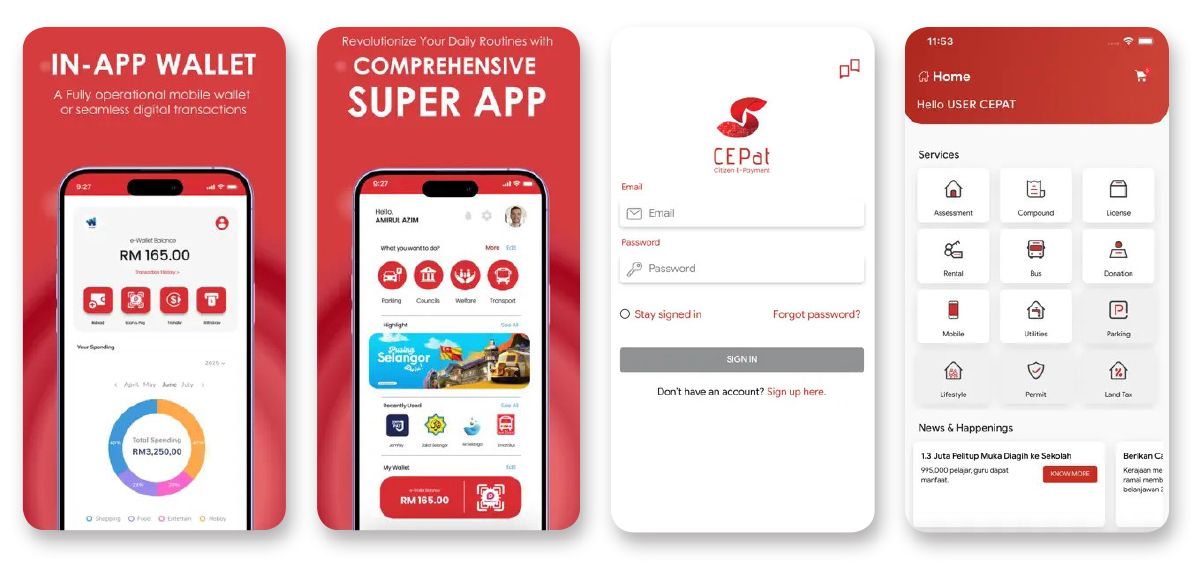
One example is the Selangor government’s decision to focus on a single super app, Nine, which is wholly owned by the state through MBI.
“It is an app that is owned within the Selangor government’s MBI group, not a third-party app and all user data remains the property of the Selangor government. I think this should make the rakyat feel more comfortable sharing their data, particularly in terms of privacy and data security,” he says.
“The Nine super app offers various functions, including paying parking fees, bills, quit rent, assessment tax, with other local council-related payments being added in stages. It also provides access to government initiatives that the public can apply for.”
Launched by the state government in October 2025, the app has more than 50,000 downloads on the Google Play Store and allows users to access municipal and local government services, make payments and use it as an e-wallet.
“The Nine super app is not yet automatically linked to MyDigital ID; we are engaging MyDigital to verify users’ identity when they register. This simplifies the application and approval process of a state-given aid, for example. Applicants no longer need to submit copies of their identity cards, birth certificates or other physical documents. Their eligibility can also be determined based on the online forms they submit,” says Muhammad Gaddafi.
While initiatives such as the Nine super app are digitalising individual public services, Selangor’s longer-term ambition is to embed technology across government administration and use it to support economic development. This is outlined in RS-2, which targets the digitalisation of 85% of government administration by 2030.
Rather than treating digitalisation as a standalone sector, the plan positions it as a cross-cutting enabler across its development missions, integrating technology into governance and economic development.
The state also aims to achieve RM600 billion in gross domestic product (GDP) by 2030, reflecting its broader ambition to strengthen Selangor’s position as a leading economic hub, according to RS-2.
Muhammad Gaddafi says a key challenge is developing a digital architecture that enables interoperability among the different technologies used by government agencies, allowing their systems to communicate with one another.
As local councils and agencies fund their own technology projects, they have the flexibility to choose their systems, provided they comply with state policies, he adds.
SSDU’s role, on behalf of the state government, is therefore to help local councils coordinate through a digital architecture that ensures different systems comply with common standards and can communicate with one another.
This would also allow the state government to access data held across these systems.
“[With the RS-2], what’s important is that the state government is developing a digital architecture in the next few years in terms of how we ensure that all the agencies operating under the state communicate with each other, especially in terms of data sharing,” he says.
Save by subscribing to us for your print and/or digital copy.
P/S: The Edge is also available on Apple's App Store and Android's Google Play.