

This article first appeared in Digital Edge, The Edge Malaysia Weekly on November 9, 2026 - November 15, 2026
Malaysia’s first state-backed venture capital management corporation, PNSB Innovation Ventures Sdn Bhd (PIV), is bringing together state and private capital to help start-ups grow and support Selangor’s ambition to become a high-tech hub. PIV, the wholly-owned venture capital and private equity arm of Permodalan Negeri Selangor Bhd (PNSB), is pursuing this goal through two technology funds with a combined target size of RM150 million.
PIV is now preparing to launch the Tanjung Innovation Fund (TIF) with a target size of RM50 million, PNSB CEO Raja Ahmad Shahrir Iskandar Raja Salim tells Digital Edge in an exclusive interview.
TIF will back start-ups and established businesses seeking to grow through technology adoption. TIF follows the Ehsan Semiconductor Fund (ESF), which targets RM100 million to support semiconductor companies. Both funds use a co-general partner (co-GP) model, with PIV sharing fund management responsibility with its partners.
TIF will be jointly managed by PIV, and private investment firms The Hive Southeast Asia Sdn Bhd and AxeHedge Inc. ESF is managed by Ehsan Kapital PLT, whose founding partners are PIV, the Selangor Information Technology and Digital Economy Corporation (Sidec) and Artem Ventures Sdn Bhd.
For 36 years, state-owned PNSB — set up in 1990 under Menteri Besar Selangor (Incorporated) — has been building affordable public housing and infrastructure through joint ventures and development arrangements with private property developers. Rumah Idaman Kwasa Damansara in Shah Alam and Bandar Saujana Putra Intersect Expansion in Kuala Langat are some of its latest development projects.
For PNSB, entering venture capital required expertise in assessing businesses and managing a different set of investment risks, says Raja Ahmad. The group had to assemble an investment team and establish the governance, investment and risk-management processes to support this new business. It built those capabilities through PIV — an entity set up in 2024 and registered with Securities Commission Malaysia — starting with an earmarked capital of RM30 million from parent PNSB.
“Why venture capital? Because we foresee that venture capital has a lot of growth potential. The funding size is palatable for us. And we foresee that there can be synergies between working with venture capitalists, state authorities and others as well,” says Raja Ahmad.
The move into venture capital grew out of a desire to diversify its property and physical asset-heavy business and support Selangor’s goal towards technology and higher-value industries. PNSB wants its technology investments to help develop local intellectual property (IP) and create skilled jobs, supporting Selangor’s broader economic ambitions.
Raja Ahmad says its investment mandate supports the state’s development agenda, initially under the First Selangor Plan and now the Second Selangor Plan (RS-2).
PIV’s investments have a dual mandate: first, to generate financial returns, and second, to boost the state’s technology ownership and its IP pipeline to create higher-value jobs and build companies capable of competing beyond Malaysia.
“For PNSB, the objective is very clear — supporting Selangor’s economic growth agenda. Therefore, we’re not investing in technology simply because technology is fashionable. There must ultimately be a commercial case and a strategic rationale for Selangor,” says Raja Ahmad.
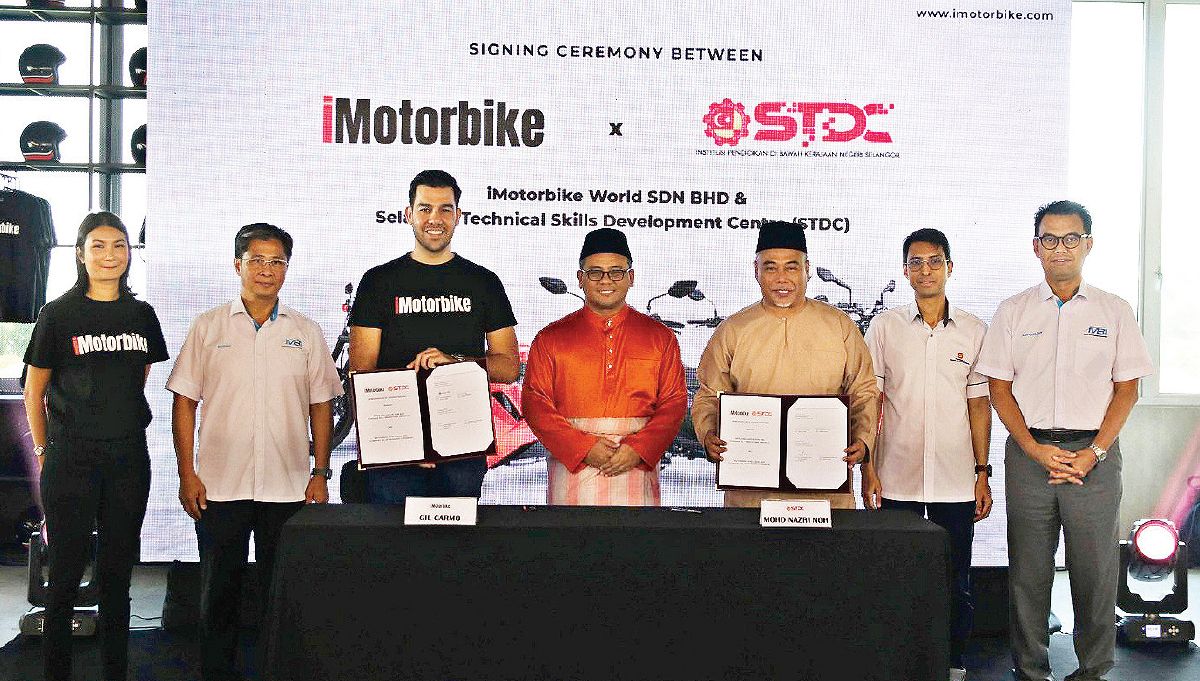
A portion of PIV’s initial RM30 million went into a RM12 million Series A funding for iMotorbike, an online platform for buying and selling used motorcycles (see box), announced in June 2023 and led by Gobi Partners and Ondine Capital, with participation from 500 Global and The Hive Southeast Asia.
PIV invested on its own as an initial test of its approach to backing start-ups.
However, competing demands for capital elsewhere in the group, particularly in its property division, meant that it never used its entire allocation.
That experience prompted PIV to turn to managing funds with partners such as Hive, AxeHedge and Artem, says Raja Ahmad. By combining its own money with funding from other investors, it could increase the capital available to businesses while retaining a role in investment decisions.
“The constraint forced us to rethink how we could achieve the original objective without relying entirely on PNSB’s balance sheet. That’s when we pivoted towards the co-GP fund model,” he says.
The first time PIV worked with other fund managers was when PNSB mooted Dana Penjana Selangor (DPS) together with Sidec and the federal government’s fund-of-funds Penjana Kapital in 2023. DPS was conceived as a federal-state co-investment initiative to encourage companies and other private investors to invest alongside the government in promising start-ups.
This way, experienced venture capital managers oversee the investments, giving investors access to a diversified portfolio of businesses while providing start-ups with funding and support to grow.
Under DPS, PNSB was developing plans to manage a fund jointly with Tuas Capital Partners, which is also one of the partners behind The Hive Southeast Asia.
However, the original set-up changed after federal sovereign wealth fund Khazanah Nasional Bhd acquired Penjana Kapital in 2024. PNSB subsequently moved away from the Penjana initiative but continued developing its investment plans through other partnerships.
Raja Ahmad says PNSB moved away from the original DPS arrangement following Penjana Kapital’s consolidation into Jelawang Capital, opting instead to develop funds with its own partners. It then pursued its investment plans through partnerships that subsequently developed into ESF and TIF.
Around the same time, Sidec started developing its integrated circuit (IC) design park to attract semiconductor companies to the rapidly growing township of Puchong. PIV saw an opportunity to provide capital through a dedicated semiconductor fund to the chip players setting up their operations in that locality.
PIV sought to keep separate the semiconductor mandate originally envisaged under DPS and, through PIV, established ESF with Sidec and Artem Ventures. It also retained the plan to manage a fund with Tuas Capital. That initiative subsequently developed into TIF, which will be used to back companies seeking to expand through technology adoption.
What will the two funds bring to the table?
The soon-to-be-launched TIF will primarily invest from seed to Series A, with cheques of up to RM10 million per company at different growth stages. For starters, PIV intends to contribute RM5 million towards the fund’s RM50 million target, with the remaining RM45 million to be raised from other investors.
It is discussing commitments with potential investors, but has yet to finalise how much it expects to secure at the first close. That first close is expected to bring together the fund’s initial investor commitments and more could join later as fundraising continues until the RM50 million target is achieved.
Investments in TIF are expected to be made in the first half of 2027.
For small and medium enterprises (SMEs), PIV intends to pair its TIF allocation with knowledge transfer facilities and tools to support their growth, particularly as these businesses may struggle to attract technology-focused venture capital investors while remaining beneath the radar of private equity funds seeking larger investments.
“[SMEs] may not necessarily be technology companies today, but technology can help them improve productivity, expand their market, strengthen distribution or scale much faster,” says Raja Ahmad.
TIF’s fund managers will assess how each business operates and identify where technology could support its growth. For a company expanding its sales team, that might mean finding a more organised way to record customer information and follow-up enquiries.
For example, a customer relationship management system could bring customer details and records of previous conversations together in one place, allowing staff to see what has already been discussed and which enquiries still need attention, points out Asyrul Ridzwan, head of investment at PNSB, where he leads PIV.
Some needs could be met with software already available on the market, while more specialised requirements could call for artificial intelligence (AI) or data tools tailored to the company’s operations.
TIF will also consider technology start-ups across industries, drawing on partner The Hive’s five years of experience in venture capital investing and building technology companies.
Investee companies must offer a sound commercial opportunity and potential benefits to Selangor, whether through jobs, technology or wider economic activity, says Raja Ahmad.
PNSB also wants to connect PIV’s investees with potential customers among the state’s agencies and related organisations where their products could improve operations or services, he shares.
“This must still be commercially driven. We’re facilitating opportunities, not guaranteeing business,” says Raja Ahmad.
Any business arising from those introductions would remain subject to the receiving agency’s approval and procurement processes, says Asyrul. Where a tender is required, the investee company would have to undergo the process. The agency would assess whether the proposed solution meets its needs, and PNSB’s backing would not allow a company to bypass the applicable requirements.
TIF follows ESF, which was set up last year to help semiconductor companies develop chip designs, hire engineers and expand their businesses.
To date, ESF has raised more than half of its RM100 million target, according to Raja Ahmad. The fund has already invested between RM1 million and RM20 million in semiconductor ship designers SkyeChip Bhd (KL:SKYECHIP) and GreatAsic Technology Sdn Bhd.
ESF’s mandate is to acquire minority stakes in seven to 10 companies, ranging from newer ventures to businesses preparing for a stock market listing locally or abroad.
Investment returns aside, PNSB wants ESF to help companies develop and own more technology locally, create higher-value engineering jobs, and win business overseas. Raja Ahmad says Selangor wants more of the design work for chips used in vehicles, phones and computers to be done within the state.
“What was missing was dedicated growth capital. Companies can be attracted to the IC Design Park and supported during their early development, but as they grow, they need capital to scale. That’s the role ESF was created to play,” says Raja Ahmad.
Working with fund managers
Via the co-GP model, PIV shares responsibility for managing TIF and ESF with its partners.
For TIF, The Hive brings experience in venture capital and building technology companies, while AxeHedge contributes experience in investing in and growing traditional businesses. This combination reflects TIF’s intention to back both technology start-ups and companies seeking to expand through technology adoption, says Raja Ahmad.
The Hive Southeast Asia Sdn Bhd is an early-stage venture capital firm that manages The Hive Southeast Asia Fund I, a 2021-vintage fund, according to PitchBook. Its investments include ThoughtFull and Halogen Capital. It is also working with US-based The Hive on the Hive Global AI Fund to invest in AI businesses in the US and Southeast Asia.
Meanwhile, AxeHedge is an alternative investment platform that invests in, finances and helps grow technology and infrastructure businesses. It also developed a trading application providing market analytics, real-time data and investment research.
As for Ehsan Kapital’s aforementioned founding partners — PIV, Sidec and Artem Ventures — PIV brings PNSB’s state investment knowledge, while Sidec connects the fund to its work attracting semiconductor companies and developing the IC design park. Artem, on the other hand, contributes investment, fundraising expertise and experience in supporting companies after investments are made.
Artem is an early-stage venture capital firm focused on fintech and insurtech, providing funding and helping founders with business strategy, recruitment and expansion into new markets. It manages the RM45 million TIM Ventures Fund with FWD Insurance and the Neo Consumer Fund. Its investments include Ejen2u International Sdn Bhd, Kiddocare Sdn Bhd and biodegradable-straw manufacturer Origo Eco Sdn Bhd. The firm is also raising the US$25 million Artem Ventures Tech Fund to invest in Southeast Asian technology companies, according to PitchBook.
“PIV has limited capital and competing requirements across the group [PNSB]. If we invest RM10 million ourselves, our impact is RM10 million. If that RM10 million forms part of a much larger fund alongside other investors, the economic impact can be significantly larger. So we’re using state capital as catalytic capital, helping mobilise additional private or institutional capital,” says Raja Ahmad.
Sharing management also gives PIV greater influence over the funds’ mandates than it would have as a small investor in another manager’s fund. This allows it to incorporate Selangor’s objectives into investment decisions while maintaining commercial discipline.
“We want to leverage private capital without losing sight of why the state’s capital is there in the first place,” says Raja Ahmad.
Working with experienced managers also helps PIV build its own fund management capabilities. Its partners bring investment experience, networks, access to potential deals and expertise in supporting portfolio companies.
Moreover, these partnerships provide continuity over the long life of a venture capital or private equity fund, even when PNSB personnel leave or change roles, says Raja Ahmad.
“PNSB doesn’t want to build a government venture capital ecosystem that competes against private fund managers. There are already experienced managers in the market. We would rather partner them, leverage their capabilities and, if our existence adds value, help attract more capital into the ecosystem. The state’s role should be to address gaps and catalyse activity where necessary,” he says.
PNSB also wants deeper pools of private growth capital to support companies as they expand beyond Malaysia.
“State capital should ultimately catalyse, not replace, private capital,” Raja Ahmad asserts.
Its ultimate ambition is to help companies develop, commercialise technology and retain more economic value in the state. Raja Ahmad believes Selangor’s long-established manufacturing base, universities with strong research and development capabilities and talent, as well as advanced infrastructure and access to corporate customers provide a strong foundation for PIV to achieve this outcome.
“We want more technology and IP to be developed in Selangor, not merely used here. We want companies headquartered and built here. We want local companies capable of competing regionally and globally,” he says.
Those companies need connections to overseas customers, supply chains and technology partners. PNSB hopes to attract entrepreneurs from outside Malaysia who can establish businesses in Selangor, bringing technology, customers and international networks with them.
In a couple of years, or by 2030, Raja Ahmad anticipates some investee companies to be able to reach the initial public offering stage. He also wants the investments to create opportunities for engineers, chip designers, researchers and other skilled professionals to build their careers in Selangor.
“I want us to be able to point to companies that have created IP here, created high-value jobs, expanded beyond Malaysia and generated wider economic activity in Selangor,” he says.
Save by subscribing to us for your print and/or digital copy.
P/S: The Edge is also available on Apple's App Store and Android's Google Play.