

(Nov 6): South Korea’s government turned the world’s hottest stock market into a political trophy. Now, a reversal that’s wiped out more than a trillion dollars in value is stirring a retail investor backlash and testing public faith in its leaders.
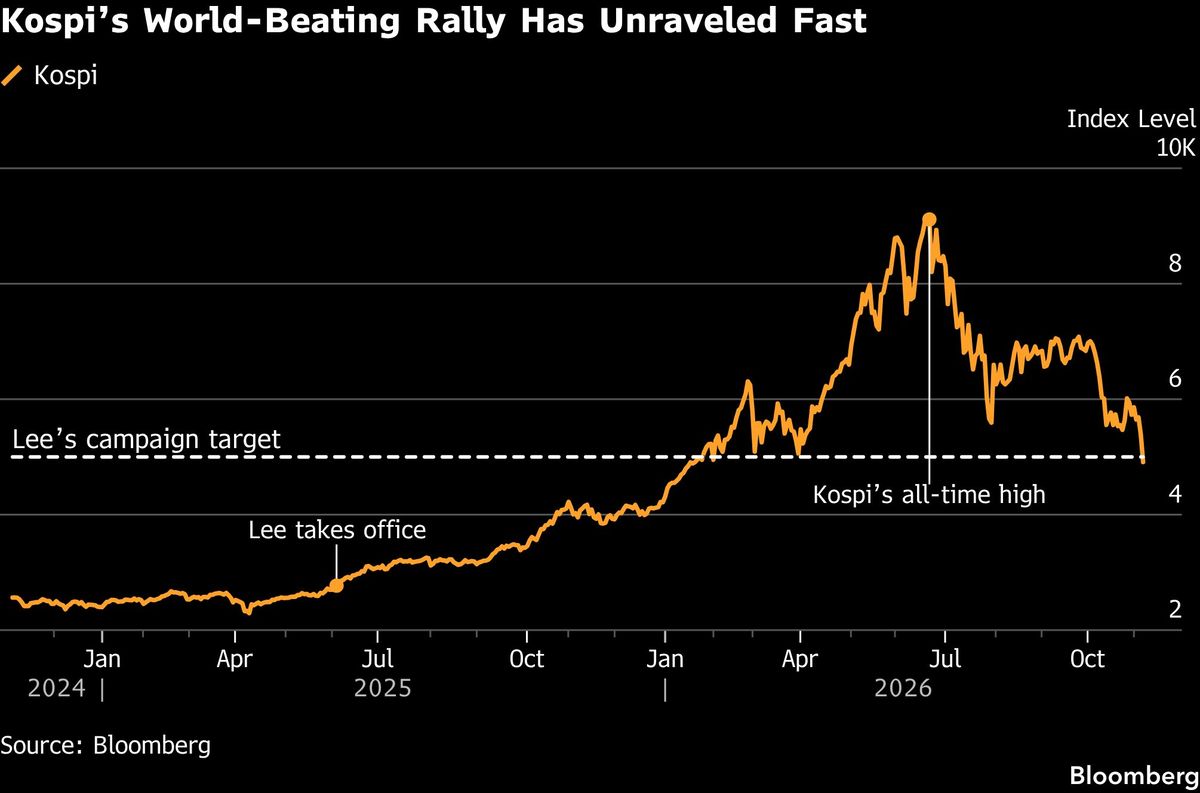
Frustration is acute among individuals who say they heeded the government’s call to favour the equity market over real estate, as officials championed the Kospi’s artificial intelligence (AI)-fuelled surge to a record high in June. As things stand, the benchmark has plummeted over 40% since then amid an unravelling global tech rally, while property prices in Seoul have climbed for a record 91 straight weeks.
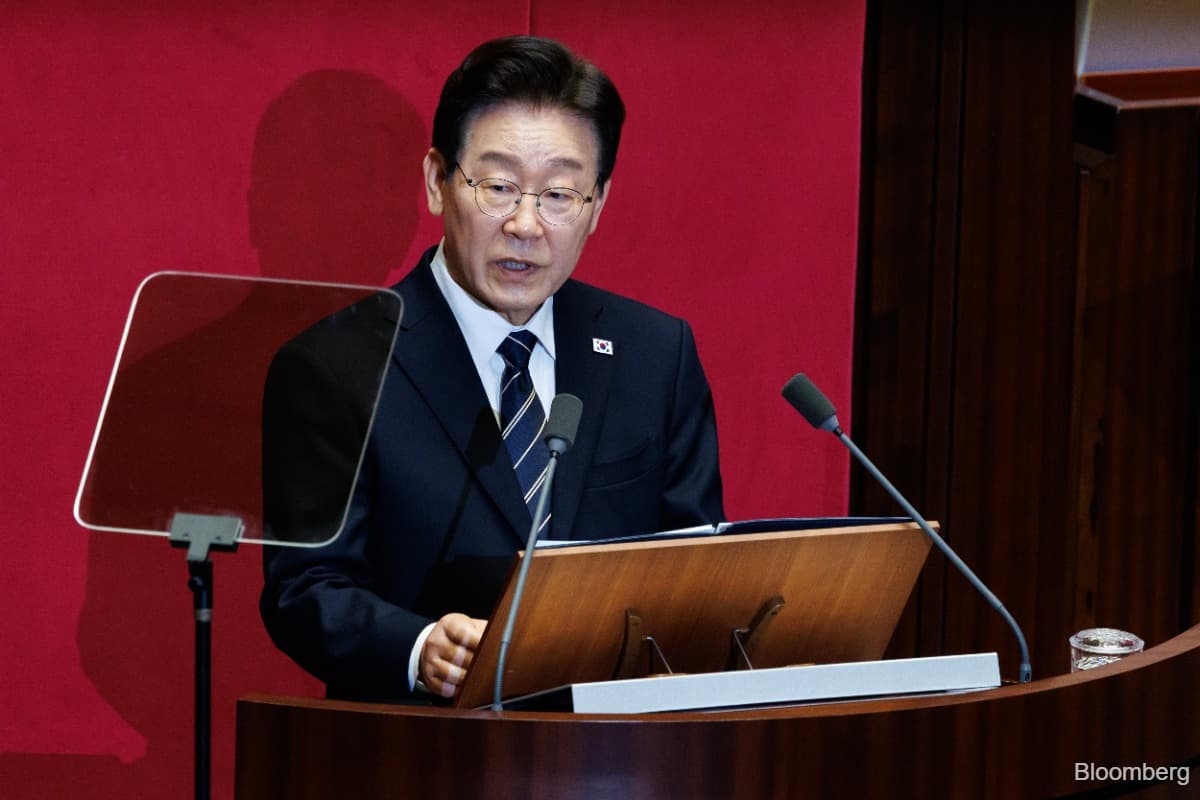
On Friday, as the Kospi slumped below the 5,000 level that President Lee Jae Myung touted during his election campaign, retail investors vented frustration and mocked Lee’s pledge on online stock forums.
The contrast between share-market performance and property prices has proved particularly painful for Kim Min, a salaried worker in Seoul. Kim says he deferred a decision to buy a house in early 2026, and instead put 40 million won (US$29,500 or RM119,615) in an exchange-traded fund (ETF) tied to small-cap Kosdaq gauge. About seven months on, more than 65% of that investment has been wiped out, he claims.
“Looking back, I think it was just pure madness that the government has fueled this rally,” the 40-year-old said. “If I can just get my money back, I would never ever trade Korean stocks again. Never.”
Lee, who took power in June 2025, made shifting household wealth away from real estate and into equities a centrepiece of his economic agenda. His administration tightened mortgage lending and sought to curb speculation in the housing market to restrain property investment, while also taking steps to boost shareholder returns.
During his campaign, Lee pledged to lift the Kospi to 5,000, or about double its level at the time, tying his administration’s credibility closely to the market’s performance. In April 2026, Jung Chung-rae, then chief of the ruling Democratic Party, said the Kospi could reach 8,000.
While the AI boom saw the index shatter those levels to hit a record 9,114.55, a punishing sell-off in July — which marked its worst month in nearly two decades — and another bruising slide in October have shaken retail investors. The Kospi plunged as much as 8.8% on Friday to 4,911.28, before paring about half the loss. That followed a 5.3% slump on Thursday.
“The president went out there and made a very confident case to the public: don’t put your money into real estate, invest in stocks instead,” said Koo Jeong-woo, a sociology professor at Sungkyunkwan University in Seoul. “But a lot of people who followed that advice have now lost money.”
The presidential office declined to comment for this story.
Lee’s ratings
The latest declines in the Kospi have come amid a sell-off in tech stocks globally due to growing concern that Democrats will seek tighter regulation of the AI industry after their strong showing in the US midterms. That could potentially slow the expansion of US data centres and weigh on the demand outlook for South Korean chipmakers.
Overall, about US$1.7 trillion has been eroded from the market value of South Korean stocks since a peak of US$5.1 trillion on June 22, data compiled by Bloomberg showed. That’s before taking into account Friday’s losses.
For South Korean daytraders, the grievance is that the government made the Kospi’s rise a showcase for its economic agenda even as much of the rally was being powered by the broader AI boom.
“There were celebrations at every milestone with photo ceremonies, and people who saw them thought the market would go up really high,” said Kim, the salaried worker from Seoul.
Many retail investors took on debt to enter the market, with brokerage iM Securities Co estimating that more than US$60 billion of stocks were bought while the Kospi traded above 7,000, mostly by mom-and-pop investors. Some piled into leveraged ETFs tied to chip stocks, which can magnify gains but also amplify losses. Those funds are down more than 70% from their peaks.
A mid-October poll showed that the disapproval rating for Lee rose to 52% from 51%. Among those who disapproved, 19% cited the government’s housing policy while 12% cited the state of the economy and response to the stock market as reasons.
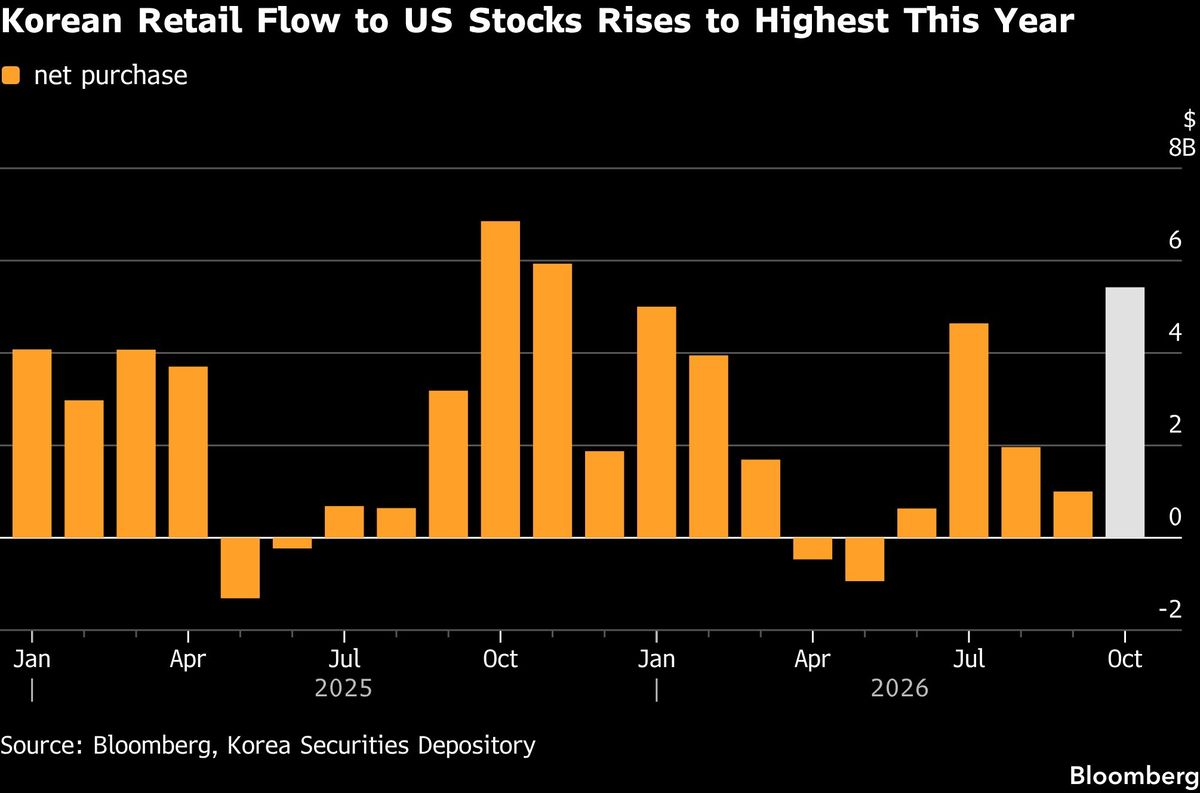
Another fallout of the rout may be that retail investors are turning their backs on local stocks, complicating the government’s efforts to discourage outflows as a way to support the South Korean won. South Koreans bought about US$13 billion worth of US stocks in the four months through October, while selling a net US$1.7 billion of Kospi shares in the period, according to depository data.
To be sure, under Lee, South Korea has implemented a series of corporate governance reforms to reduce the so-called Korea Discount, and that supported the Kospi’s world-beating ascent. His administration has also sought to dismantle excessive regulation and inefficiencies in capital markets. The Kospi is still up more than 20% this year.
As the AI frenzy intensified earlier in the year, Wall Street banks including Goldman Sachs Group Inc and JPMorgan Chase & Co were among those that boosted their Kospi targets to at least 12,000.
Now, the same global forces that propelled the index are working in reverse, as concerns mount over lofty valuations and whether the billions of dollars being poured into the technology will bring sufficient returns. Goldman last month cut its target to 9,000.
“Reinvigorating the stock market can be a government’s goal but proposing a number such as 5,000 or 8,000 as the goal could leave a wrong impression,” said Kang In Soo, an economics professor at Sookmyung Women’s University. Now, the Kospi’s sharp fall from over 9,000 will likely dominate public memory, rather than Lee’s election campaign target of 5,000, he said.
Uploaded by Tham Yek Lee