

KUALA LUMPUR (Nov 6): The ringgit could possibly strengthen towards the 4.00 threshold against the greenback by year-end, CIMB Treasury and Markets Research opines, as it foresees electronics exports widen Malaysia’s trade surplus and exporters convert more of their overseas earnings into ringgit.
The research house expects the ringgit to trade between 4.00 and 4.10 per US dollar through December, with foreign demand for Malaysian bonds also favouring the stronger lower end of that range, it said in a note dated Nov 5.
The ringgit traded at 4.059 at the time of writing at 12.30 noon on Friday, against 4.0445 at Thursday’s close.
“Ringgit appreciated by an average 1.1% in November and 1.2% in December against the USD over 2018-2025. Year-end conversion of export receipts and overseas investment income could support a similar pattern, although more regular GLC/GLIC repatriation may temper the seasonal boost,” the note read.
The ringgit previously boasted an eight-year high of about 3.89 in late February before coming under pressure as the war in the Middle East pushed Brent crude above US$100 a barrel in March.
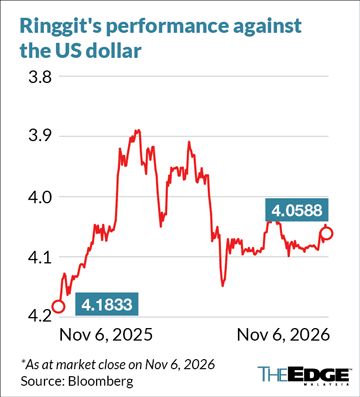
It recovered to 3.91 on May 7, then weakened past 4.00 on June 4. By June 22, it was trading at about 4.15, its weakest level this year.
CIMB is of the view that Malaysia’s electronics exports would grow 35% year-on-year in the fourth quarter, after a 46% increase in the prior three-month period.
Overall, it expects growth to ease from 34.3% this year to 10.2% in 2027 as the comparison base rises, with investment in artificial intelligence infrastructure continuing to support demand.
Thus far, businesses’ foreign currency deposits have also fallen to US$42 billion in September after reaching US$48.5 billion.
CIMB said the decline could mean exporters had begun converting accumulated earnings into ringgit, although businesses may also have used the funds to make foreign currency payments.
“Foreign portfolio flows could also become more supportive as equity selling eases and bond demand strengthens,” the research house said. “With BNM tightening already reflected in domestic yields, lower UST yields could narrow Malaysia’s yield disadvantage and sustain bond inflows even if equity demand remains weak.”
Foreign investors’ holdings of Malaysian bonds rose RM6.2 billion between end-September and end-October. Foreign investors remained net sellers of equities, though sales slowed to RM3.4 billion in the third quarter from RM5.5 billion in the second.
CIMB flagged two risks to its outlook. Stronger US jobs data could revive expectations of a Fed rate hike, while renewed conflict in the Middle East could drive investors towards the dollar.