

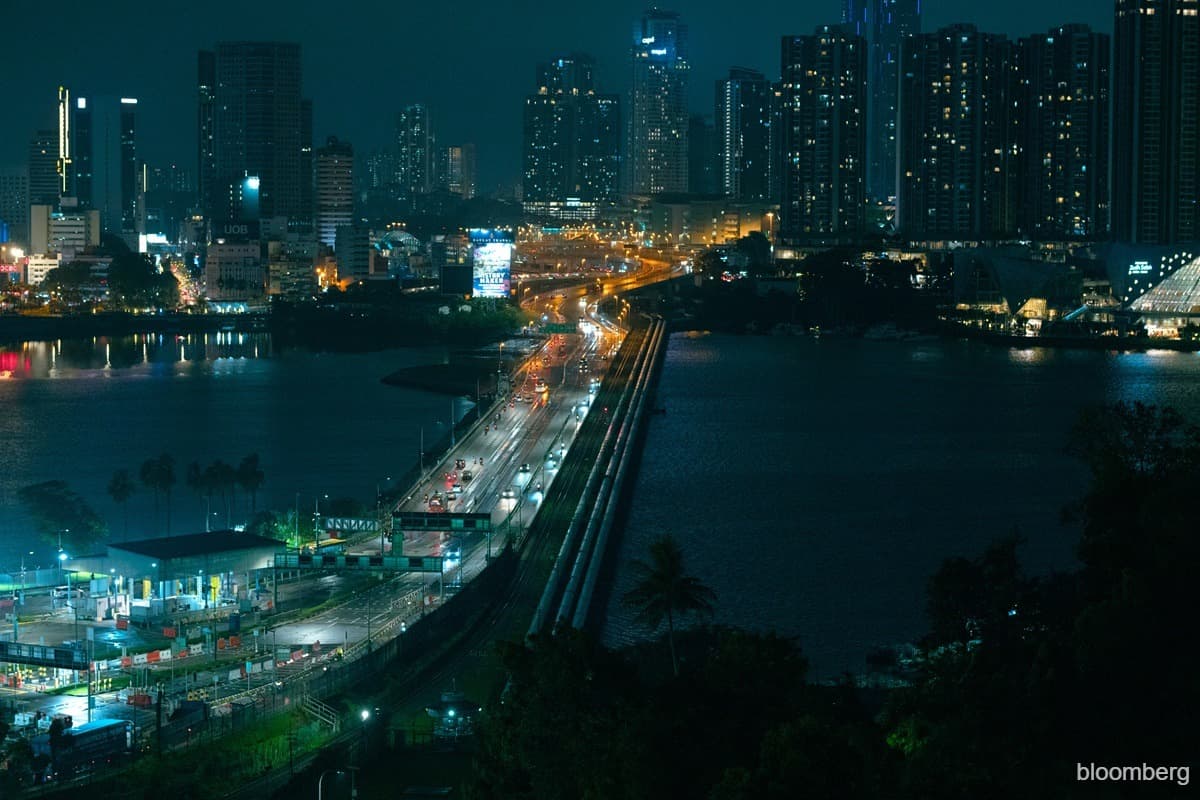
(Nov 6): I refer to the meeting between Malaysian and Singapore leaders on the latest update on the Johor-Singapore Special Economic Zone (JS-SEZ) which took place on Nov 2, 2026, in Singapore.
It is significant that the previous Joint Ministerial Committee for Iskandar Malaysia (JMCIM) has been enhanced to this inaugural Johor-Singapore Ministerial Committee (JSCMC) on the JS-SEZ, which covers a larger are and is far more ambitious in its scope and scale compared to what was trying to be achieved under the Iskandar Development Region.
It is also significant that the JSCMC will include not just Malaysia’s minister of economy and Singapore’s minister for national development (both are co-chairs) but will also include Malaysia’s Miti minister and the menteri besar (MB) of Johor, as well as Singapore’s minister for energy, trade and industry (METI) and its minister for transport. Both sides have agreed on proposing additional representatives on the JMC as required and it would make sense for Malaysia’s minister of transport to be part of this committee given the importance of the soon to be operational Johor Bahru-Singapore Rapid Transit System (RTS) in integrating Singapore even more closely to Johor.
I would like to congratulate the Malaysia Investment Development Authority (Mida), Invest Johor, Enterprise Singapore, Singapore’s Economic Development Board and Malaysia’s Ministry of Investment, Trade and Industry (Miti) and Singapore’s METI for their hard work and collaboration in facilitating RM88.83 billion of approved investments between January 2025 and June 2026 into the JS-SEZ of which approximately 45% has been implemented.
The positive momentum from this inaugural JMC must be carried to the meeting between the two prime ministers, during their leaders’ retreat, which is scheduled to take place sometime in December. There is an urgent need to put a few more substantive initiatives on the table, in order to convince foreign investors and domestic investors in Malaysia and Singapore of the seriousness of both sides to make JS-SEZ into a unique success in the region.
Given this urgency, the following suggestions should be considered:
1) To include an additional component / measure in Mida’s New Incentive Framework (NIF) scorecard system which is a “JS-SEZ” category. This can be incorporated into the Mida framework relatively easily and doesn’t include additional lengthy negotiations internally within the Malaysian government.
This additional component can measure the value added of a particular investment project on how it can benefit the larger JS-SEZ ecosystem. For example, a data centre project which also includes a water treatment plant can be scored higher especially if the water from the treatment plant can be used to supply other data centers in the JS-SEZ area.
This model can also be applied to other regions in Malaysia if there is pushback on why the JS-SEZ is treated so “specially”. Of course, the weightage which the JS-SEZ gets within this scorecard (which is not made public) can be higher than other regions especially with capital investments and alignment from the federal and state governments in Malaysia and also directly from the Singapore government or via some of the Singaporean government-linked investment corporations (GLICs).
2) To include an announcement of the development of a Malaysia-Singapore Industrial Park in the JS-SEZ which will be jointly developed by Malaysia and Singapore. The reference point here could be the M+S development of Marina One and DUO in Singapore, headed by Khazanah and Temasek, in 2018, as part of the Tanjung Pagar train station agreement. The potential sale of Marina One at between S$5 to S$6 billion that was recently announced could also be referenced as evidence of a successful partnership that provided attractive returns to both countries. The partners to develop this proposed project should be negotiated and then announced at a future date. This proposal would garner investor attention as it is something more concrete compared to the investment incentives enhancement proposed in Point 1 above.
3) To announce the intention to jointly invest and develop renewable energy (RE) and water treatment (WT) projects in the JS-SEZ as part of the solution to the energy and water demands in Johor as a result of the data centre investments (both current and projected) and also to recognise Singapore’s own demand for RE sources as part of its net zero ambitions by 2050. One possible project for co-investment on the part of a GLIC in Malaysia and a GLIC in Singapore would be the Southern Johor Renewable Energy Corridor (SJREC) project by Ditrolic and Permodalan Darul Tazkim (under the Johor state government) which has progressed to a stage of financial viability exploration and was prominently featured in the recent Singapore International Energy Week. Another possibility is Sembcorp’s JV with KPRJ Environment Sdn Bhd (a wholly-owned subsidiary of Kumpulan Prasarana Rakyat Johor Sdn Bhd) and Qua Energy to develop a floating solar project in the Linggiu Reservoir in Johor.
Other projects which are in the pipeline could also be highlighted as co-investment possibilities.
4) To announce a joint task force on the RTS in preparation of the roll-out of the RTS in February 2027. This task force should only focus on RTS related matters and avoid other transportation issues affecting Johor and Singapore. This task force can comprise a federal agency on the Malaysian side under the Ministry of Transportation and one on the Singaporean side (the Land Transport Authority or LTA for example) and also the Majlis Bandaraya Johor Bahru (MBJB) and the Urban Renewal Authority (URA) or the National Parks Service (NPS) on the Singapore side, for example. The URA or NPS can provide specific and practical feedback on the design of pedestrian walkways around the RTS station in Bukit Chagar. (This proposal was made by me in an event organised by Cerebrum, a think tank under JCorp in April 2026).
5) To announce the co-development of human capital involving institute of higher learning from Malaysia and Singapore to be facilitated by the Johor Skills Development Center (or Johor Skills) and the recently established Skills and Workforce Development Agency (SWDA) in Singapore. This will address the recurring questions on the availability of skills and human capital in the JS-SEZ.
I am sure that there are other ideas which have already been put on the negotiating table by the relevant stakeholders. I am cautiously optimistic that the announcement of the JS-SEZ master plan at the leaders’ retreat in December 2026 will come with some substantive announcements on the next steps for this potentially game-changing and globally unprecedented special economic zone initiative.
Dr Ong Kian Ming is a former deputy minister of international trade and industry.