

This article first appeared in Digital Edge, The Edge Malaysia Weekly on November 9, 2026 - November 15, 2026
About one in 10 women surveyed in the Klang Valley reported having been diagnosed with polycystic ovary syndrome (PCOS), according to a 2022 study published in Frontiers in Endocrinology, but the number of women affected could be higher.
PCOS is a common hormonal disorder characterised by imbalances, including higher-than-normal androgen levels, which can cause irregular or infrequent periods.
The World Health Organization (WHO) estimates that up to 70% of affected women worldwide remain undiagnosed. In May this year, PCOS was renamed polyendocrine metabolic ovarian syndrome (PMOS), reflecting its effects on hormones and metabolism beyond the ovaries.
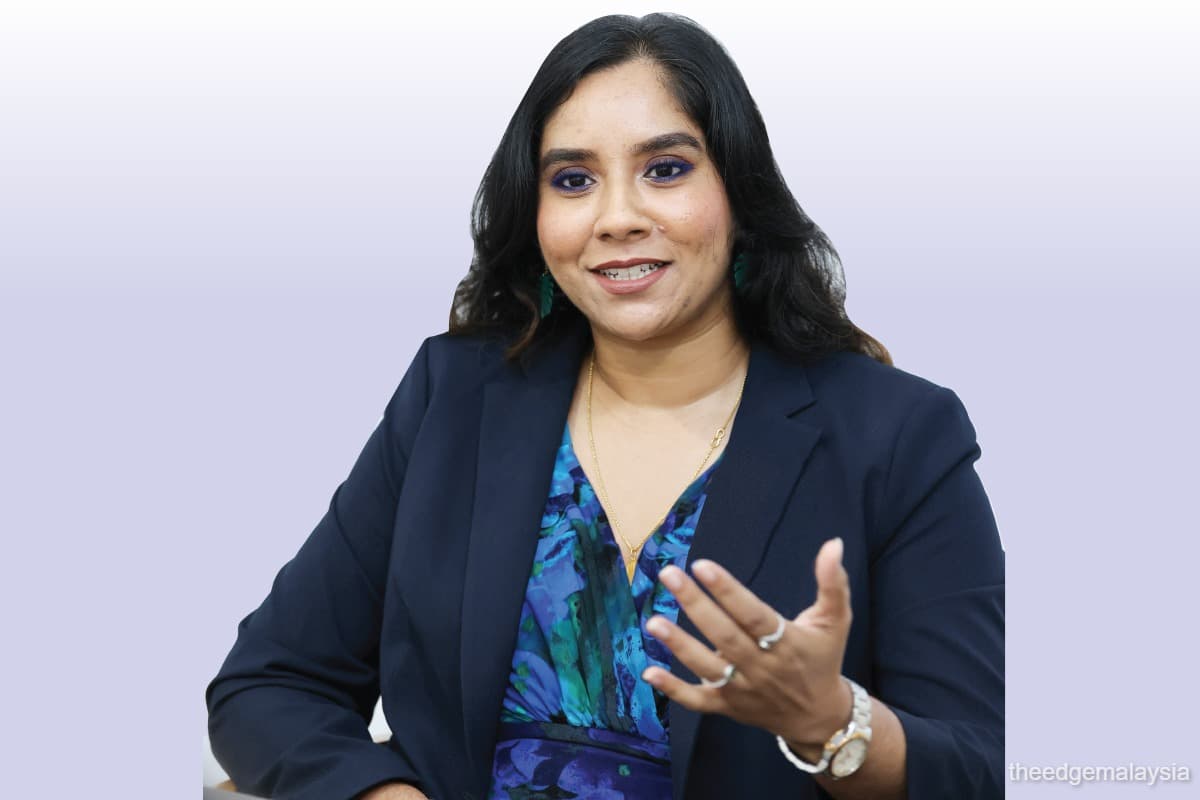
For Karen Michell Othaya Kumar, founder of hormone health platform Baseline, navigating the condition proved difficult despite her medical experience.
At 31, while working under high stress and grieving the loss of her father, she missed her period for months and was subsequently diagnosed with suspected PCOS and prescribed oral contraceptive pills.
Following sinus surgery, she stopped taking oral contraceptives because she learned they could increase the risk of blood clots. She turned instead to regulated supplements and lifestyle adjustments.
The experience made her question how women without medical knowledge could navigate hormonal health, particularly those relying on social media, unverified supplements and misleading slimming products.
“Everyone wants to make money out of your problem. It is concerning to watch women trust unverified claims,” she says.
Karen, now 37, is an assistant medical officer and senior clinical research specialist with 14 years’ experience in the medical industry, including nine years with the Ministry of Health. She has a Bachelor of Science in Biology and Master’s in Sustainable Development Practice from Universiti Sains Malaysia, and she is pursuing her doctoral studies in public health at Monash University’s School of Medicine.
Her awareness of hormonal health began much earlier, when, at 16, she watched her mother, a single parent, go through surgically induced menopause, following surgery for fibroids.
Without adequate support, her mother experienced severe mood changes and a rapid deterioration in her well-being.
These experiences prompted Karen to develop Baseline through her company, Santé Solutions. Launched on March 8 this year to mark International Women’s Day, the artificial intelligence (AI)-powered platform, which Karen bootstrapped with an initial investment of RM20,000, has served more than 400 women so far.
“It is going to be free no matter where Baseline goes,” says Karen, stressing that the decision to keep Baseline’s entry point free is so that women can access it regardless of their financial circumstances.
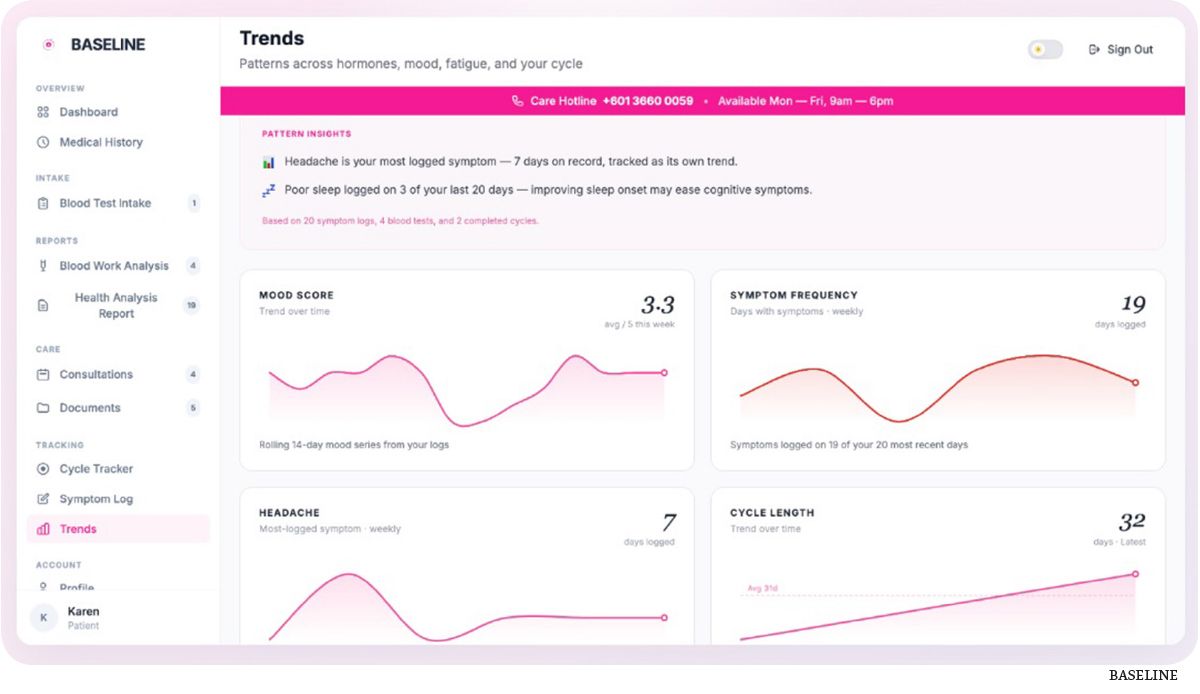
Also available as a mobile app, Baseline offers an AI hormone analysis in English and Bahasa Melayu, asking users targeted questions about their symptoms before providing a report and options for further care.
“The aim is any women who drops by the website will not go away empty-handed.”
The platform’s menstrual cycle tracker monitors physical symptoms and mood fluctuations across cycle phases. Near-accurate predictions depend on users logging symptoms such as cramps or headaches daily.
The platform uses AI for risk profiling, trend identification and symptom tracking, while human professionals handle every formal review, blood test recommendation and consultation, she says.
The platform is supported by a multidisciplinary clinical advisory team comprising an obstetrician and gynaecologist, a general practitioner, a pharmacist, registered counsellors, a fitness coach and a traditional Malay medicine practitioner.
Bringing health records together
Apart from helping women understand their symptoms, Karen wants Baseline to address the fragmentation of healthcare data.
Patients who visit different clinics often find their blood test results, medical histories and ultrasound scans scattered across separate systems.
Baseline’s proprietary dual-view dashboard brings users’ medical histories, prescriptions and blood test reports into a central record.
Patients own their health records and receive a simplified report, while doctors linked to their dashboard can access a clinician view that includes menstrual tracker data.
Karen says this makes consultations more efficient and helps doctors monitor patients’ adherence to treatment.
Consolidating such information also raises questions about privacy, particularly as reproductive and hormonal health information is classified as sensitive personal data under the Personal Data Protection Act 2010 and subject to stricter rules.
Karen ensures that consent is taken before collecting and processing personal and health -related information to generate personalised hormone health insights.
Security was built into Baseline from the outset, with cloud infrastructure provided by Vercel and Google Workspace. Karen says all user data, from symptoms to blood reports, is encrypted and can be accessed only by her.
Healthcare professionals have restricted access, while the highest level of system access is held by Karen and her chief technology officer for maintenance, troubleshooting and account administration.
Raw data collected through the free AI analysis is accessible only to Karen.
Expanding access
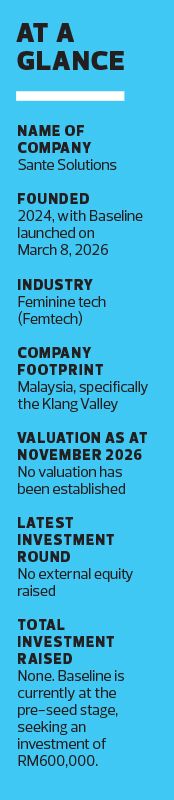
Building Baseline without external funding has been challenging, which is why Karen is now seeking to raise RM600,000 from the industry and investors. She says 30% of the funds raised will be used to hone the platform’s capability and the rest to bolster the start-up’s administration.
Participating in Selangor Information Technology & Digital Economy Corporation’s (Sidec) Deep Tech Xccelerator (Deep-X), a 12-week programme for AI-driven deep tech start-ups, gave her the opportunity to engage directly with government and innovation agencies.
From a cohort of 30 start-ups, Baseline was shortlisted for the Grand Final Demo Day on Oct 14, where teams competed for investment access and cash prizes.
“I’m not really worried about the investment part because I built this with nothing and, somehow, it is going forward. Of course, money is going to make things faster, but I’m not so worried,” she says.
The next step is to expand Baseline’s focus on metabolic health and PCOS to adolescent hormonal health, an area she says requires careful navigation of regulations.
“Ultimately, I want to go into diagnostics to make testing more accessible from home,” says Karen.
Her longer-term ambition is to build what she describes as the first health dataset tailored to Southeast Asian women, reflecting local diets, genetics and lifestyles.
She is considering expansion into Thailand and Vietnam, where she sees opportunities to develop services that reflect local needs and cultural contexts.
Save by subscribing to us for your print and/or digital copy.
P/S: The Edge is also available on Apple's App Store and Android's Google Play.