

This article first appeared in Digital Edge, The Edge Malaysia Weekly on November 9, 2026 - November 15, 2026
NEWS
Only a third of learners rate their AI readiness highly
Only 33% of Malaysian learners rate their artificial intelligence (AI) readiness highly, despite 77% feeling confident about entering the workforce, according to a report by Pearson and Amazon Web Services.
Launched on Oct 28, AI Readiness: Building the Bridge from Higher Education to Work in Malaysia also found that about 80% of higher education leaders were confident their graduates could meet employer expectations.
Employers reported a different experience, with 69% identifying difficulty finding graduates with the right skills as a primary AI-related challenge.
Limited practical experience was cited by 45%, a lack of professional maturity by 41% and poor AI habits, including relying on generated answers without checking their accuracy, by 37%.
Technical proficiency alone was insufficient: 69% of employers considered human and technical AI skills equally important, while 24% placed greater importance on human skills, including communication, collaboration, adaptability and sound judgement.
Although 55% of higher education leaders reported moderate or significant investment in AI, 43% said their institutions had made limited or no investment.
Budget constraints were cited by 45%, followed by insufficient time and incentives for lecturers to update curricula and inadequate computing infrastructure, both at 35%.
Another 33% highlighted the difficulty of keeping pace with AI developments.
The report identifies six barriers to readiness: the pace of AI development; weak links between industry and education; gaps in faculty capabilities; governance issues; limited practical experience; and mismatches between graduates’ skills and employers’ expectations.
The report recommends more practical learning and opportunities to apply AI, updated curricula and support for lecturers to teach responsible AI use, alongside closer industry collaboration through workplace projects and clearer employer feedback on graduate competencies. — By Aisyah Muti’ah Hamzah
Google introduces age estimation for Malaysian users
Google has announced age-assurance technology in Malaysia that uses account signals to estimate whether users are under 18 and apply additional protections to their accounts.
The system considers signals such as the information users search for to determine whether they are likely to be adults or teenagers.
Accounts identified as belonging to users under 18 will receive age-appropriate settings, including SafeSearch filtering, restrictions on mature content in products such as Google Play and Gemini, and a prohibition on personalised advertising.
Location Timeline in Google Maps will also be disabled, while YouTube will activate digital well-being tools such as reminders to take breaks and go to bed. Content recommendation safeguards will limit repeated viewing of certain types of content.
Google says affected users will receive an email explaining the changes and the default protections applied to their accounts. Users who believe their age has been estimated incorrectly can correct it by submitting a photograph of a government-issued identity document or a selfie.
AI assistants overtake search as first stop for surveyed users
Malaysian AI users are more likely to consult an AI assistant than a traditional search engine first when researching an important decision, according to a white paper by data and AI consultancy Entermind.
The Secret Lives of AI-Ready Customers surveyed 1,300 adults in Malaysia who had used at least one named AI tool in the preceding 30 days, rather than the population as a whole.
Among respondents, 43% turned to an AI assistant first, compared with 31% who used a traditional search engine.
Some 70% used AI daily or several times a week, while 41% had made a purchase or financial decision based primarily on AI-provided information or recommendations.
Among daily users, 59% consulted AI first and 52% had acted primarily on its advice.
ChatGPT had been used by 82% of respondents in the preceding month and Google Gemini by 52%, while 28% used three or more tools.
However, 51% preferred AI to guide their decisions while leaving them in control, compared with just 6% who wanted it to handle most tasks.
In travel, 36% of respondents found AI most useful for discovering options, while in healthcare and education, 45% and 41% respectively found it most useful for understanding information.
The findings also point to changing expectations of businesses: 78% wanted company websites and apps to make finding information and making decisions as effortless as AI tools.
Among respondents frequently exposed to AI-generated content, 80% said disclosure of its use mattered, while 58% were willing to share personal information with a trusted company’s AI. — By Aisyah Muti’ah Hamzah
CelcomDigi signs 15-year fibre agreement for Kulim expansion
CelcomDigi Bhd (KL:CDB) has signed a 15-year agreement with Kulim Technology Park Corp Sdn Bhd (KTPC) to provide fibre connectivity at Industrial Zone Phase 4A of the Kulim Hi-Tech Park in Kedah.
Under the Nov 2 agreement, CelcomDigi will manage the zone’s fibre duct infrastructure and provide enterprise connectivity services to incoming manufacturers.
These include dedicated internet access, private leased lines, internet protocol virtual private networks, managed dense wavelength division multiplexing and managed fibre services.
Kulim Hi-Tech Park recorded cumulative investment of RM189.4 billion and a workforce of 48,813 as at the second quarter of 2026, according to the park operator.
KTPC group CEO Datuk Mohd Sahil Zabidi says the infrastructure will support incoming manufacturers’ operational needs and the park’s longer-term development, while creating wider opportunities for local talent and businesses.
The partnership also supports development in the Northern Corridor Economic Region, which covers Perlis, Kedah, Penang and Perak.
Prudential launches free financial education platform for students
Prudential Malaysia has launched Levela, a free financial education platform developed by Prudence Foundation primarily for university students.
Available through a website and mobile app in six languages, it includes shariah-compliant content in English and Bahasa Melayu.
The platform uses short, interactive lessons to address financial decisions young adults encounter as they prepare for working life. Users can access the platform at no charge through either channel.
Its six areas cover budgeting and cash flow; savings and emergency funds; credit and debt; risk management and insurance or takaful; financial goals and planning; and fraud prevention and digital security.
The learning content addresses both everyday money management and decisions about borrowing, protection and longer-term financial goals.
Levela builds on Prudence Foundation’s Cha-Ching programme, which introduces primary schoolchildren to financial concepts and money management.
At the launch, Deputy Minister of Finance Liew Chin Tong raised concerns about youth indebtedness as young Malaysians increasingly use “buy now, pay later” services for purchases and daily essentials.
He said the Consumer Credit Commission was working to regulate operators, including registration and reporting requirements, to help keep indebtedness at a sustainable level.
Prudential Assurance Malaysia CEO Kelvin Ang said financial education needs to be practical and help young adults make informed choices as they enter working life. — By Aisyah Muti’ah Hamzah
HSBC adds currency watchlists and rate alerts to mobile banking
HSBC Malaysia has enhanced its FX on Mobile service with tools that let customers monitor currencies, view historical exchange-rate movements and receive alerts when rates reach selected levels.
The features comprise FX Watchlist, FX Chart and FX Rate Alerts, available through the HSBC Malaysia Mobile Banking App.
Customers can convert currencies at live exchange rates around the clock, while HSBC Premier customers can use Global Money Transfers to send funds to more than 50 countries and territories without transfer fees.
HSBC Malaysia head of wealth and premier solutions Jon Chivers says customers increasingly expect to manage foreign exchange digitally, bringing currency monitoring, conversion and international transfers together within the mobile banking app.
The bank says the tools support international needs such as travel, overseas spending, education payments and financial support for family members abroad.
Citing Bank Negara Malaysia data, HSBC says spot foreign exchange turnover across retail and corporate transactions grew at a compound annual rate of 12.6% between 2021 and 2026, with the 2026 figure annualised.
It also cites a GlobalData projection that cross-border payments will increase 8% between 2026 and 2029.
Alibaba.com introduces Accio and plans Malaysian halal showcase
Alibaba.com has introduced its agentic AI platform Accio to Malaysian small and medium enterprises, offering tools to automate cross-border trade tasks such as market research, supplier sourcing and buyer outreach.
The announcement was made at the B2B AI Seller Summit in Kuala Lumpur, where Alibaba.com also signed a memorandum of understanding with the Malaysia External Trade Development Corporation to develop a dedicated Halal Pavilion on its platform. The proposed showcase will feature certified Malaysian products for international buyers.
The summit also hosted the Malaysian grand finale of CoCreate Pitch 2026, a product-based start-up competition that received more than 2,300 applications.
Lettuboost took first place, followed by Global Cerah and Eartheories, with the winners offered the opportunity to attend the CoCreate Global Summit in London in November.
AEON Bank adds AI financial coaching to its app
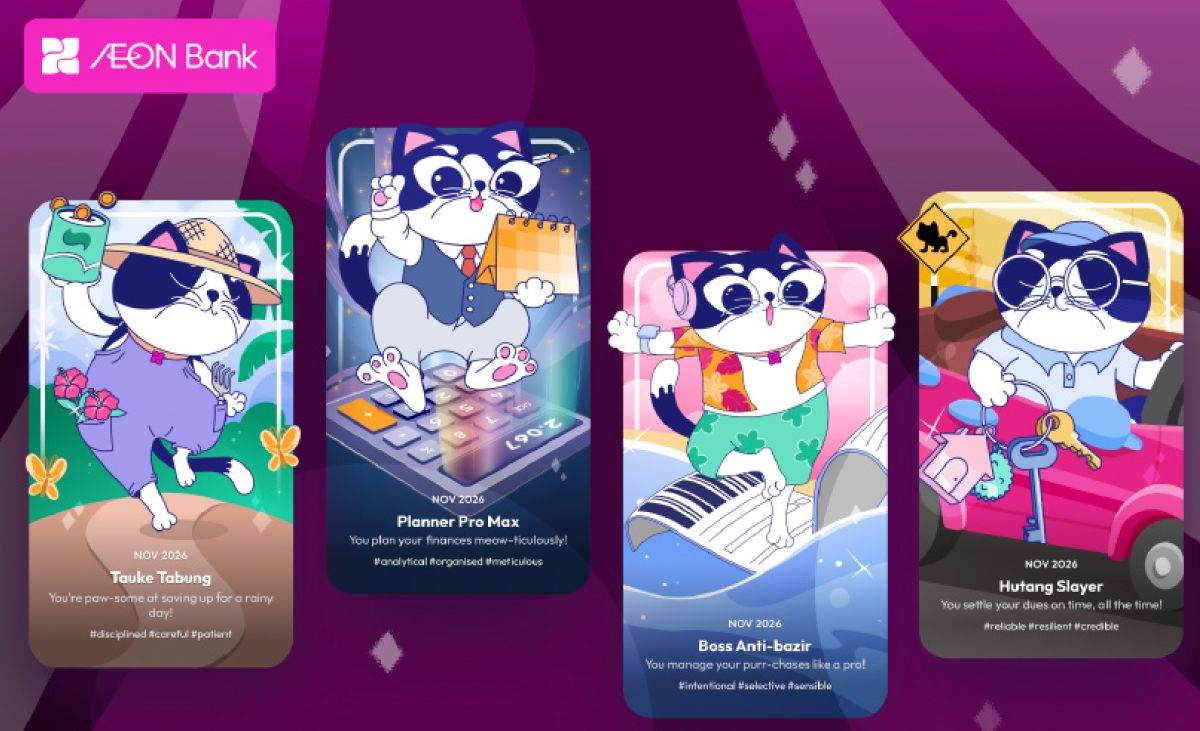
AEON Bank has introduced Financial Purr-Sona, an interactive feature in its banking app that uses an AI financial coach called Neko Sensei to offer personalised insights and budgeting tips.
The feature analyses activity within the app across saving, spending, planning and upcoming financing or payment commitments.
Users receive a financial persona, with names including Tauke Tabung, Planner Pro Max, Boss Anti-Bazir and Hutang Slayer, which can change as their activity and financial habits evolve.
To access the feature, users tap the Neko Sensei icon on the app’s home screen and complete a quiz to identify their financial persona.
The bank says more active use of the app and its features can provide a more comprehensive basis for personalisation.
RED ALERT
Attack on government-only Windows system in Asia, reports Kaspersky
Kaspersky’s Global Research and Analysis Team has uncovered an attack targeting a customised Windows 10 system used exclusively by government organisations in an unnamed Asian country.
The attackers used legitimate software components and modified supporting files to launch NetamLoader, a previously unknown malware framework capable of receiving and running additional code while concealing its activity.
Kaspersky identified one victim and has not linked the attack to any known threat group.
Researchers found a suspicious archive containing legitimate programs, including Patch My PC components and a Microsoft-signed module, in a Windows update folder.
The findings suggest a possible software supply chain attack, but researchers did not establish how the archive reached the victim or find evidence that Patch My PC or its distribution systems were compromised.
NetamLoader interferes with anti-malware scanning, deletes investigative evidence and delays connections to attacker-controlled servers, potentially leaving short monitoring sessions with little network activity to examine.
In a separate press release, Kaspersky reported that IT and technical specialists experienced a higher overall rate of cybersecurity incidents than their non-technical peers, according to its study of 7,200 respondents across 18 countries.
The rate was 86% among technical specialists, compared with 84.1% among non-technical respondents, reflecting greater exposure to malware, AI-enabled fraud or deepfakes, and attacks involving smart devices.
Across 14 professions, reported incident rates ranged from 82% among administrative workers to 89.7% among corporate risk, legal and compliance professionals. Fraudulent calls and text messages, at 40.9%, and spam, at 40.4%, were the most common incidents overall.
Respondents’ main concerns included data leakage at 45.6%, social media account hacking at 44.6% and personal data theft at 38.1%.
Following incidents, 44.7% began ignoring unknown calls and 36.5% stopped visiting untrusted websites, while only 30.1% enabled multi-factor authentication.
TECH BOOKS
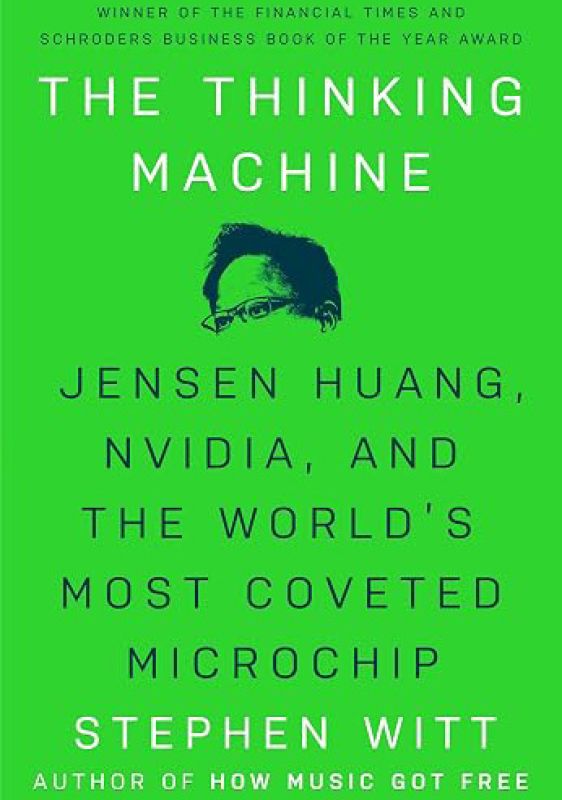
The Thinking Machine: Jensen Huang, Nvidia, and the World’s Most Coveted Microchip by Stephen Witt
In June 2024, 31 years after its founding in a Denny’s restaurant, Nvidia became the most valuable corporation on Earth. The Thinking Machine is the astonishing story of how a designer of video game equipment conquered the market for AI hardware and, in the process, reinvented the computer.
Essential to Nvidia’s meteoric success is its visionary CEO Jensen Huang, who, more than a decade ago, on the basis of a few promising scientific results, bet his entire company on AI.
Through unprecedented access to Huang, his friends, his investors and his employees, Witt documents for the first time the company’s epic rise and its single-minded and ferocious leader, now one of Silicon Valley’s most influential figures.
The Thinking Machine is the story of how Nvidia evolved into a supplier of hundred-million-dollar supercomputers. It is the story of a determined entrepreneur who defied Wall Street to push his radical vision for computing, becoming one of the wealthiest men alive. It is the story of a revolution in computer architecture and the small group of renegade engineers who made it happen.
And, it is the story of our awesome and terrifying AI future, which Huang has billed as the “next industrial revolution”, as a new kind of microchip unlocks hyper-realistic avatars, autonomous robots, self-driving cars and new movies, art and books generated on command.
This is the story of the company that is inventing the future. — Amazon

PICTURE OF THE WEEK
An unmanned firefighting aircraft developed by Chinese aircraft maker EHang designed to tackle fires in high-rise buildings on display at the Nanchang Aviation Industry Expo in Jiangxi, China, on Oct 31. The event showcased aviation technologies and products from industry participants, including aircraft manufacturer Commercial Aircraft Corp of China Ltd. — Reuters

EDITOR’S MUST-HAVES
Antigravity adds tracking accessories and dual-stick controls for A1
Antigravity has introduced a Follow Me Bundle and a conventional remote controller for its A1 drone, adding ways to track subjects and control aerial footage captured in 8K 360 degrees.
The A1 is a drone with an integrated 360-degree camera that captures footage in 8K resolution, allowing users to record every angle during flight. The Follow Me system combines visual tracking with satellite positioning from the Watch Remote to follow subjects during movement.
The Watch Remote and Ring Remote provide access to flight commands, including Drag-to-fly, which lets users guide the drone and adjust its position during filming. The Ring Remote also supports hand gestures, while full-coverage propeller guards are included to protect the drone’s propellers.
For users who prefer familiar controls, the separate Remote Controller provides a dual-stick layout, alongside Fixed View and Virtual Gimbal functions for camera perspectives and manoeuvres such as Tail Whip shots.
The Follow Me Bundle starts at RM2,799 and includes a crossbody bag and a high-capacity battery, while the Follow Me Accessories Kit costs RM1,499.
The Remote Controller costs RM379 on its own, or RM7,499 in a bundle comprising the A1, Vision Goggles, controller, three high-capacity flight batteries, a quick reader, eight spare propellers and a sling bag.
The products are available through Insta360’s physical store in Malaysia and its official stores on Shopee, Lazada and TikTok Shop.
Save by subscribing to us for your print and/or digital copy.
P/S: The Edge is also available on Apple's App Store and Android's Google Play.