


(Nov 5): After languishing for much of the year, Hong Kong stocks are staging a comeback as investors rotate away from hardware stocks into discounted Chinese internet platforms.
The Hang Seng Tech Index climbed 5.6% on Thursday, the most since February 2025. The broader benchmark Hang Seng Index jumped 3.7%, with Alibaba Group Holding Ltd and Tencent Holdings Ltd among the biggest drivers behind the advance.
China’s beaten-down internet giants have emerged as a key beneficiary from the US midterm election fallout, as investors pivot away from the artificial intelligence (AI) trade and into value and consumer shares. Alibaba and Tencent offer low valuations with sprawling businesses that touch almost every corner of daily life. Beijing’s renewed efforts to restore investor confidence are also helping the rebound.
Hong Kong stocks are benefitting from several rotation trends in Asia, said Marvin Chen, a strategist at Bloomberg Intelligence. “A North Asia regional rotation into China as Korea and Taiwan come under pressure; a value rotation as China has been stuck at trough valuations this year while the rest of the world rallied; and an AI rotation as investors diversify away from tech hardware and pure AI plays,” he added.
The rebound follows a tough stretch for Hong Kong equities, which remains one of the worst-performing markets globally this year. The Hang Seng Tech Index had come close to erasing all its gains since China’s 2024 stimulus pivot, underscoring the extent of investor scepticism.
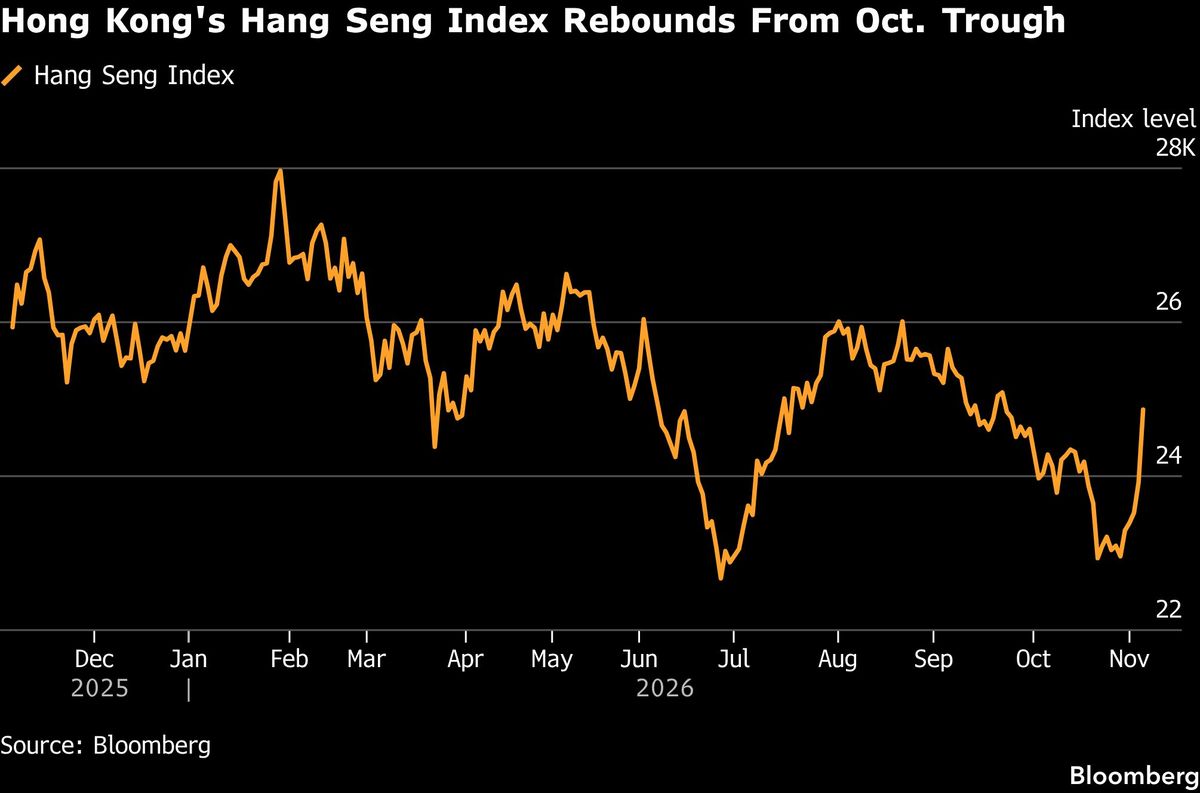
Some investors are trying to do “bottom fishing” as Hong Kong names have become very cheap, said Leonid Mironov, a portfolio manager at Gavekal Capital.
Alibaba and Tencent each rose more than 7%, while food delivery firm Meituan added 6.8%. The Hang Seng Tech gauge traded at 13 times forward earnings estimate last month, the lowest since 2024.
The cost of hedging against declines fell across Hong Kong indices, with that on the Hang Seng Tech Index reaching its lowest level since July, according to three-month implied volatility data. The number of options traded on the Tracker Fund of Hong Kong jumped to a one-year high as bullish bets dominated.
Short cover
The US elections turned out to be a “mean reversion event both for US politics and the Hong Kong markets”, said Hao Hong, the chief investment officer of hedge fund Lotus Asset Management. “Too much selling in Hong Kong names that have been severely oversold and under extreme pessimism now gives rise to one of the biggest short squeezes in recent years,” he said.
Hong Kong’s turnover in short positions reached 32% of the market’s total on Tuesday, the highest in over three years, according to Bloomberg calculations based on exchange data.
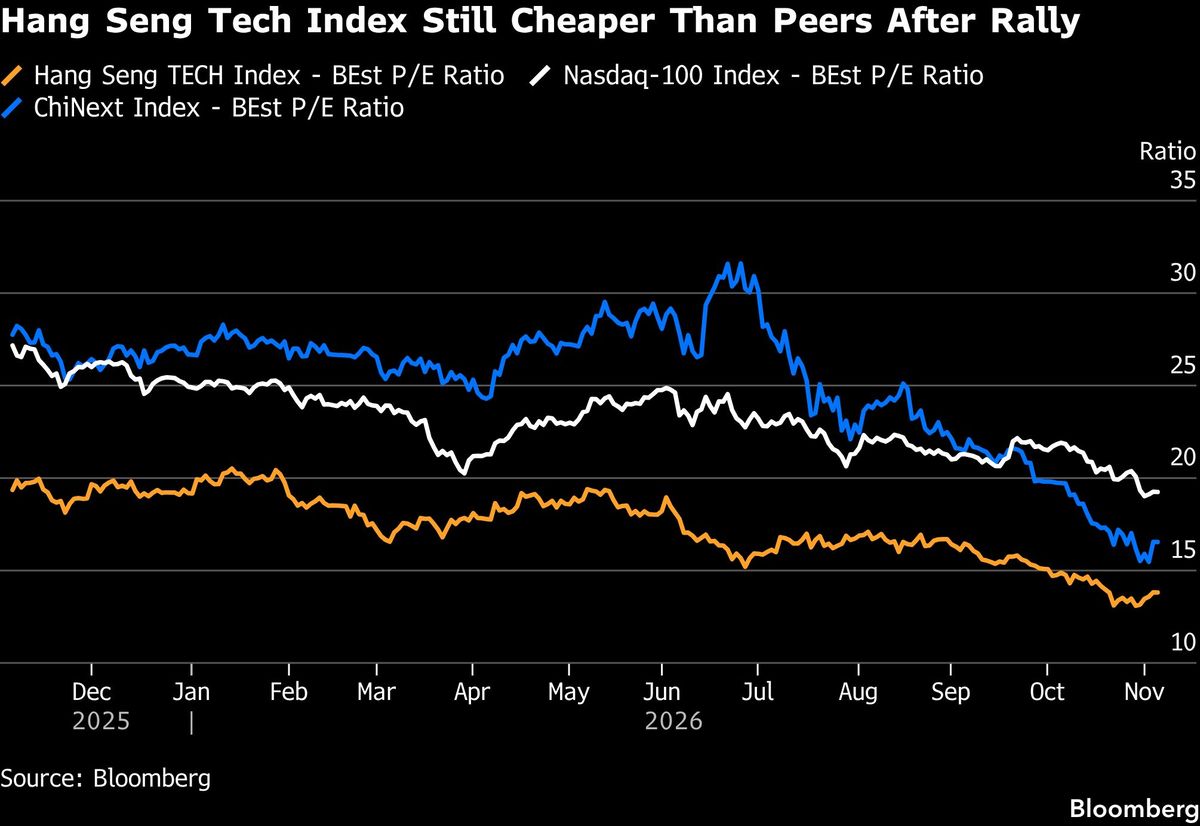
Stocks in the financial hub largely sat out the global AI rally this year, as the market is heavily skewed towards stocks that rely on China’s domestic demand. Intense competition at home also hurt margins and profit.
Despite Thursday’s gains, the market still has some way to go to dispel scepticism that the rally can last beyond a short-term bounce. Another test will be whether mainland investors can continue to return in meaningful ways. After snapping up Hong Kong stocks via trading links on Tuesday, onshore traders resumed selling in the following sessions.
For now, there is growing recognition that bearish positioning in Hong Kong had become too extreme, and that the rebound could extend beyond a technical rally, Hong added.
“It is time to correct the over-pessimistic views and get back to business,” he said.
Uploaded by Tham Yek Lee