

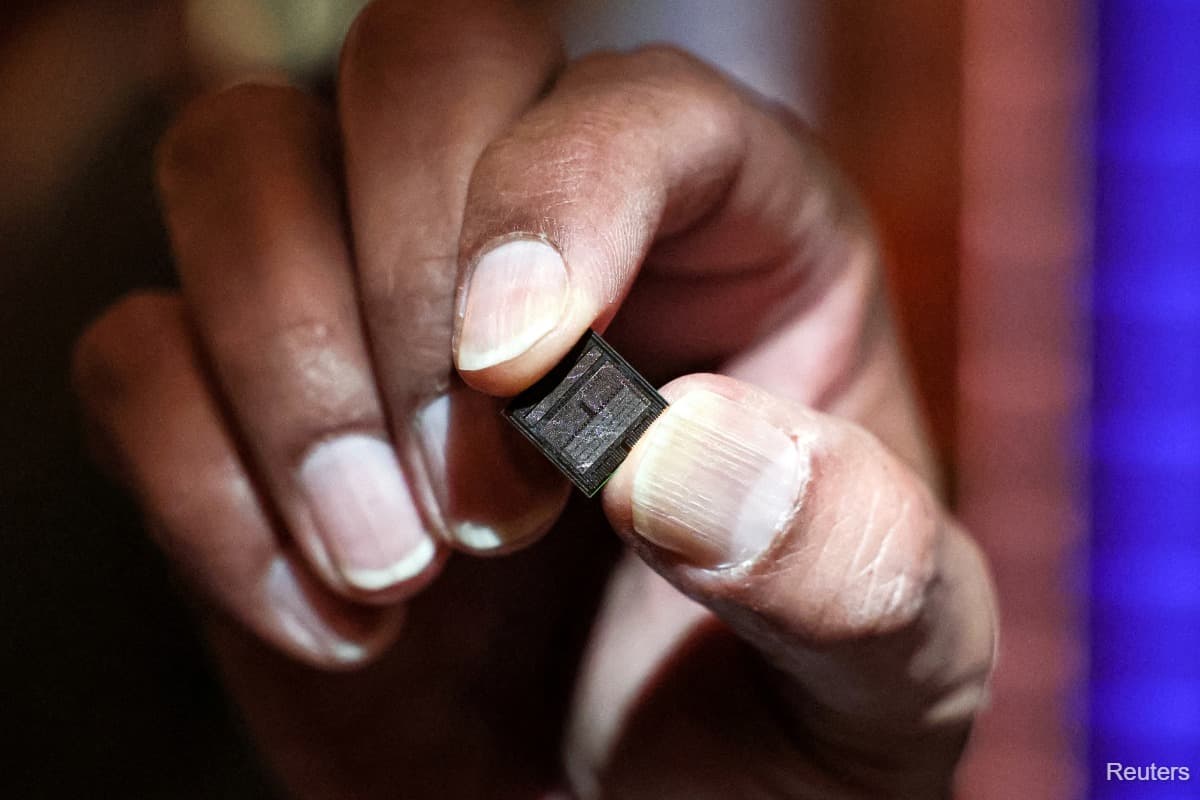
(Nov 5): Micron Technology Inc has suspended plans for a memory chip plant in Taiwan due to a protracted labour dispute, according to people familiar with the matter, throwing into question the fate of a major production base for crucial artificial intelligence (AI) components.
The US company has all but halted construction of a plant in the northern Taiwanese city of Taoyuan, said the people, who asked not to be identified because the deliberations are private. Executives are concerned about mounting uncertainties, including the risk that an agreement with a local labour union will get overturned. Micron has informed Taiwanese officials and a supplier about its plans to suspend construction in the city, the people said.
Tensions between Micron and its workers flared this year after employees demanded higher compensation, seeking more of the record profits generated from the AI build-out. The potential disruption to Micron’s plans in Taiwan — an island that produces three-fifths of the US firm’s conventional chips — threatens to further cloud a market already grappling with endemic shortages of memory.
Micron — which has invested close to US$50 billion (RM202 billion) in Taiwan over three decades — had planned on making high-bandwidth memory and DRAM at the new Taoyuan plant using top-end equipment from ASML Holding NV. While it isn’t considered a giant facility by modern standards, those components are intertwined with Nvidia Corp accelerators and the global AI data centre boom, and in such short supply that prices are skyrocketing.
“Taiwan plays an important role in Micron’s global footprint, and our operations today continue as normal,” Micron said in a statement, without addressing questions about the Taoyuan complex. “We are confident in maintaining business continuity for our customers.”
Micron secured a deal with the bigger of its two unions in October, but the company may need to renegotiate because some employees are balking at the terms, according to the people.
The suspension raises the possibility Micron will reconsider plans for its broader manufacturing hub in Taiwan, which helps it compete with South Korea’s Samsung Electronics Co and SK Hynix Inc, and China’s CXMT Corp.
Micron had budgeted US$3 billion to US$4.5 billion towards the Taoyuan complex, which included purchases of ASML gear, one of the people said. There’s still some minor work being done on the site to ensure its safety, but construction will freeze after that, the people added. Dubbed Fab 11E, it was previously scheduled to come online in 2028.
Micron is Taiwan’s largest foreign investor, and it would be a major blow to the island if the company scaled back there.
Taiwan’s economy and stock market have gotten a boost from the AI boom, with the likes of Taiwan Semiconductor Manufacturing Co (TSMC) building plants at an unprecedented pace. Yet its viability as a long-term investment destination is at risk from potential Chinese military intervention.
Even as Micron considers slowing down in Taiwan, it’s racing to ready factories elsewhere. It’s committed to investing US$250 billion in US manufacturing, including in New York state. It has also been expanding in Japan and Singapore.
Taiwan’s Ministry of Economic Affairs didn’t comment on Micron’s move to pause some expansion, but said the government was helping the company implement investment plans.
“The government supports the legal agreement the company has reached with the union, and will shoulder and share responsibilities with the local government to help resolve the differences and create a win-win outcome,” the ministry said in a statement to Bloomberg News. The Taoyuan government said it hasn’t been notified of a suspension, though it’s hoping Micron and its employees can reach a consensus.
The Taoyuan plant isn’t the largest for Micron in Taiwan. But it’s a showpiece project for a US company with an outsized local presence.
Taiwan currently accounts for 60% of Micron’s global output of DRAM or dynamic random access chips, the common form of memory used in computers and phones. The area also produces a big chunk of its high-bandwidth memory or HBM, which is used in AI systems.
The island is Micron’s largest site in terms of personnel, with 15,000 employees or about a quarter of the company’s total. The Taoyuan union represents fewer than 3,000, with the bulk of the remainder joining the far larger Taichung body.
The Taoyuan group has demanded Micron distribute 15% of its operating profit to global employees, because Samsung and SK Hynix have adopted similar measures. Union chair Jerry Lin said the employees also want all-cash incentives, rather than partially in stock.
The union is now trying to form a bigger group by recruiting members from the Taichung body — to help try and annul the existing pact. It will then demand Micron restart negotiations, Lin said.
While Micron hasn’t disclosed terms of the standing deal, Taiwan’s Ministry of Economic Affairs said the agreement would lift junior engineers’ annual packages by more than two-fold to NT$4 million (US$121,450 or RM491,528), on average. Senior engineers would get a three-fold bump to NT$6 million. The mean annual pay for an engineer at listed local semiconductor firms was NT$2.58 million in 2025, according to employment site 104 Job Bank.
Micron felt confident the agreement reached with the larger union was legally binding, according to a person familiar with the matter. Taichung union chair Mark Hsu also acknowledged its legality, but said he respected the move by its smaller peer to form a bigger organisation.
Talks with the Taoyuan union are ongoing. “We look forward to reaching an agreement,” Micron said.
Uploaded by Tham Yek Lee