

This article first appeared in The Edge Malaysia Weekly on November 2, 2026 - November 8, 2026
SD Guthrie Bhd (KL:SDG) president and group CEO Mohd Haris Mohd Arshad is building on the foundation laid by his predecessor, Datuk Mohamad Helmy Othman Basha, who led the group’s expansion into new business segments. Given his background as a trader, Mohd Haris is now overseeing the addition of another segment — midstream operations. The following is an excerpt from his recent interview with The Edge.
The Edge: Will you be continuing with what has been laid out? The group has gone through some changes, your new businesses — these verticals. Will you be continuing on that journey?
Mohd Haris Mohd Arshad: Yes, what we have are three verticals, and I call it four now. We have upstream, industrial development, and downstream has now been broken up into two — midstream and downstream. So, upstream, midstream, downstream, industrial development and renewable energy (RE).
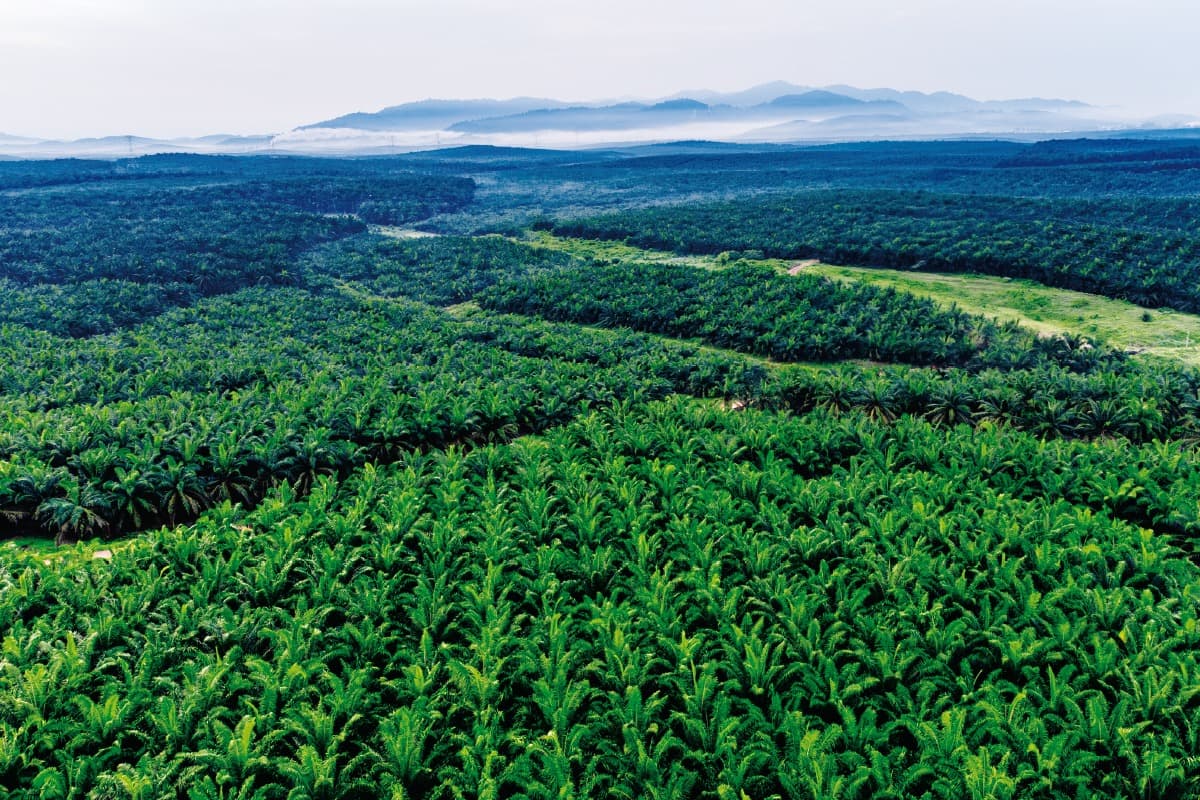
Upstream is core, that's business as usual. We will continue to double down on improving yield, productivity and looking at managing costs. Because spending on new land is impossible, and investment in new plantations is not cheap. So, the cheapest route is to look at increasing productivity. How we do that is to ensure that we have enough labour in Malaysia — we go for mechanisation, we look at cost mitigation through digitalisation, precision agriculture and the like.
Vertical No 2 is industrial development and RE. The good thing is we roughly have a view as to what the master plan is for the country. And then when you overlay our land with that master plan, you will find that it sits right along all of our land bank, from the north to the south. So, the question is knowing what that blueprint looks like for the country and the development agenda that the government has; what is our play there? So, we will look at partnering with the state, with other reputable companies to develop this land that we've identified. Within industrial development and RE, currently, the business model is to look at partnerships where we will not be driving those projects, but we want people with expertise to help drive that for us. So, we are a significant minority. Over time, phase two, there could be a different picture, but for now that’s what we’re looking at. Just a significant minority to begin with.
Midstream is basically a unit that doesn’t necessarily have assets. Its core assets are people and connectivity. It connects upstream, all of our own production, to the refineries that now sit in downstream. So, it becomes an orchestrator or supply chain orchestrator to ensure that everything that we produce in upstream gets channelled into the best market or the best inlet or outlet, whether it’s downstream or selling to a third party. In addition to that, midstream is also supposed to grow its trading volume.
Then downstream is our bread and butter, where we process our oil into products. We have a footprint in Malaysia, Europe and South Africa. We are building a new refinery in Indonesia now.
You are an agribusiness group but, more and more, you’re venturing into the development of industrial parks although you’re not the main driver, and you still need the land for your upstream and you can’t buy new land (because of scarcity). How do you make that decision — do I sell, doesn’t that go against what I’m supposed to be doing, to grow my production of palm oil?
Absolutely, you asked the right question. What do we want to become? Industrial development didn’t start from saying, ‘Hey, let’s do this.’ People have been coming to us and saying, ‘I want this land, that land, this land.’ [The] government could come in, the state could come in, and then go for compulsory land acquisition. So, we have two choices — either sit back and say, ‘Okay, just take our land; we’re going to sell it to you at agricultural value, and I'm just going to be focusing on my plantation.’ And what I said earlier, we have insight into what the development plans are for the country.
So, as CEO, I will not be doing justice to the company if I sit back and say, ‘Just take this land; you go and develop it.’ Initially, it was coming up from a defensive play where we said, ‘Okay, no, no, no, don't take my land; let me JV (joint-venture) with you.’ Now, what we’re saying, ‘Let’s be a bit on the offensive. And I’m saying this to you now: If you want to come and work on our land, I’m going to have a stake in it. I will not be selling land to you anymore.’ Unless there’s a specific strategic land acquisition that the government needs to do. Because we are not against development. We will work alongside the government for development. But do not think that you can just buy my land and go away with it.
Being a significant minority means we will also work together to drive it. [It] doesn’t mean we are moving away from being an agribusiness or plantation company into property development. Not at all — let me give you a perspective. We own 600,000ha of land across the group. What we’ve identified is not even 10% of our total land bank. What we’ve identified there is good to last us for at least 30 years. So, we will never move away from being a plantation company, but the land that we’ve identified is aligned with what Malaysia’s development plan is. It’s quite strategic; it’s not taking all of our land and monetising it into industrial development. So, agribusiness first and foremost, and industrial development where it makes strategic sense.
There are two parts to the plan. One is to make sure that I truly monetise the value for Guthrie and, two, to ensure that I support the government’s agenda in Malaysia.
Yields have risen, improved slightly between 2024 and 2025. You said your base is 2021. How do you get to that level? What you’re doing now, is it working?
Okay, 2021 baseline to 2029, the ambition is to give us one extra tonne of combined oil, of palm oil, palm kernel oil. The things that we do in Malaysia versus Indonesia versus Papua New Guinea (PNG) are quite different. Let me explain.
We are where we are right now in Malaysia mostly because of Covid-19. We lost workers and we had to rehabilitate. It took us more than three years to fully rehabilitate. So, for 2021, 2022, 2023, we were doing a lot of rehabilitation work, and 2024, 2025, we started to see the results.
What’s happening in action right now? Mechanisation clearly helps, but it’s also about ensuring that we have the right amount of manpower. And we have that now, which is why we’re now seeing yield coming up.
In Indonesia, our numbers were going down and that was deliberate. They went down because we went on an aggressive replanting scheme … We have been replanting at a rate of over 5%. In fact, we’re going at 6% and, in some cases, we even went up to 7% … because in 2020, 2021, our trees were ageing. So, if we do not go for extra replanting, we can never get to the right age profile that we need for Indonesia. That aggressive replanting resulted in a lot of trees being chopped down and, therefore, our production actually went down. I’m happy to say that, right now, our aggressive replanting is done. We are going back down to 4%, which is the normal replanting rate. As a result, our age profile is now at the right level — about 12 years. This will then give us the growth in yield, as our new replanted area is now maturing.
Now, in PNG, we’re seeing new areas maturing, giving us 30, 35 tonnes of yield and that’s helping us achieve our numbers, that’s No 1. No 2, we are also doing some replanting in PNG, and that will have to improve our yield as well.
So, replanting is critical in PNG. The replanting is done in Indonesia; so, we now need to maintain that. In Malaysia, we now have enough manpower and mechanisation. So,mechanisation is a Malaysia-centric play. Whereas in Indonesia and PNG, we do some, but not as much as Malaysia because labour cost is still relatively cheaper in those two countries. So, we’re focusing only on Malaysia for mechanisation.
Let’s go to the effects of the Iran-US war, high fertiliser costs as well as diesel. How are you managing that? On the other side of it, CPO prices have risen. Biodiesel demand, with the B20, is supportive of prices.
Not just Guthrie, but also our peers … It’s very, very challenging. Yes, the immediate impact is high prices and so on. But the issue right now is that fertiliser prices have gone up … For this year, we’re actually okay because we covered it very early on. Next year, we expect fertiliser costs to go up … We’re probably going to see a 15%-to-20% increase. The biggest problem for me right now is the supply chain. Now, I need to ship my oil today so that my customer can receive it in 14 days or 30 days. We’ve had issues with vessels not turning up, vessels not being available because they have been used to store crude oil. Freight prices have gone up. Logistics become critical and, over time, this becomes a problem for the producers because you’re not able to move your oil, your products from Malaysia to the destination market. Malaysia is dependent on exports when it comes to palm oil, and part of the reason the inventory now is really high is precisely because of the difficulty in moving our oil out. That’s not the only issue, but it’s one of them. And also because of the fact that as palm oil supply becomes somewhat unreliable, customers are looking at other options. So, the impact is through this disruption in the supply of energy, higher prices of energy resulting in high freight, being export dependent, that has an impact on us.
So, your margins will be compressed or you’re still fine because prices are also rising?
Yeah, so that one sort of compensates the other. But I’d rather that you have a price that’s not too high, or it will kill off demand. If you see palm oil prices rise to RM6,000, you have to be very careful there because soybean oil is becoming far more competitive. And the Indian customers will happily switch from palm oil to soybean oil.
Do you expect more volatility for commodities in the future?
Very much so. We were quite fortunate this year because we had some forward sales done. If you recall, the price went up to RM5,000, and it stayed there for a while. Now it's coming back down to between RM4,600 and RM4,700. So, we did a lot of hedging at the time.
That allowed upstream to log in some favourable prices through this trading desk. Similarly, what we see downstream is customers may want to buy when they are a bit worried prices are going to go up. So, without a trading desk, my downstream team may not be able to make your forward pricing. So, this enables us to manage volatility, both from an upstream standpoint and from a customer standpoint.
With the demand from government policy in Malaysia and Indonesia, how many biodiesel plants do you have? Are you going to increase your capacity for producing biodiesel?
We have only one plant, which is in Malaysia, and that is originally to supply the domestic market, our B10, and in fact it’s supposed to be B20, and also some export. The biggest palm biodiesel consumer is, of course, Indonesia. It consumes about 14 million tonnes of palm oil for biodiesel today. We have no facilities in Indonesia and it’s a choice that we made. Part of it has to do with the fact that to have a biodiesel plant, you need to have a supply contract with Pertamina. Yes, you can get that. But the thing about biodiesel in Indonesia is it’s a cash play. In other words, you have to have a big enough wallet to make the play because your payment term is very long. So, we are in the business where if I sell today, I get paid in 14 days, 30 days or, at most, 90 days, with some of my FMCG (fast-moving consumer goods ) customers. But when you talk about getting paid in six months or nine months, that’s not the kind of business we’re in. It’s a choice.
How has El Niño affected your crops?
It hasn’t had much of an impact this year and that’s because the fruit set began 12 to 16 months ago. What you see right now will have an impact in 2027 and early 2028. So, our view is that Indonesia is probably going to suffer the most out of the three countries in which we operate. Malaysia is probably going to suffer the least, and we worry about PNG, as in some of our operations we are seeing forest fires for the first time ever. That shows you the scale of the El Niño that we're facing right now. They say it’s the ‘Godzilla El Niño’; I think that’s not a wrong representation.
You joined the group in downstream, and you were pivotal in growing the segment. Coupled with your experience at Cargill and Unilever, what perspectives do you bring to the table as president and CEO? And is that why you have this midstream segment coming up?
In a way, yes. I started off my career as a trader. When I was at Unilever and Nestlé, one of my tasks was to help build their trading capabilities, particularly at Unilever. But that’s just a skill set that got me into Sime Darby Plantation. But when you talk about the perspectives that I bring, perhaps [it’s] sort of these ways of working that make FMCG customers and multinationals enduring and strong.
What do I mean by that? At the heart of it is the fact that if you are working for us, generally, there are certain things that we expect. And the first thing is we expect accountability. We expect you to be agile, to have a bias for action and to accept responsibility. So, there’s accountability, responsibility. I was brought up in that sort of environment. What do I mean by that? I’m here to deliver a certain mandate; I must deliver. At multinationals, if you don’t, you’re out. I’m not saying that we should do this in the context of Malaysia, but I do want to remove this perception that if you come and work for Guthrie, you are working in an environment in which we have this tidak apa attitude; that we accept mediocrity. That’s not who we are in Guthrie.
On the RE side, there was a term sheet between your JV with Gamuda Bhd (KL:GAMUDA) and Gentari Renewables Sdn Bhd with a US-based company to power its data centres in Malaysia. Is this a sign of a big pivot where you’re doubling down on RE?
No, not at all. I think, going forward, it’s all part of industrial development, really. So, when there’s an opportunity for us to learn and grow in RE, we will do that. But, ideally, our renewable energy has to be tied to our industrial development. Because, oftentimes, when you build industrial development, industrial parks or data centres, the biggest resources they are looking for are water and energy. If you can provide green energy, even better. So, our RE strategy has to be tied to our industrial development strategy and not to be a standalone IPP (independent power producer), if you like. That’s not the idea.
Save by subscribing to us for your print and/or digital copy.
P/S: The Edge is also available on Apple's App Store and Android's Google Play.