


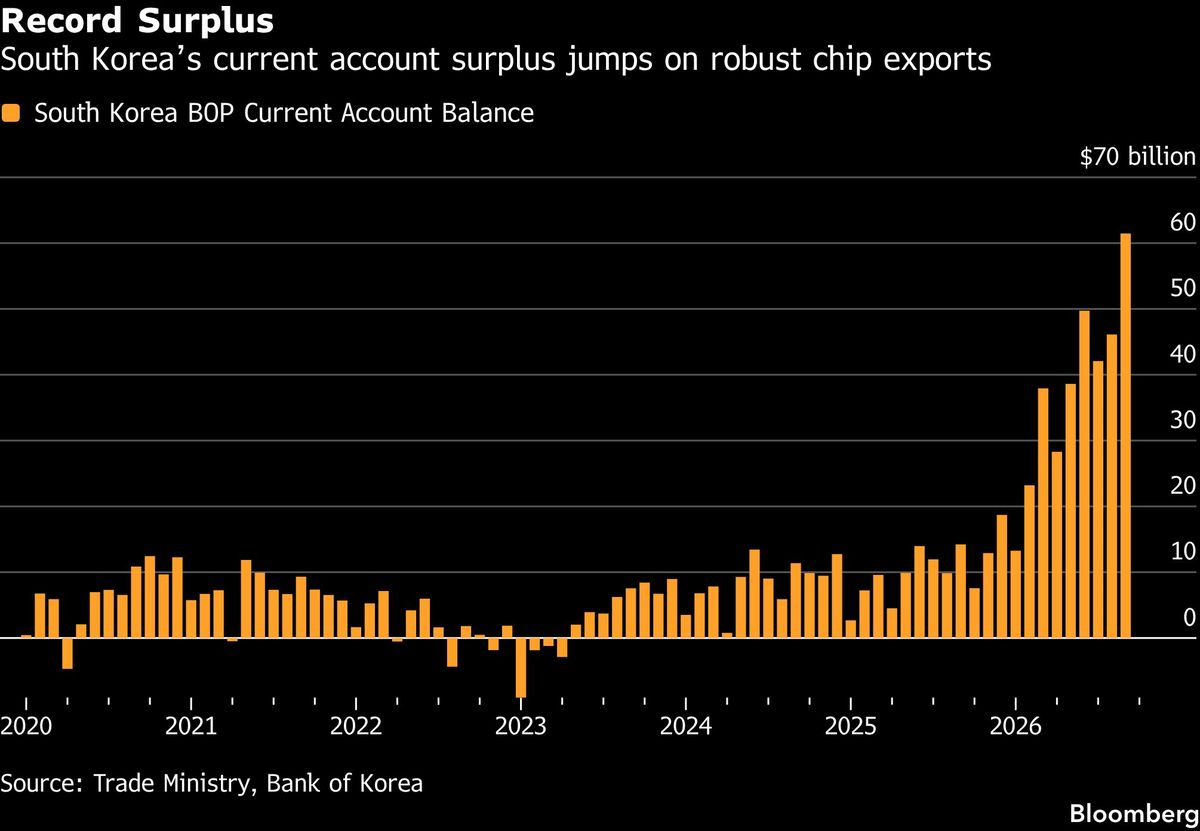
(Nov 5): South Korea’s current-account surplus jumped to a record in September, fuelled by booming semiconductor exports as global investment in artificial intelligence continues to stoke demand for the country’s technology products.
The current-account surplus widened to US$61.5 billion from US$46.1 billion in August, according to Bank of Korea data released Thursday. The figure surpassed the previous record of US$49.7 billion set in June, marking the first time the monthly surplus exceeded US$60 billion, the bank said.
The record highlights how South Korea’s economy has become increasingly reliant on the global AI boom, with soaring demand for advanced memory chips powering exports, and helping drive growth. The strength of the external sector has offered a buffer against weakness in other parts of the economy, even as questions persist over how long the unprecedented pace of AI spending can be sustained.
Those doubts have grown louder after Democrats swept the US midterm elections, raising the prospect of tougher scrutiny of increasingly unpopular data-centre projects and potentially slowing the pace of the AI buildout.
The goods balance in September also reached an all-time high of US$62.8 billion, topping the previous peak of US$47.9 billion in June. Exports jumped 92.4% from a year earlier to US$130.7 billion, exceeding US$100 billion for a fourth consecutive month. Shipments of information-technology products surged about 196%, while non-IT exports rose 13.4%. Imports climbed 29.4%.
The financial account showed a net asset increase of US$54.3 billion. Koreans increased overseas direct investment by US$11.4 billion and securities holdings by US$16.6 billion. Foreign investors, meanwhile, sold a net US$13.7 billion of Korean stocks, led by major semiconductor shares, while Korean investors’ purchases of overseas bonds reached a record high.
South Korea’s central bank paused its tightening cycle in October after two consecutive rate hikes as policymakers weighed stronger-than-expected growth against persistent inflation pressures. The BOK has signalled that the economy is likely to expand considerably faster than previously projected, leaving open the possibility of further tightening. The BOK’s next rate-setting meeting is due on Nov 26.
Uploaded by Liza Shireen Koshy