

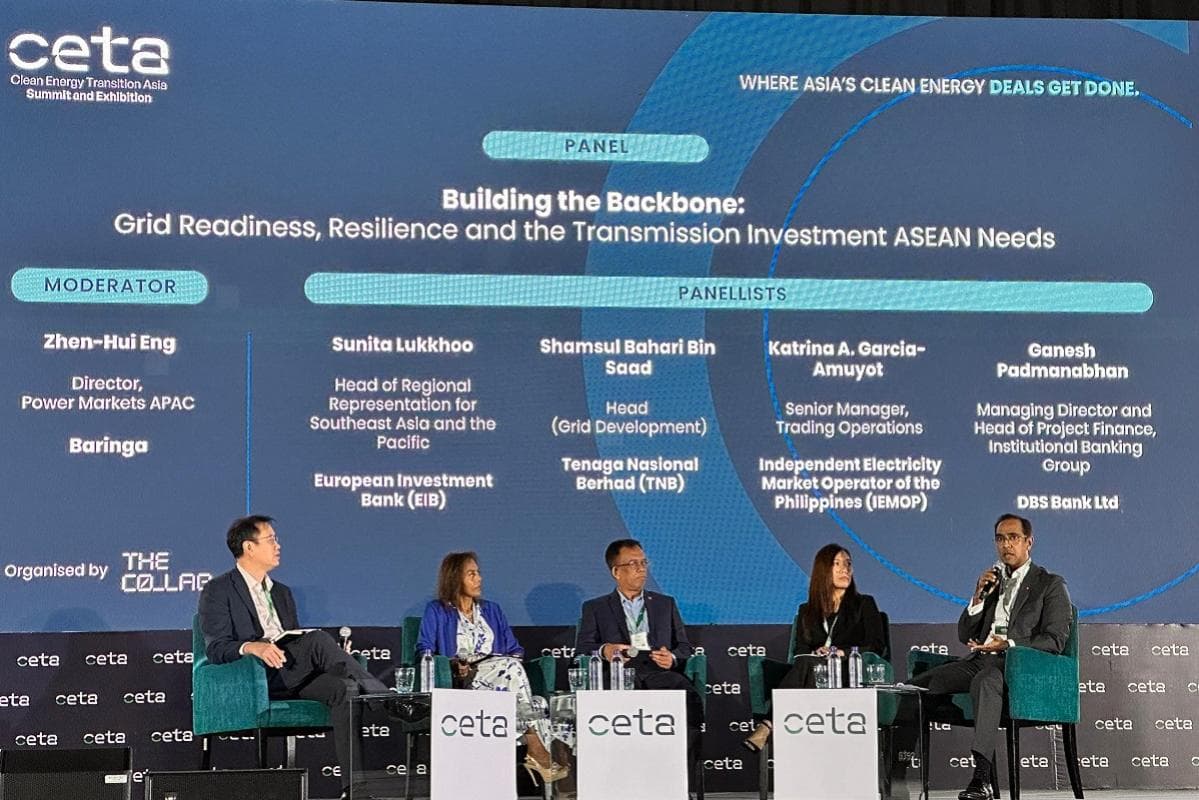
KUALA LUMPUR (Nov 4): Malaysia must strengthen its domestic electricity transmission network to ensure grid stability and support greater cross-border power connectivity under the Asean Power Grid (APG) initiative, said Tenaga Nasional Bhd (KL:TENAGA) (TNB) head of grid development Shamsul Bahari Saad.
“At the moment, we are strengthening our internal grid. We have completed our 500kV transmission line from the north to the south, and we are building another 500kV backbone from the east to the south,” he said during a panel discussion titled “Building the Backbone: Grid Readiness, Resilience and the Transmission Investment Asean Needs” at the Clean Energy Transition Asia 2026 summit, held at the Malaysia International Trade and Exhibition Centre (Mitec) on Wednesday.
“If we want to strengthen our interconnectivity with other countries, we should strengthen our internal grid first.”
As part of efforts to reinforce the National Grid, TNB commenced work on a new 500kV transmission line project in August to strengthen energy security and accommodate growing electricity demand.
The project, which includes the development of the 500kV transmission main intake substation (PMU) Kampung Awah in Maran, Pahang, will connect strategic locations along the east coast of Peninsular Malaysia.
Scheduled for completion by 2030, the National Grid Backbone will span approximately 500km, making it the country's longest 500kV transmission system, according to TNB's statement issued on Aug 28.
The infrastructure will strengthen electricity transmission capacity across Kelantan, Terengganu, Pahang, Negeri Sembilan and Johor.
The project forms part of TNB's broader grid modernisation efforts, with the utility planning RM43 billion in capital expenditure between 2025 and 2027 to improve the National Grid's reliability, resilience and capacity.
The investments are also intended to meet rising electricity demand from data centres, artificial intelligence (AI)-driven industries and other digital infrastructure, while supporting the country's energy transition.
Beyond domestic infrastructure development, TNB is working with neighbouring countries to advance cross-border electricity connectivity.
“At the moment, for us in TNB, we have also formed a joint working committee with Thailand and Singapore. [And] they are progressing well. We target to complete the study by the end of next year. At the same time, we are strengthening our internal grid too,” Shamsul said.