

(Nov 4): Saudi Arabia’s quarterly fiscal deficit more than doubled as the kingdom’s oil revenues tumbled on the back of disruptions from the US-Iran war and lower fees paid by state oil giant Aramco.
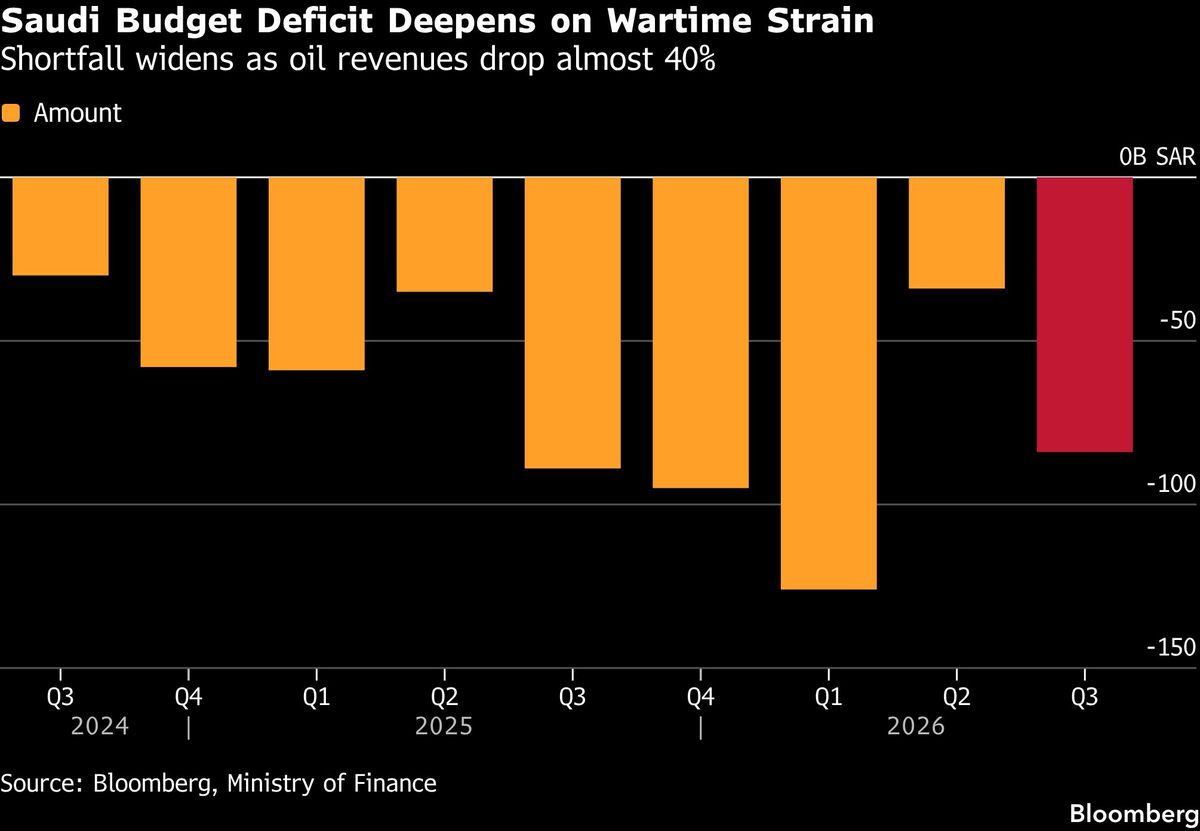
The government posted a budget shortfall of SAR84 billion (RM90.77 billion) in the third quarter, up about 145% from the prior period, according to a statement from the Finance Ministry on Tuesday.
Oil receipts fell almost 40% from the prior quarter to about SAR116 billion, the lowest level since 2020. Non-oil revenues fell around 7%, while overall spending dipped by 8%.
Economists including Monica Malik at Abu Dhabi Commercial Bank and Tim Callen of the Arab Gulf States Institute said changes in government payments from Aramco help explain some of the drop in oil revenue.
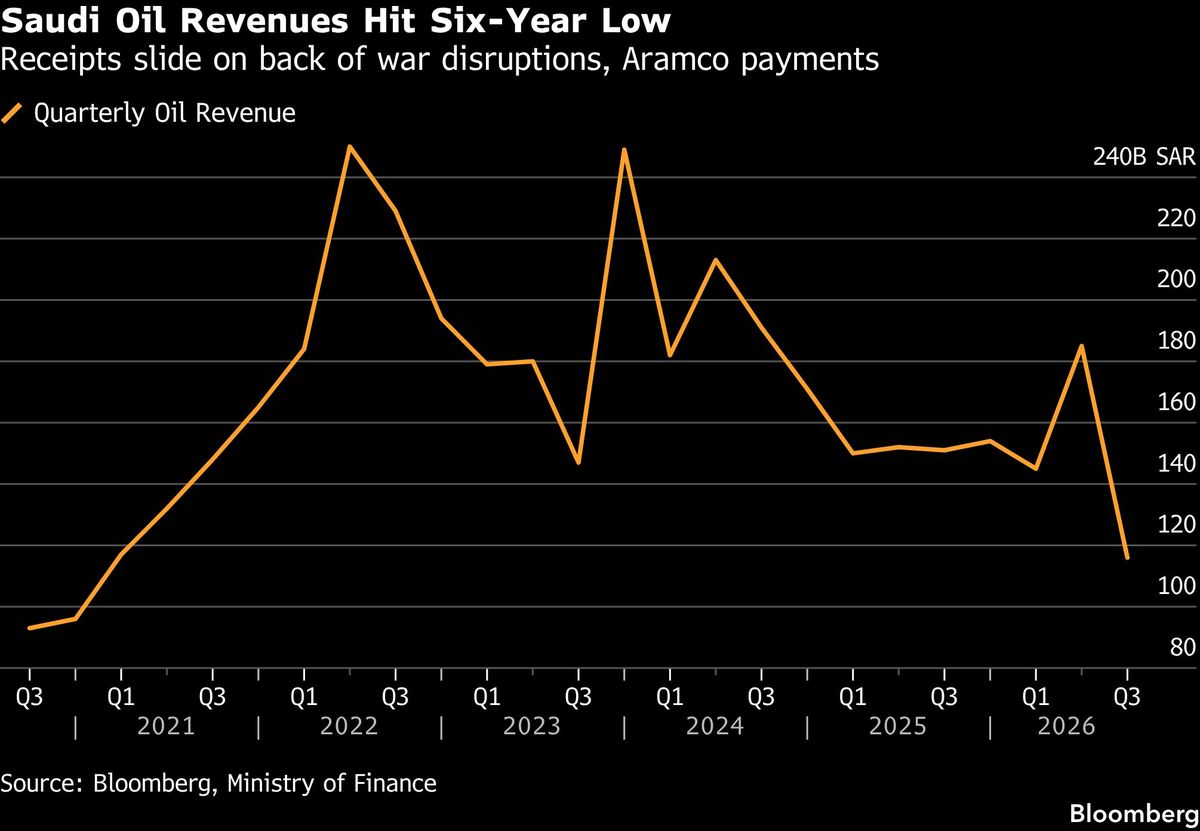
Aramco, in which the government is the top shareholder, pays less in royalty fees when average realised oil prices are lower, as they were in the third quarter, Callen said. Income tax factors also resulted in lower fees.
The higher deficit underscores the fiscal strain Saudi Arabia is under as conflict in the Middle East disrupts exports of crude oil — the kingdom’s biggest single source of earnings — and drives elevated wartime spending. It also dovetails with an economic contraction of 3.8% over the same time period, mostly due to depressed oil activities.
The US-Iran war, which broke out on Feb 28 and is at risk of flaring up in coming weeks, has threatened Saudi infrastructure, disrupted oil output and effectively closed the Strait of Hormuz, the Persian Gulf chokepoint through which most pre-war oil exports flowed.
The world’s largest oil exporter has managed to offset some of the impact of the war by using a backup pipeline to move crude to the Red Sea port of Yanbu. It’s now exporting crude at some of the highest levels of the war and is benefiting from higher oil prices.
Brent crude in London last closed around US$104 a barrel.
Callen, a former International Monetary Fund mission chief for Saudi Arabia, expects oil revenues to “rebound strongly” in the fourth quarter, in part because of stronger crude prices and higher Aramco royalties.
He sees Saudi Arabia’s 2026 fiscal deficit at around 6% of gross domestic product, higher than the government forecast for 4.9%. ADCB’s Malik predicts a shortfall of 5.6% of GDP.
“The oil revenue surprised to the downside in the third quarter, given the oil market fundamentals, though [it] is in line with the Aramco payments to the government,” Malik said. “This places risks to a wider deficit than we are currently forecasting.”
Should Saudi oil exports continue and Brent stay near the US$105 level, the kingdom stands to make an additional US$8 billion (RM32.53 billion) in oil revenue across October and November, according to Mohamed Abu Basha, head of macroeconomic analysis at investment bank EFG Hermes.
At the same time, the kingdom has increased its forecast for spending amid expectations it will need to direct more money to defence and infrastructure to support the economy.
Expenditure needs may only have increased since the end of the third quarter as Saudi Arabia has faced escalating threats from the Iran-backed Houthi rebels in Yemen.
In October, they stepped up attacks on the capital, Riyadh, killing more than a dozen people, curbing air travel and delaying major showpiece events.
The International Monetary Fund has said Saudi Arabia’s fiscal buffers and backup oil-export facilities are helping curb damage to the economy. It still sees the kingdom as better placed than its Gulf peers to ride out the upheaval.
Saudi Arabia said it plans to continue borrowing in public and private markets to plug its fiscal deficit and said it remains flexible in its ability to adjust spending to face economic and geopolitical changes.
Uploaded by Arion Yeow