

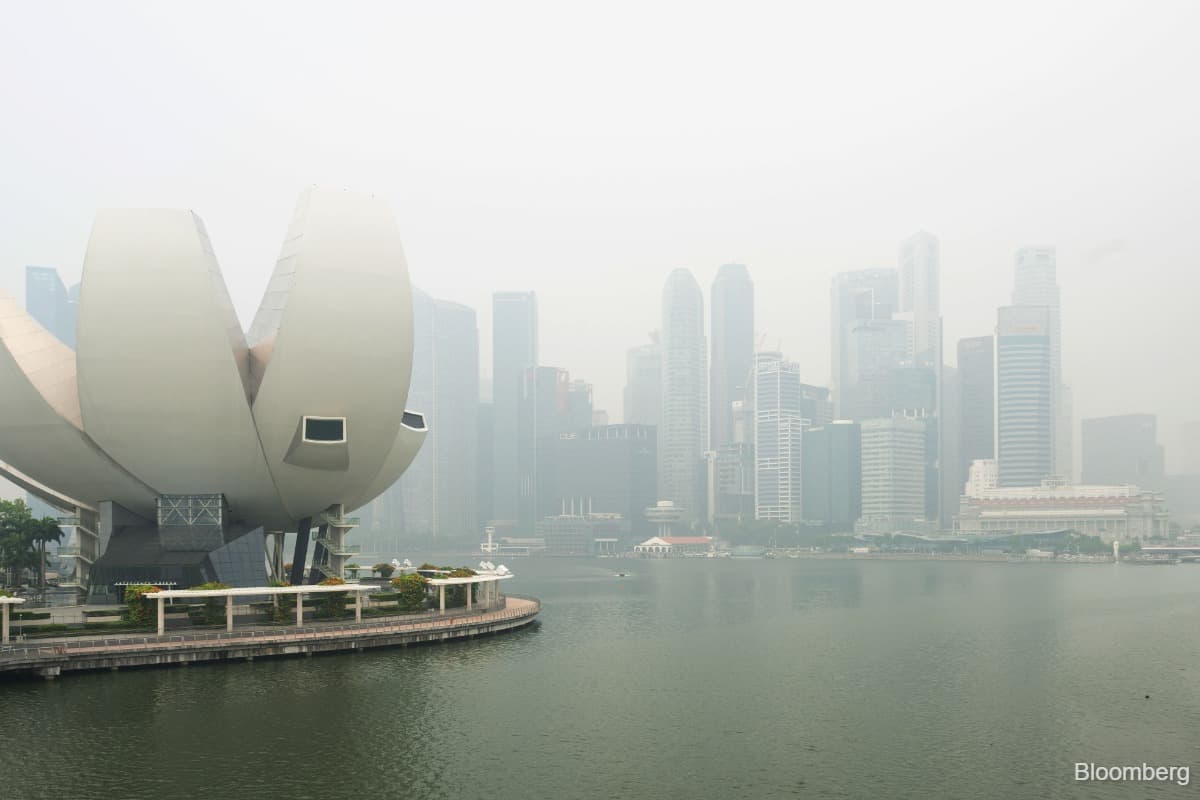
(Nov 4): Singapore’s government has proposed amendments to toughen its law on cross-border haze, responding to a devastating wildfire season in Indonesia that cloaked the city-state in smog for weeks.
The country is seeking to bolster existing rules with measures including restrictions and fines for businesses dealing with entities or individuals suspected to have engaged in conduct leading to the blazes, Sustainability and Environment Minister Grace Fu said.
The changes would also allow for arrests in Singapore and would boost the maximum fines for causing or contributing to haze-related fires from S$100,000 (about US$78,000 or RM318,032) per day to S$1 million per day, with the cap increasing tenfold to S$20 million.
“Following the recent haze episode, it is clear that the status quo is not tenable,” Fu said in a Parliament session on Wednesday. “We need better ways to obtain and verify information, trace complex corporate relationships and impose meaningful consequences on errant entities, even where criminal prosecution proves difficult.”
Fires in Indonesia have spewed pollution across the region in recent months, sending air quality to “very unhealthy” levels at times in Singapore. The smog — which has also fuelled protests in Indonesia — has spread into Malaysia and the Philippines, closing schools and driving demand for air purifiers.
The enhanced legislation is Singapore’s latest effort to hold firms accountable for the seasonal fires, which are often linked to land clearing for agriculture. The issue has been worsened this year by a strong El Niño weather pattern that exacerbated and prolonged the dry season. Rains have recently picked up, improving air quality levels.
The latest amendments will allow for offences to be heard in court in the absence of an accused person, and expand the scope of the act to include conduct contributing to land and forest fires that pose a risk of haze pollution to Singapore — even before it reaches its shores.
“The punishments are not only monetary. The measures can be used to restrict and deny commercial activities and financing — effectively making the company a corporate pariah,” said Simon Tay, chairman of the Singapore Institute of International Affairs, an independent think tank. “There are nevertheless safeguards to ensure that prevention, proof and punishment will be administered justly in accordance with the rule of law.”
Singapore enacted its transboundary haze law in 2014, allowing the country to issue daily fines to polluting companies. The city-state tried to enforce that legislation during a severe haze episode in 2015, but conceded at the time it was having difficulty getting information from Indonesian authorities. Several cases remain under investigation.
The government recently stepped up efforts to pursue companies that may have contributed to this year’s pollution. The amendments would allow for greater ability to conduct such investigations.
The National Environment Agency has issued notices to a number of firms in Indonesia and separately sought information from 10 Singapore-registered palm oil and forestry companies, including Wilmar International Ltd, Golden Agri International Pte Ltd, and First Resources Ltd.
Senior government officials also met representatives of the Singapore-based companies issued notices by NEA, saying they would be expected to appoint independent assessors to examine their operations, supply chains and corporate relationships. Fu said last week the government would amend the haze law to give the framework legal force.
The number of hotspots detected in Indonesia in September and October were the highest since 2015, the forestry ministry’s SiPongi platform shows.
While advances in satellite imagery and modelling have improved authorities’ ability to trace smoke, Singapore still needs official information and records from host countries where the fires occur to pinpoint those responsible, Fu said in a parliament session on Tuesday.
She added that Singapore has offered firefighting and cloud-seeding assistance, while stressing that any support must be coordinated with Jakarta. Indonesia informed Singapore last month that it was able to handle the fires and didn’t require foreign assistance, she said.
“We don’t want to offer help when they don’t need or impose ourselves,” Fu said, adding that Singapore would continue discussions with Indonesian counterparts on how it could complement their efforts.
The two countries signed an environmental cooperation agreement in June that includes transboundary pollution, while Singapore is also working through Asean toward the region’s goal of being haze-free by 2030 as it prepares to chair the association next year.
Uploaded by Chng Shear Lane