

This article first appeared in Capital, The Edge Malaysia Weekly on November 2, 2026 - November 8, 2026
EXPORTERS and importers are unlikely to see relief from elevated shipping costs anytime soon, as global freight rates are expected to remain high amid rising crude oil prices and persistent geopolitical tensions in the Middle East.
The Drewry World Container Index showed spot freight rates surged 163% year on year to US$4,585 per 40ft container as at Oct 22, 2026.
Shipping companies see little sign of rates easing in the near term, with elevated freight costs expected to persist through the rest of this year and into 2027. The Russia-Ukraine war, attacks on vessels transiting the Strait of Hormuz and Houthi strikes on commercial shipping in the Red Sea continue to disrupt supply chains and cloud the outlook.
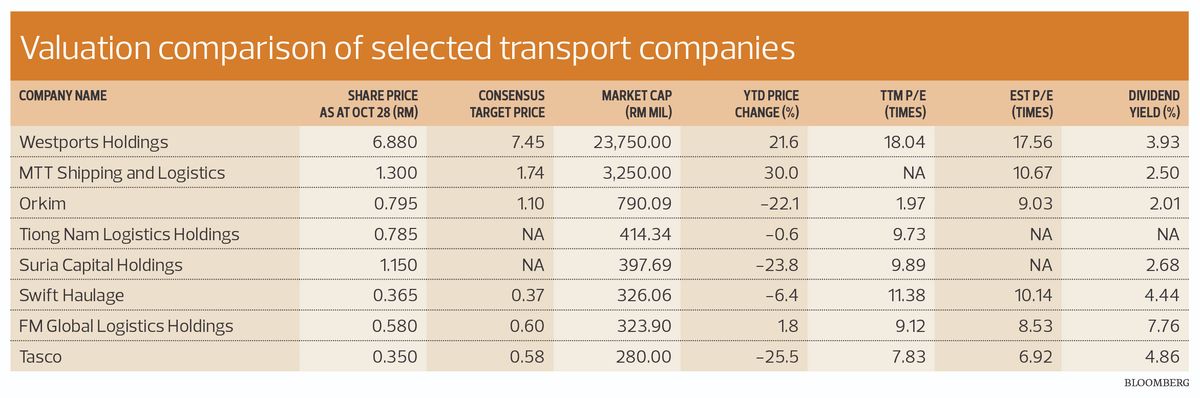
Against this backdrop, transport companies remain broadly optimistic about their operating performance, supported by resilient domestic consumption, investment and port activity. However, rising fuel, labour and compliance costs continue to weigh on margins across the sector.
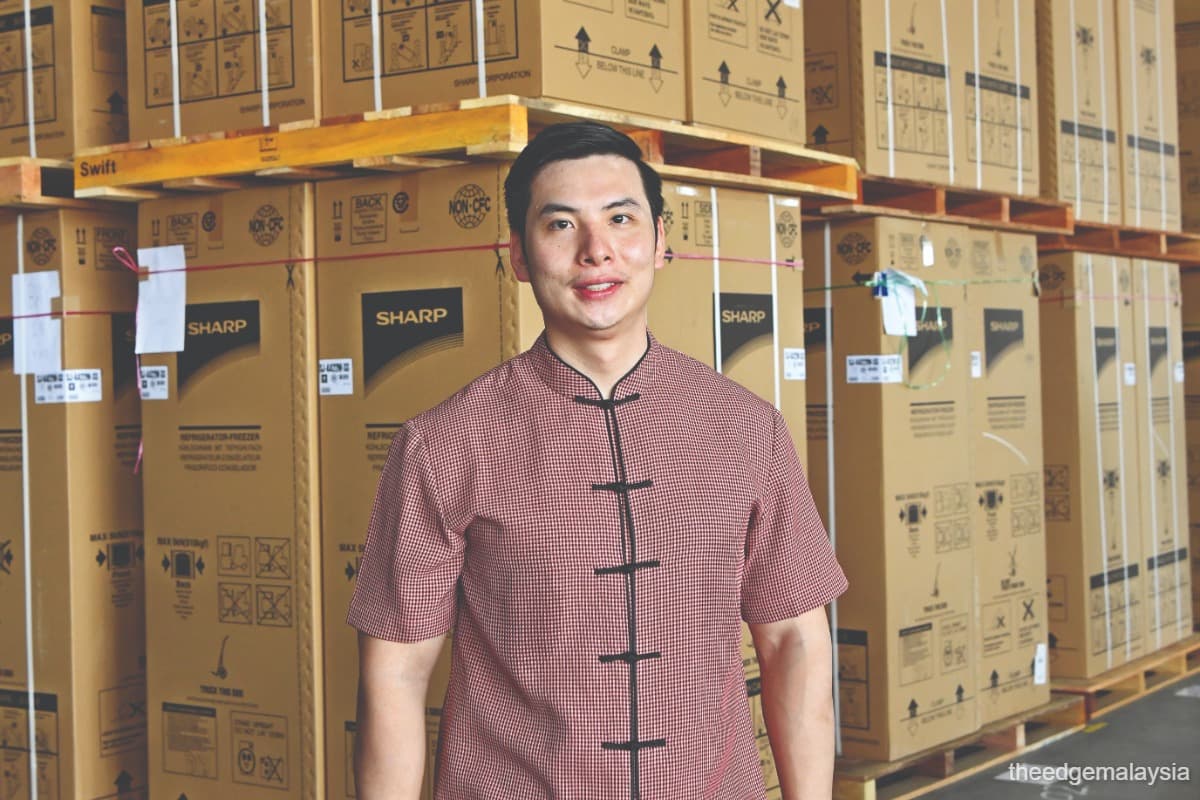
For haulage operators such as Swift Haulage Bhd (KL:SWIFT), government diesel subsidies and contractual fuel adjustment mechanisms have helped cushion the impact of higher fuel prices. Diesel accounts for about 20% of Swift’s operating costs, making it one of the group’s largest expense items, group CEO Loo Yong Hui said in an email response to questions from The Edge.
The impact of higher diesel prices has so far been limited, largely because most of the group’s haulage contracts incorporate a fuel adjustment factor (FAF), allowing changes in fuel costs to be passed on to customers.
Swift also benefits from the government’s Subsidised Diesel Control System 2.0 (SKDS 2.0), introduced in June 2024, under which eligible commercial fleets can purchase diesel at RM2.15 per litre.
“So far, the effect on our operating costs has been limited, for two reasons. First, most of our haulage contracts have an FAF built in. When diesel prices rise, the adjustment passes through to customer rates, which protects our margins.
“Second, the government’s targeted diesel subsidy under SKDS 2.0 cushions much of the impact of higher market diesel prices,” he says.
While Swift’s operations in Thailand and Singapore are exposed to prevailing market diesel prices, most of the group’s contracts in those markets also incorporate fuel-adjustment mechanisms. The group is also managing fuel consumption through route optimisation, telematics and driver-performance monitoring, while gradually transitioning part of its fleet to electric vehicles (EVs).
The country’s largest container haulier by number of prime movers, Swift operates seven electric prime movers and two electric small trucks, compared with a total fleet of 1,600 prime movers and 100 small trucks. The group plans to accelerate its electrification efforts, having signed a heads of agreement with SINOTRUK International (M) Sdn Bhd to add at least 50 electric prime movers next year.
Charging infrastructure remains the main obstacle to wider EV adoption in Malaysia, rather than vehicle availability, Loo says. Swift is therefore investing in its own charging facilities to improve access and manage charging costs as its electric fleet expands.
Swift’s net profit for the six months ended June 30, 2026 (1HFY2026) rose 9.8% to RM15.33 million from RM13.97 million a year earlier. Revenue increased 2% to RM385.33 million from RM377.91 million. Analysts expect the group to post a net profit of RM31.1 million for FY2026, up 13.5% from RM27.39 million in FY2025.
Despite steady demand, Loo says Swift faces mounting pressure from labour costs, including minimum wage reviews, employer contributions to the Employees Provident Fund for foreign workers and a shortage of drivers. Stricter enforcement of speed limiters and vehicle weight regulations is also adding to compliance costs.
Competition in Malaysia’s fragmented haulage market remains another challenge. A potential normalisation of shipping activity in the Red Sea and Strait of Hormuz could also reduce freight rates and compress forwarding margins.
Financing costs are an additional concern. Swift’s net gearing stood at 1.14 times as at June 30, 2026, leaving the group exposed to higher borrowing costs.
The group is reviewing its capital allocation strategy to optimise its capital structure and considering ways to unlock value from underutilised assets, including the potential disposal of unused land. Its target is to reduce gearing to below one time, Loo says.
Swift raised haulage rates by about 5% to 10% across its customer base from mid-2026. Further increases in the second half of 2026 will depend on individual contracts and cost movements.
“Pricing is reviewed contract by contract, based on our own costs. Many contracts include fuel adjustment clauses, so diesel changes flow through automatically,” notes Loo. “Our focus for the rest of the year is fully applying the revisions already made and improving productivity.”
Swift’s warehousing recovery hinges on higher occupancy
Swift’s warehousing segment slipped into the red in 2QFY2026 following the loss of major customers and start-up costs at new facilities. Loo expects the losses to narrow as vacant space is filled and newer sites build up their operating volumes.
The group is working to restore occupancy at its Port Klang, Selangor, and Johor facilities while positioning its free trade zone facility in Port Klang as a regional distribution and spare-parts hub. In Johor, occupancy at its Tebrau site has begun recovering following the departure of a major customer.
Its Penang warehouses are operating close to full capacity, while a new facility in Kuantan, Pahang, is scheduled to become operational in the fourth quarter of 2026. The Kuantan site is being marketed to customers in the petrochemical and industrial sectors.
Swift is also tightening cost controls by bringing manpower in-house, purchasing material handling equipment instead of renting it and standardising operations across facilities. New contracts are being priced to cover the full cost of service, with existing rates reviewed where necessary, according to Loo.
The group has 1.8 million sq ft of warehousing space, of which about 70% is currently utilised. It aims to lift overall utilisation to between 80% and 85% by year end, with further improvements expected through 2027 as new facilities mature.
Swift is targeting additional customers in the food, pharmaceutical, and oil and gas sectors, as well as demand for bonded storage.
“We expect the warehousing segment to return to profitability as occupancy improves at Port Klang and Johor and the new facilities mature,” says Loo.
Budget 2027 provides greater certainty for shipping firms
The extension of the full income tax exemption for shipping companies to 2036, alongside lower fixed stamp duty rates for loans used to finance the purchase or construction of Malaysian ships, is expected to benefit operators undertaking fleet expansion and renewal, including MTT Shipping and Logistics Bhd (KL:MTTSL) and Orkim Bhd (KL:ORKIM).
Analysts say the measures announced in Budget 2027 provide greater certainty over the industry’s tax outlook and reduce upfront financing costs for vessel investments.
Under the new stamp duty framework, qualifying loans will attract a fixed duty of RM2,000 for amounts of up to RM100 million and RM5,000 for amounts exceeding RM100 million. This replaces the prevailing rate of 0.5% of the loan amount, reducing the upfront cost of financing eligible vessel purchases and construction.
MTT Shipping, the country’s largest container liner operator by market share, operates 26 vessels with capacities ranging from 415 to 1,836 20ft equivalent units (TEUs). Its network primarily connects Peninsular Malaysia with Sabah, Sarawak and Brunei.
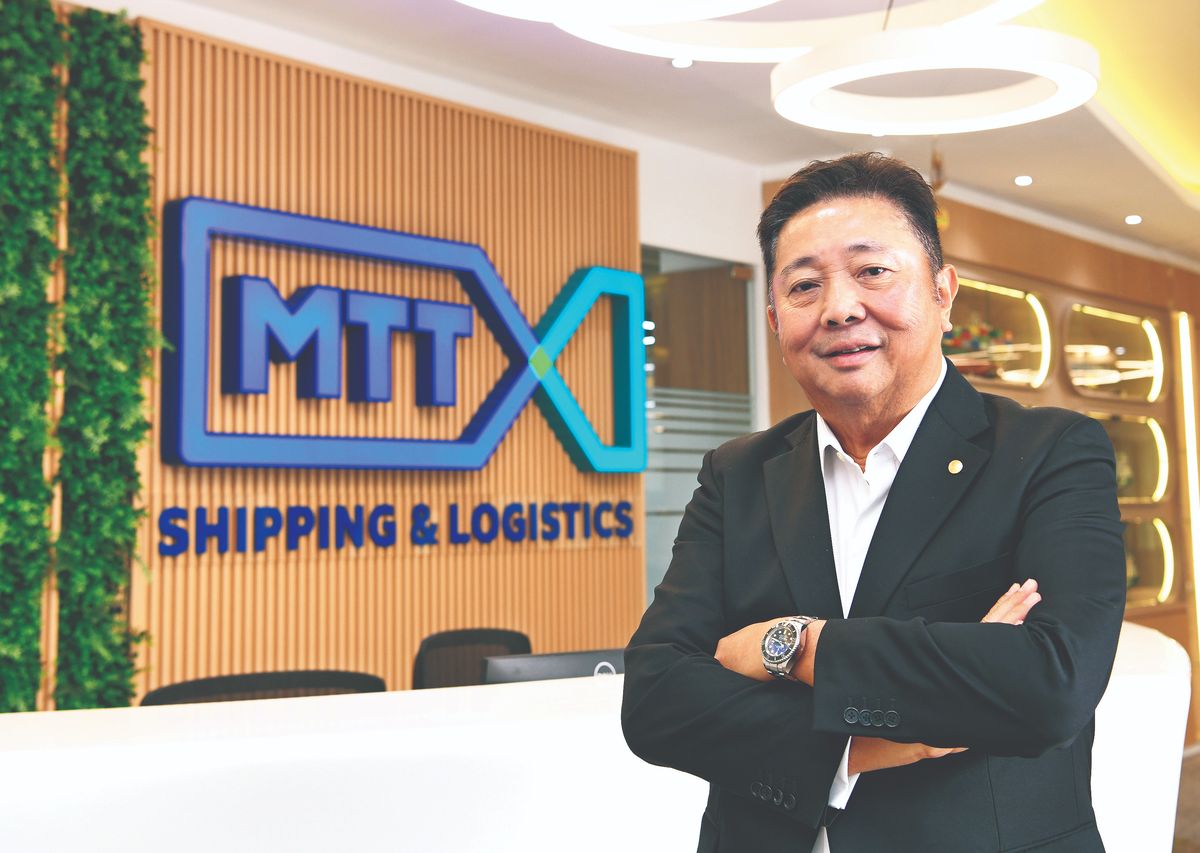
The group accounts for 46% of Malaysia’s container liner cabotage volume and operates both owned and chartered vessels. It is scheduled to take delivery of another 12 container vessels over the next few years.
MTT Shipping co-founder and managing director Ooi Lean Hin agrees that the extension of the exemption under Section 54A of the Income Tax Act 1967 provides much-needed long-term certainty.
Previously, the exemption was renewed on a three-year cycle, creating uncertainty over the industry’s tax treatment. Ooi says the prospect of a tax burden of about 30% on shipping profits had prompted some operators to reflag vessels in Singapore.
“Extending the exemption to the year of assessment 2036 could encourage shipowners to register more vessels in Malaysia, helping reverse the country’s services deficit. Shipping generally operates in a tax-free environment. Where that is not available, shipowners may flag their vessels in jurisdictions such as Panama that offer favourable tax treatment,” he adds.
Singapore and Hong Kong operate tonnage-tax regimes, while Malaysia is considering a similar approach. In the meantime, the 10-year exemption provides a more stable tax environment for local operators, he notes.
The revised stamp duty rates under Budget 2027 are also significant, given the capital-intensive nature of shipping where vessel acquisitions and newbuildings require substantial financing.
Ships have traditionally been built in Japan, South Korea and Taiwan, although China now accounts for more than 80% of global shipbuilding output, according to Ooi, who is also chairman of the Shipping Association of Malaysia.
MTT Shipping reported a net profit of RM160.6 million on revenue of RM658.7 million for the first six months ended June 30, 2026 (1HFY2026). A year-on-year comparison was unavailable because the company was recently listed on Bursa Malaysia’s Main Market on April 21.
Ooi expects the group to perform strongly in FY2026, supported by demand outstripping supply in the intra-Asia feeder segment. Additional vessel deliveries in 2027 should provide a further boost to revenue.
He also expects freight rates to remain elevated into 2027, citing geopolitical tensions, climate-related disruptions and persistent port congestion.
“Typhoons have become more disruptive, forcing port closures and causing vessels to bunch up as operations resume. Port congestion is absorbing an estimated 14% to 15% of global shipping capacity,” Ooi says, noting that delays in North Asia contribute to bottlenecks at ports such as Singapore.
Major Chinese ports remain constrained following Typhoon Saudel in late August, adding to the congestion from a series of recent typhoons. In addition, drought restrictions at the Panama Canal are limiting capacity to 34 daily transits in early September and 32 later in the month, with Neo-Panamax capacity capped at nine slots per day.
Geopolitical risks remain elevated, including the Iran conflict, Houthi attacks on Saudi Arabia and the continuing Russia-Ukraine war, he adds.
Shipping lines are also taking a more disciplined approach to capacity management following the disruptions of the Covid-19 pandemic. Rather than allowing excess capacity to undermine rates during periods of weaker demand, carriers are increasingly cancelling scheduled voyages, a practice known as blank sailing.
“Carriers are not as destructive as they were before Covid-19. They manage capacity against actual demand by blanking sailings during slower periods, which helps support a more stable freight environment,” says Ooi.
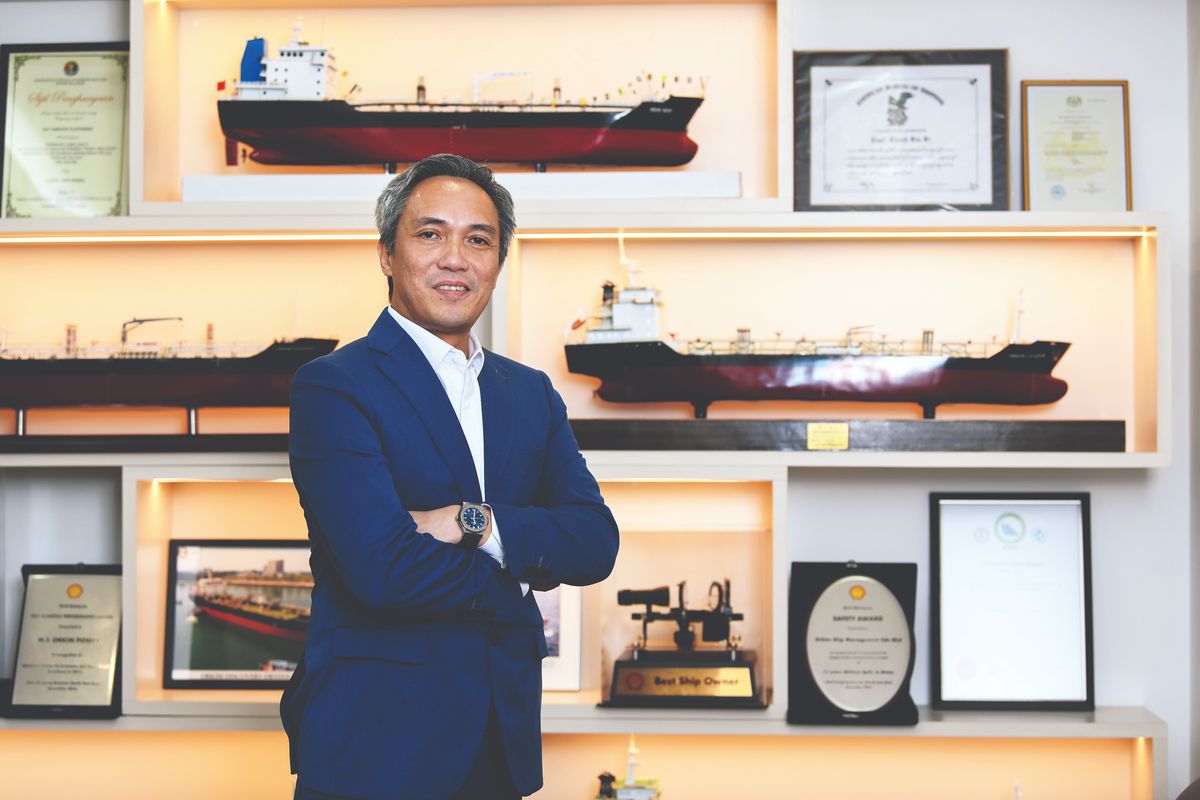
Orkim, a Malaysian operator of clean petroleum product (CPP) and liquefied petroleum gas (LPG) tankers, also expects to benefit from the extended tax exemption and fixed stamp duty on qualifying ship financing loans.
The group has acquired two chemical tankers this year and is scheduled to take delivery of another on Nov 3. It plans to sign contracts for two additional newbuildings for delivery in 2028, executive director and CEO Captain Cheah Sin Bi tells The Edge.
The expansion, alongside the planned disposal of older vessels, is expected to increase Orkim’s fleet to 22 vessels by 2028 and add about 50,000 tonnes of capacity.
Cheah also expects freight rates to remain firm amid limited newbuilding activity in the region and strong vessel utilisation. Average daily charter rates have risen to about RM59,000, from RM58,400 in the first half of 2026, as the group deploys larger vessels.
“We do not see many newbuildings in this region and most shipments are already fully booked,” he says.
Orkim reported a net profit of RM47.01 million on revenue of RM175.37 million in the first six months ended June 30, 2026 (1HFY2026). Cheah says the group’s planned fleet expansion and the extended shipping tax exemption should support growth and generate greater savings than previously anticipated. He is less concerned about port congestion because the group’s vessels are paid on a daily charter basis, meaning waiting time does not necessarily translate into lost charter revenue.
Air freight gains as ocean capacity tightens
Capacity constraints among global shipping lines amid the Middle East conflict are prompting the shifting of some high-value cargo, particularly data centre equipment, to air freight.
Integrated logistics provider Tasco Bhd (KL:TASCO) has seen a change in its international business solutions (IBS) mix, with air freight forwarding (AFF) gaining at the expense of ocean freight forwarding in its first financial quarter ended June 30, 2026 (1QFY2027).
In an Aug 6 research note, RHB Investment Bank Bhd cut its FY2027 to FY2029 earnings forecasts for Tasco by about 7% annually, as it factored in weaker ocean freight forwarding, contract logistics and cold supply chain performance, partly offset by stronger air freight forwarding. The research house expects softer contract logistics and cold supply chain activity to persist amid lower project shipments in customs clearance and the loss of a key cold chain customer.
RHB maintained its “buy” recommendation but lowered its target price to 62 sen from 66 sen. The revised target implied an upside of 77% from the stock’s closing price of 35 sen last Wednesday.
Tasco’s net profit for 1QFY2027 came in below market expectations, falling 7.2% to RM8.53 million from RM9.19 million a year earlier.
Nevertheless, analysts expect the group’s net profit to rise 16.2% to RM43.55 million in the financial year ending March 31, 2027 (FY2027), from RM37.47 million in FY2026, supported in part by the commencing operations of new warehouses and the integrated logistics services tax rebate in 4QFY2027.
Save by subscribing to us for your print and/or digital copy.
P/S: The Edge is also available on Apple's App Store and Android's Google Play.