

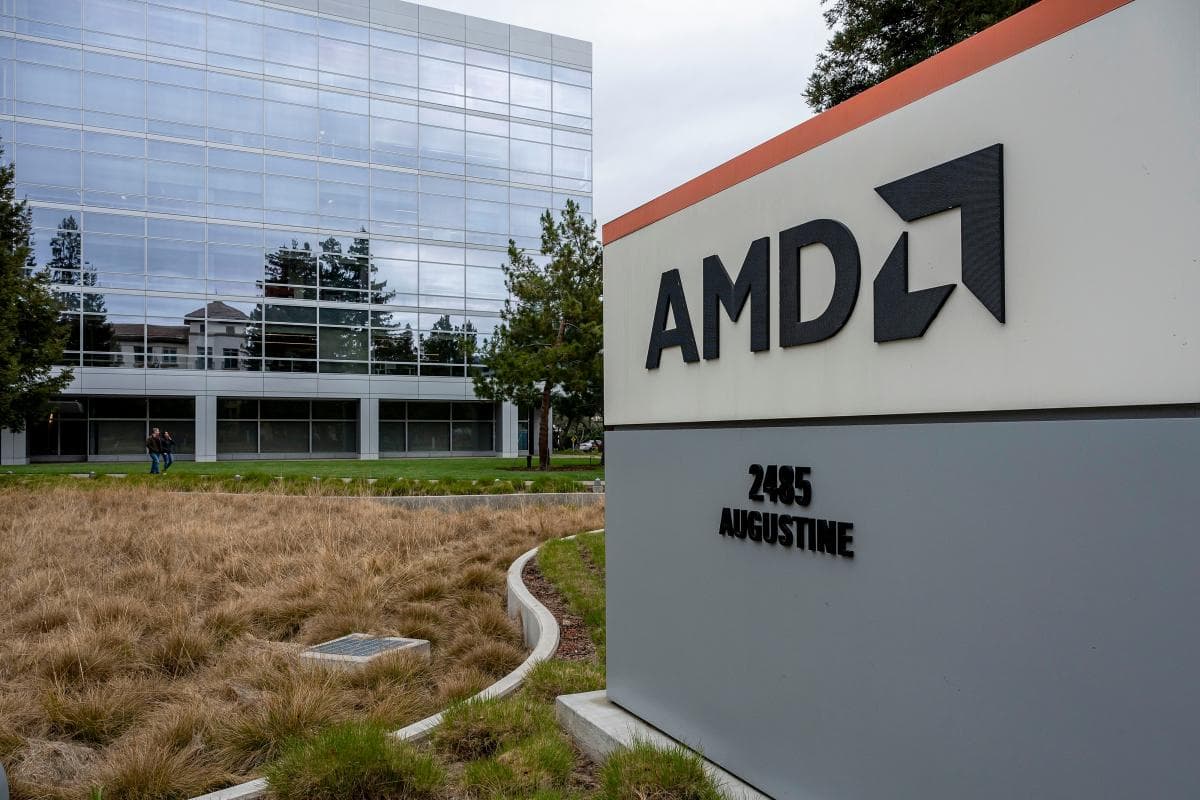
(Nov 4) : Advanced Micro Devices Inc, a key challenger to Nvidia Corp in artificial intelligence chips, gave a revenue forecast that exceeded analysts’ estimates, showing that demand for data centre processors remains strong.
Fourth-quarter revenue will be US$17 billion, plus or minus 3%, the chipmaker said in a statement Tuesday. That easily topped the average analyst estimate of US$16.3 billion, helping send the shares up about 8% in late trading.
The outlook provided fresh evidence that AI spending is sustainable, soothing jittery investors. Shares of chipmakers and other tech companies have been battered in recent weeks over concerns about a bubble in the AI infrastructure industry.
“AMD’s earnings are simultaneously a test of its own performance and of the broader AI trade,” Emarketer analyst Jacob Bourne said in a note. The results “will give investors encouragement given the recent tech and semiconductor selloff, as investors increasingly scrutinize AI spending and its returns.”
AMD’s outlook — along with a strong forecast from server maker Super Micro Computer Inc — helped spark a late-trading rally among AI equipment makers and cloud providers. Shares of companies from CoreWeave Inc. and Nebius Group NV to Dell Technologies Inc. and Hewlett Packard Enterprise Co all gained.
Under chief executive officer Lisa Su, AMD has become one of the most important suppliers of processors and computers that operate at the heart of AI facilities, underpinning a flood of new services.
“Our fourth-quarter outlook reflects accelerating revenue and earnings growth, driven by strong demand across our data center portfolio,” Chief Financial Officer Jean Hu said in the statement.
Even with recent market turbulence, AMD shares have more than doubled this year. The company’s valuation reached US$1 trillion in September, putting it in an elite group.
The data center growth has helped AMD offset a slump in the personal computer market, where rising memory-chip costs have slowed production and depressed user demand. Intel Corp., AMD’s top rival in that field, suffered its worst stock decline in decades after a downbeat earnings report last week.
One possible weak spot for AMD: Its gross margin will narrow to about 55% in the fourth quarter. That measure — the percentage of sales after removing production costs — had been 56% in the previous period.
AMD’s third-quarter sales rose 45% to US$13.4 billion. Profit climbed to US$2.09 a share, minus certain items. Analysts on average had predicted revenue of US$13.1 billion and earnings of US$1.97 a share.
AMD continues to deliver record results and now boasts sales that are twice as big as they were two years ago. It’s also been outperforming longtime nemesis Intel in the market for central processing units, or CPUs. But the company is still well behind Nvidia in so-called AI accelerators, which are used to train and run artificial intelligence models.
Sales at AMD’s data center business nearly doubled to US$8.5 billion. Analysts had predicted a total of US$8.2 billion. PC and gaming-related sales shrank 8% to US$3.7 billion.
Like other makers of components for PCs, AMD is suffering from a side effect of the data center boom. AI servers require a massive amount of memory. That’s cut into the supply of chips available for laptops and desktop machines — and forced prices up.
AMD is debuting new product ranges in both the CPU and accelerator markets. The Santa Clara, California-based company is also taking on Nvidia more directly with its Helios server design.
But Nvidia, the largest chipmaker and world’s most valuable company, hasn’t been standing still. It’s updating its own lineup at a fast pace and branching out into everything from software to networking to complete computers.
Uploaded by Isabelle Francis