

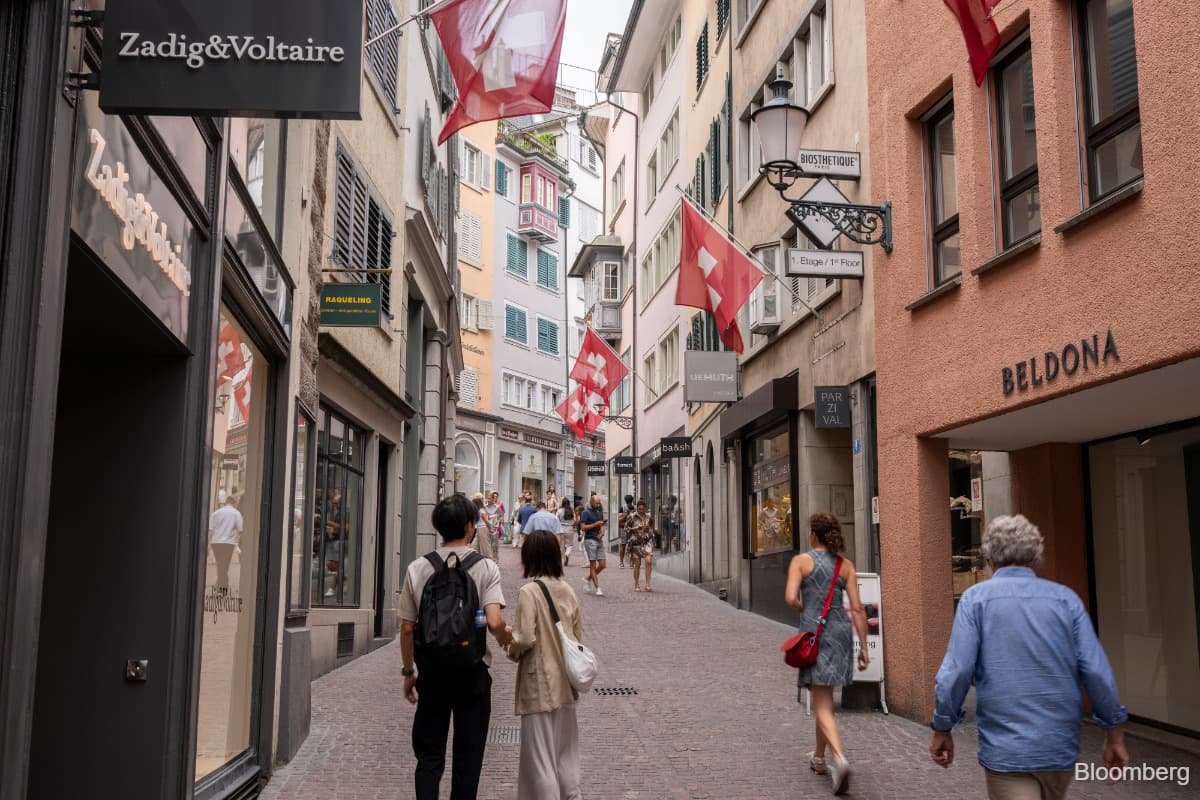
(Nov 3): Switzerland’s inflation rate rose to the highest level in almost three years, driven by the surge in oil costs and a weaker franc.
Consumer prices increased 1.5% from a year earlier in October, the statistics office said on Tuesday (Nov 3). That’s up from 1% in September and stronger than predicted by any of the economists in a Bloomberg survey.
While the reading is within the Swiss National Bank’s 0-2% range, it is already noticeably above the 1.2% forecast of policymakers for the fourth quarter. Officials see most of the acceleration as temporary and have said that medium-term pressures increased only slightly.
SNB borrowing costs have been at the world’s lowest level of zero for more than a year, in part because the cost shock from the Iran war has been benign in Switzerland. Petrol prices have risen but a smaller share of energy in the Swiss inflation basket has kept that from driving the gauge.
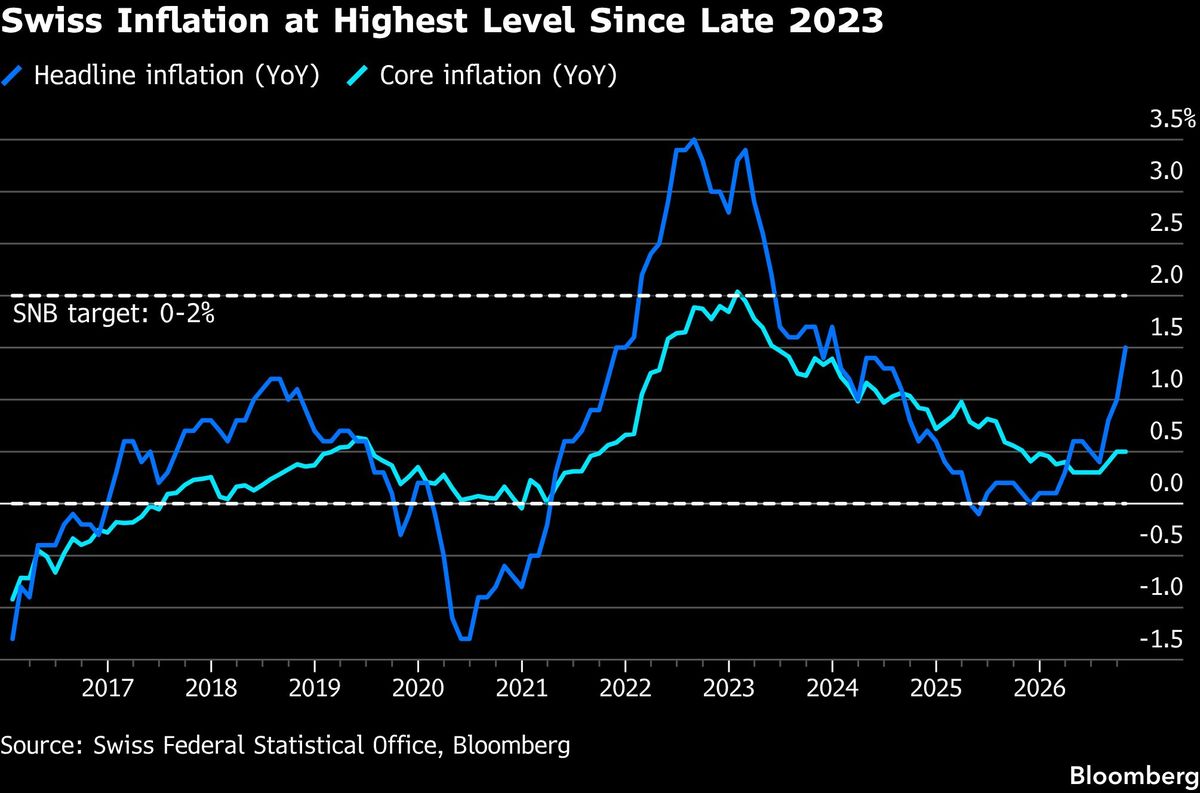
In October, rising prices for heating oil, petrol and diesel drove inflation, the statistics office said. So-called core inflation, which excludes volatile elements such as energy, held steady at 0.5%.
The acceleration in Switzerland remains muted compared to the surrounding euro area, where the fallout from the Iran war probably drove price growth to twice the European Central Bank’s target last month. According to the harmonised European methodology, Swiss inflation in October was 1.6%, versus an expected 4% in the currency bloc.
Over the past months, a continued weakening of the franc has boosted domestic cost increases, as buying abroad became pricier for the Swiss. Policymakers acknowledged this at their most recent rate decision in September, dialling down their threat of intervention after some action to weaken the currency.
Uploaded by Arion Yeow