

(Nov 3): China’s efforts to stem a market rout by reviving tools from the 2024 downturn were met with scepticism as stocks resumed their sell-off.
The two liquidity-injection tools — a swap facility and relending operations to encourage more stock purchases — reappeared with some adjustments as authorities sought to bolster market stability. Turnover in exchange-traded funds favoured by the national team also surged to 120 billion yuan (US$18 billion or RM74 billion), the highest since late January, suggesting state investors actively stepped in.
Markets weren’t impressed. The tech-heavy Star 50 Index tumbled nearly 4% on Tuesday, erasing gains from the previous session when anticipation of policy support drove markets higher. The CSI 300 Index, an onshore benchmark, slipped as much as 1.2% before closing 0.2% lower.
The slide shows re-utilising 2024 tools has lacked the shock-and-awe effect needed to reignite animal spirits. The pivot back then stunned investors on multiple fronts, combining the new equity-support facilities with rate cuts to signal strong determination to reviving stocks. Yet a crisis of confidence has become more entrenched now with sluggish economic growth and uncertainty over earnings, suggesting a more structural policy reset is needed.
“The measures are likely to have only a limited marginal impact, as these tools have been available for the past two years and are not new sources of incremental support,” said Fu Zhifeng, the chief investment officer of Shanghai Chengzhou Investment Management. “The meeting is more significant as a policy signal, showing regulators’ intention to stabilise the market.”
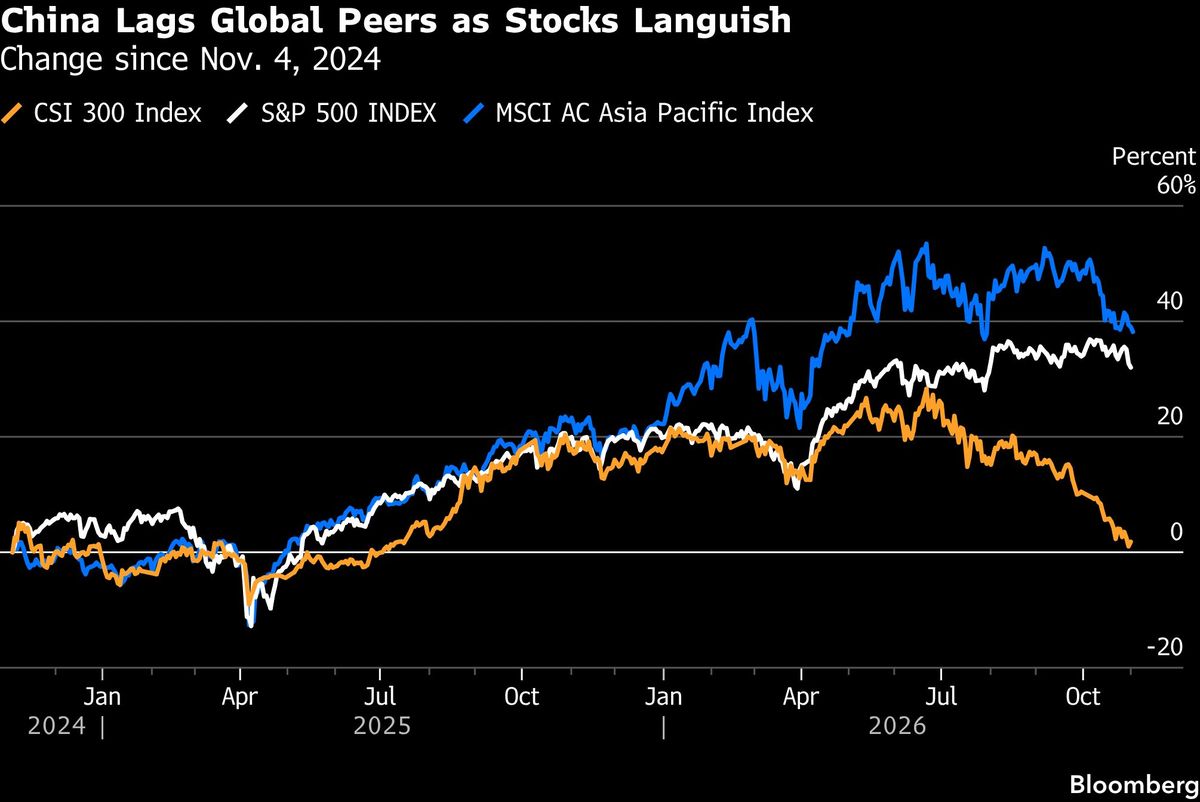
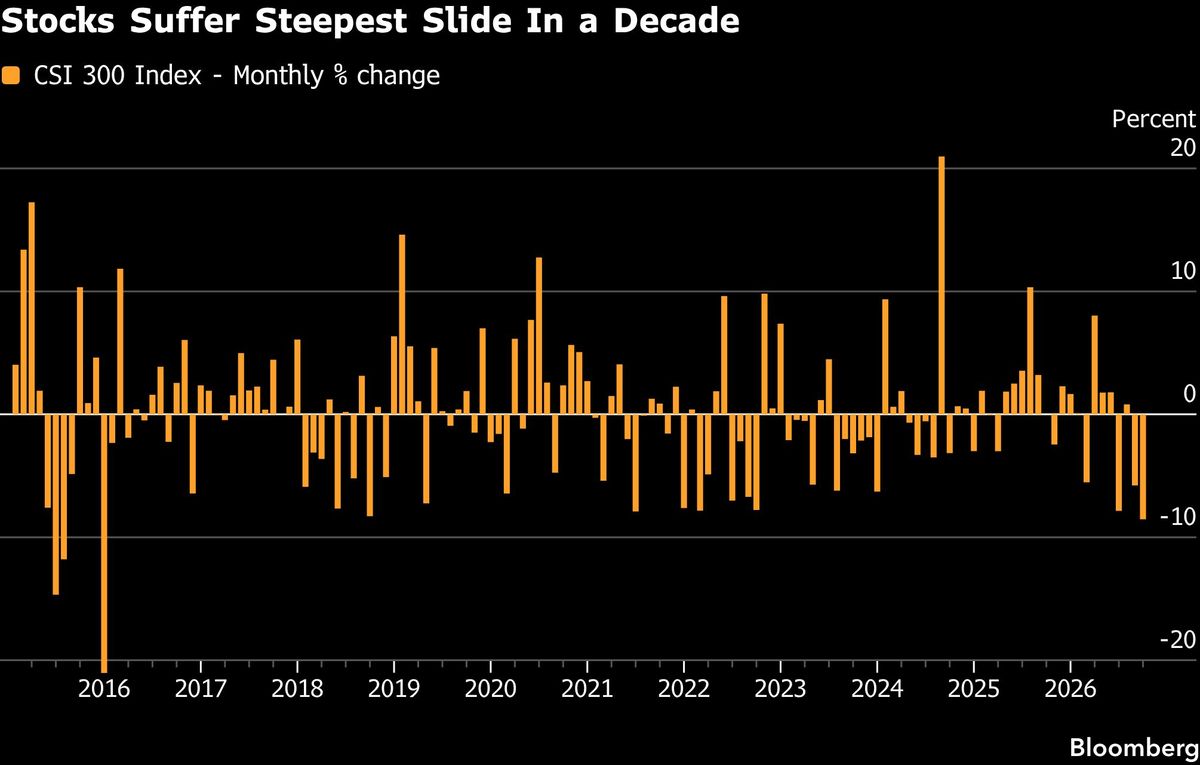
Chinese shares have been mired in a slump since the summer amid a weak economy and doubts over artificial intelligence (AI) earnings. The CSI 300 Index fell 8.5% in October, its worst monthly decline in more than a decade, and dropped for a record 12 straight weeks through last Friday.
In a Monday statement, the People’s Bank of China (PBOC) said it will conduct operations under its securities, funds and insurance companies swap facility when appropriate, allowing them to exchange assets for more liquid ones to fund stock purchases. It will also increase the number of participating institutions and moderately lower swap fees.
Separately, the PBOC will cut the rate on its relending facility to 1% from 1.25%, make the programme permanent, and encourage banks to increase lending. The facility provides low-cost central bank funding to banks for loans that finance companies’ share buy-backs and stake increases by major shareholders.
The swap operations will begin in the coming days, with 31 securities and fund firms approved to participate and applying for more than 100 billion yuan of quotas, the China Securities Regulatory Commission (CSRC) said in a statement. The relending programme will be broadened, including by encouraging more major index constituents and leading technology companies to participate, it said.
The CSRC also plans to ease buy-back rules, facilitating repurchases when shares fall below the IPO price and requiring companies with excess fundraising proceeds to buy back shares when market-support conditions are triggered. It will also study changes to margin-financing requirements as a countercyclical measure to mobilise existing funds and improve market liquidity, suggesting scope to ease leverage restrictions.
About 440 billion yuan of loans supporting share buy-backs and stake increases have been contracted, with more than 280 billion yuan disbursed, according to the central bank. The outstanding balance of the swap facility is 105 billion yuan.
The regulators have also told banks to hold fire on company listings and large share sales, another attempt to put a floor under the rout, the Financial Times reported on Tuesday.
The Monday meeting was attended by 23 securities firms, funds and 26 banks. Representatives of China International Capital Corp, Guotai Haitong Securities Co, Citic Securities Co, Industrial & Commercial Bank of China Ltd, China Construction Bank Corp and China Citic Bank Corp were among those who spoke, the PBOC said.
“Overall I think it’s an effort to stabilise its financial markets, but it has a clear long-term perspective rather than an immediate reward,” said Anna Wu, an investment strategist and founder of Floodlines Research. “A real turnaround needs demand-side fiscal support that reaches households, a steadier property market, and evidence that earnings, especially in AI and tech, can justify valuations.”
Uploaded by Tham Yek Lee