

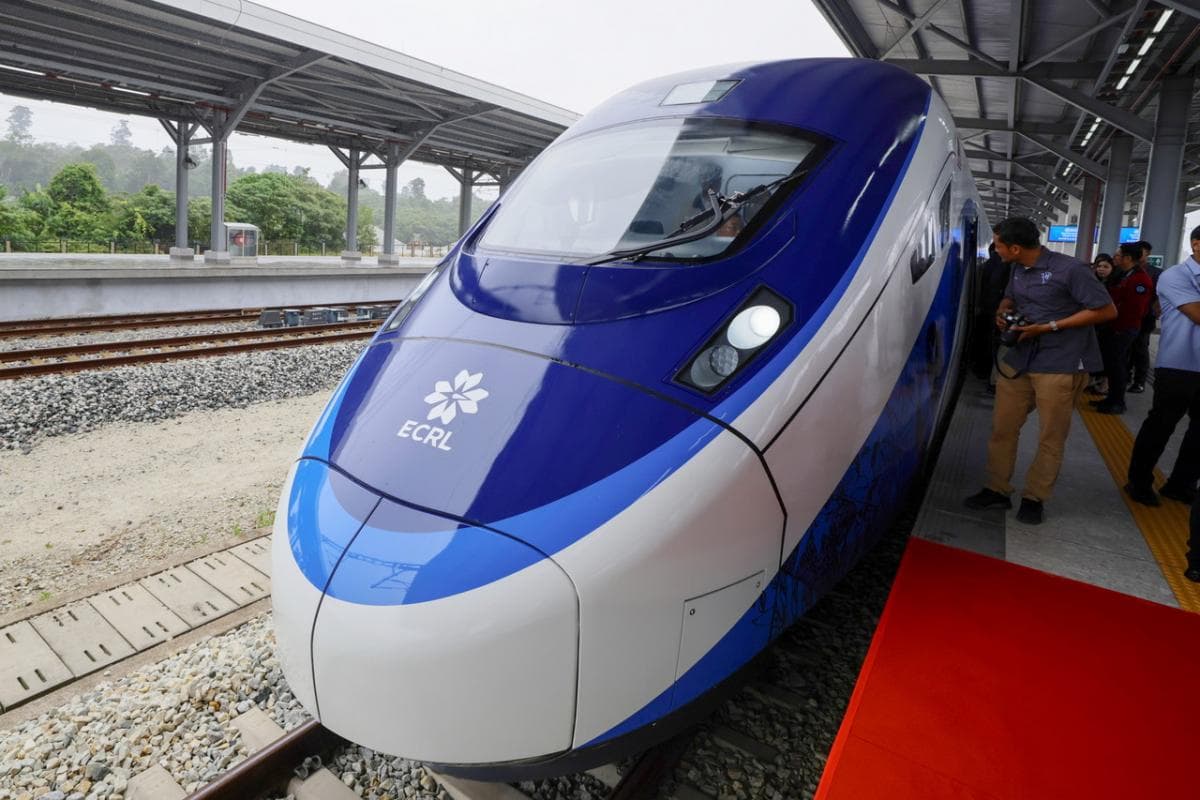
KUALA LUMPUR (Nov 3): The Ministry of Transport said that the East Coast Rail Link (ECRL) is projected to generate some 3% annual growth for its passenger services over the next three years, while its cargo services are expected to see a sharp increase in freight income by 2029.
Its minister Anthony Loke Siew Fook said passenger revenue was forecast at RM192 million in 2027, RM198 million in 2028 and RM204 million in 2029, based on a consultant’s study conducted in 2025.
Cargo revenue, meanwhile, is projected to increase from RM68 million in 2027 to RM71 million in 2028, before more than tripling to RM214 million in 2029.
“These projections are subject to actual operating performance, including passenger numbers, cargo volumes and developments in market demand,” Loke said in a written parliamentary reply published on Monday (Nov 2).
He was responding to Datuk Wan Saiful Wan Jan (Tasek Gelugor), who asked about the railway’s construction cost, annual government payments, projected revenue and measures to ensure operating sustainability.
Loke did not explain the projected jump in cargo revenue in 2029 or provide annual passenger forecasts in the reply. Project owner Malaysia Rail Link Sdn Bhd (MRL) previously said it was targeting about 1.4 million passengers in 2027, against about 2.2 million seats available.
While passengers would account for nearly three-quarters of projected service revenue in 2027, Loke said the longer-term business model aims for cargo contributing about 70% and passengers the remaining 30%.
That would allow the railway to tap demand for goods movements between the east and west coasts of Peninsular Malaysia and access to major ports, he said.
The transport minister added that passenger and cargo receipts would help cover operations, maintenance and related costs. Operator ECRL Operation Sdn Bhd (EOSB) would also pursue non-fare income through space rentals, advertising and other commercial activities.
EOSB is equally owned by MRL and China Communications Construction (ECRL) Sdn Bhd. Loke said the arrangement involved sharing operating risks, giving both shareholders an incentive to increase revenue, improve asset utilisation and control costs.
The minister listed China Exim Bank loans, MRL sukuk, Transport Ministry development allocations and Ministry of Finance financing among the project’s funding sources. The reply, however, did not provide a financing breakdown or quantify the government’s annual repayment obligations.
The overall cost of the ECRL project for the 665-kilometre alignment from Kota Bharu to Port Klang has now exceeded RM52.43 billion.
Still, Loke said the railway’s value should not be measured solely by direct financial returns, but also by “its contribution to connectivity, logistics and economic activity”.
On fares, Loke said the government considered affordability, competing transport options, journey times and service quality alongside long-term operating sustainability.
“The government’s objective is not merely to make ECRL the cheapest option, but to ensure it offers competitive travel value that is fast, comfortable and reliable,” he said.
MRL announced on Oct 19 that one-way Gombak–Kota Bharu fares would start at RM125 for Transit services and RM147 for Express services.
Dynamic pricing means fares can rise depending on booking time and seasonal demand. Passenger services on that section are targeted to begin in mid-December, subject to safety requirements and regulatory approvals.
Read also:
ECRL Gombak-Kota Bharu fares start at RM125
For more Parliament stories, click here.