

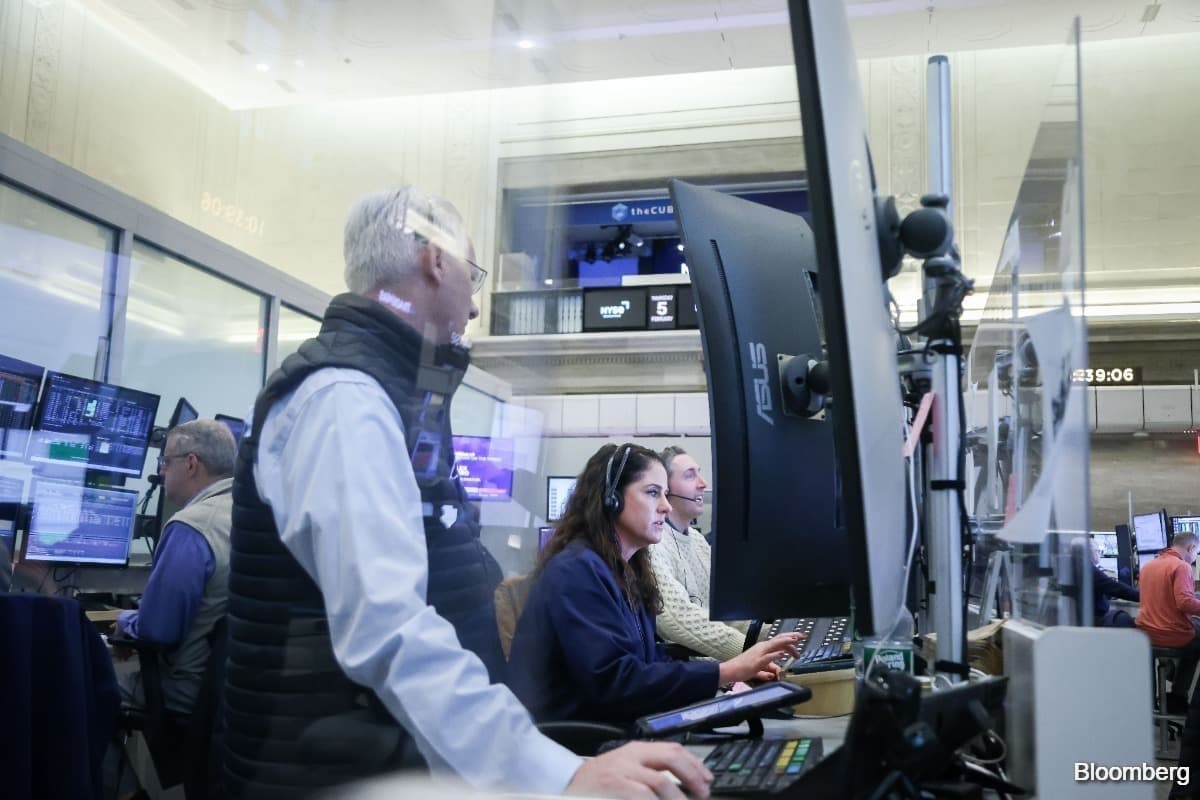
(Nov 2): Wall Street's main indices rose on Monday as oil prices tumbled more than 6% on hopes of a US-Iran peace deal, with investors also bracing for Tuesday's midterm elections and another busy week of earnings.
Brent crude prices fell to a near two-week low as Iran's talks with Qatari officials to end the eight-month-long conflict with the US raised hopes that Middle East supply disruptions could ease.
Iranian President Masoud Pezeshkian said the country's supreme leader has granted "certain authorities" to the government with regard to peace talks, state media reported.
Most megacap and growth stocks gained, with Nvidia and Amazon.com rising 1.5% and 4.1%, respectively.
At 10:02am ET, the Dow Jones Industrial Average rose 537.86 points, or 1.04%, to 52,308.17, the S&P 500 gained 44.29 points, or 0.58%, to 7,623.22 and the Nasdaq Composite gained 183.02 points, or 0.72%, to 25,620.02.
Seven of the 11 major S&P 500 sectors were in positive territory, with consumer discretionary leading gains, while energy fell over 2.1%.
The gains offered some respite to the AI trade after a bruising October, which left the tech-heavy Nasdaq-100 close to entering correction territory, as investors grew wary of Big Tech's soaring AI spending while awaiting evidence of stronger returns.
Concerns, however, lingered as Oracle dropped 5.8%, after regulatory filings showed that the cloud infrastructure provider plans to raise US$20 billion (RM81.4 billion) through a debt and share sale, highlighting investor concerns that debt-funded spending could become harder to justify as borrowing costs rise.
Sentiment towards AI remains shaky, as an amended IPO filing showed Anthropic's net loss narrowed sharply in the third quarter, while revenue jumped ahead of a potential listing.
Marvell Technology fell 6.1% after the custom chipmaker said that it is buying optical components maker Lumentum in a US$115 billion all-stock deal, including debt. Shares of Lumentum were down 10.5%.
Intel extended its losses, down 2.6%, after clocking the stock's worst one-day fall since the 1980s on Friday. The company forecast quarterly revenue below market estimates and said it does not expect positive cash flow this year.
Rival chipmaker AMD is set to report its earnings later this week, while tech giant Apple fell 1.3% ahead of its quarterly earnings due after the bell.
"It is likely to remain volatile through the earnings season, and individual companies may get punished by the market if they're not fulfilling the market's asks on all of those fronts," said Kiran Ganesh, multi-asset strategist at UBS Global Wealth Management.
This week's key catalysts include the US midterm elections on Tuesday, which will determine whether Democrats can wrest control of Congress away from President Donald Trump's Republican Party.
Democrats are widely predicted to win the House of Representatives, but the Senate is more in doubt. Republicans controlled both chambers of Congress during the first two years of the Trump administration.
Meanwhile, data showed that US manufacturing activity picked up in October amid solid domestic demand.
Advancing issues outnumbered decliners by a 3.13-to-1 ratio on the NYSE and by a 2.08-to-1 ratio on the Nasdaq.
The S&P 500 posted 26 new 52-week highs and no new lows while the Nasdaq Composite recorded 55 new highs and 117 new lows.
Uploaded by Magessan Varatharaja