

(Nov 2): Chinese stocks advanced on expectations of renewed liquidity support after reports that regulators met with banks and brokerages to discuss market measures.
The CSI 300 Index rose 0.8% on Monday, rebounding from last week’s 2.9% drop. The tech-heavy Star 50 Index ended the day more than 3% higher. The onshore yuan climbed 0.2% against the dollar.
Expectations that authorities will step in have been brewing in recent weeks as stocks extended their downward spiral, with the CSI 300 Index tumbling into a bear market. Chinese media Cailian reported that the central bank will conduct its swap operation on Tuesday, utilising a key tool from the 2024 rescue plan to inject liquidity. The news outlet also reported earlier that financial regulators planned to meet with major banks on Monday to study optimising lending programmes, which were also used in 2024.
“Today’s move provides crucial incremental liquidity at a time when the market lacks fresh capital to absorb selling pressure, helping it stabilise and find a bottom,” said Yuan Weitao, a fund manager at Xi’an-based asset management firm Guofulianhe. “Rather than stepping in with large-scale funding after every sharp decline, the authorities and regulators are taking a more measured approach and allowing the market to adjust on its own.”
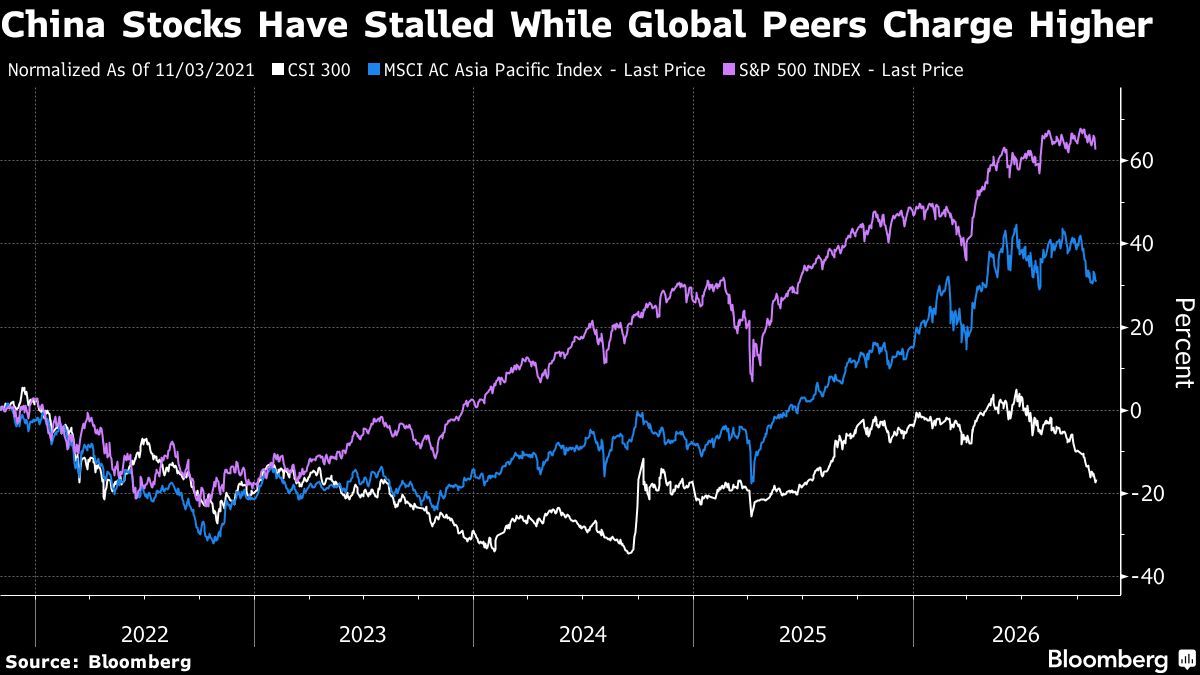
Chinese shares have been mired in a slump since the summer, weighed down by a weak economy and doubts over artificial intelligence earnings. Previous attempts to revive the market — including a round of buying by the national team starting July, and regulatory guidance to curb selling last month — have fallen short.
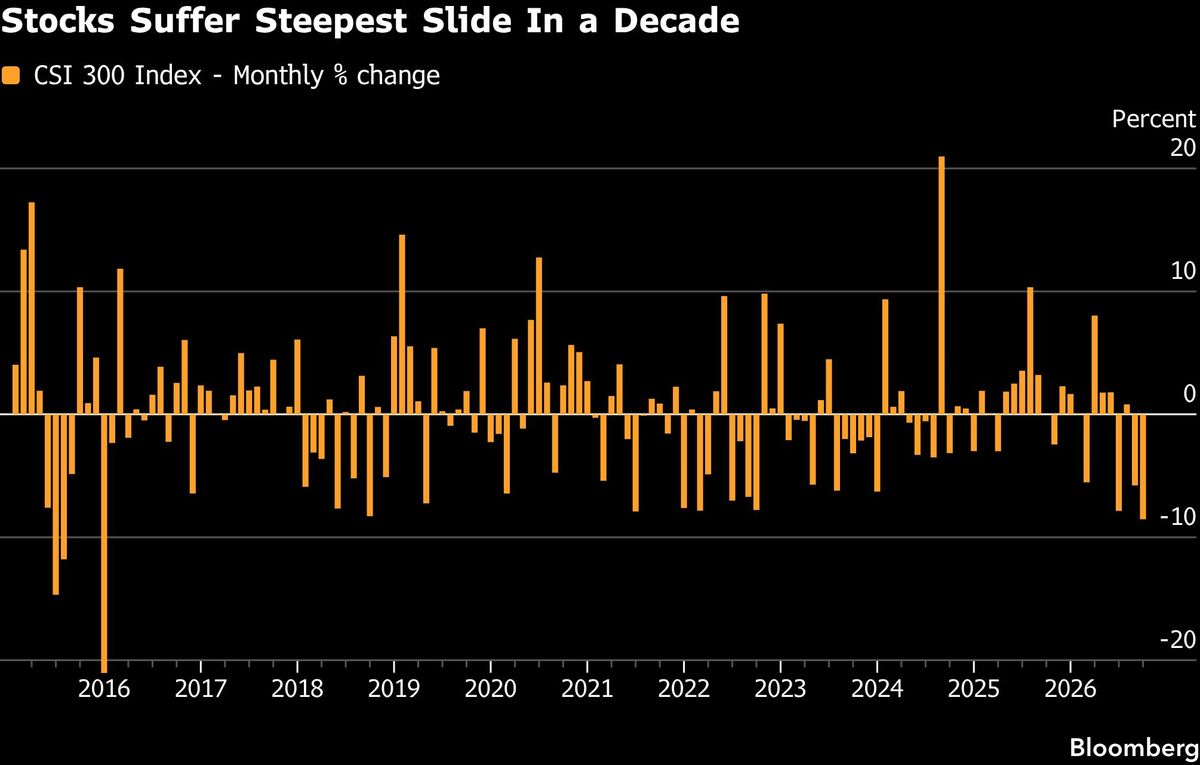
The CSI 300 benchmark fell 8.5% in October in its worst month in more than a decade, and fell for a record 12 straight weeks through last Friday.
A major state-owned bank also plans to increase a lending quota by up to 200 billion yuan (US$30 billion or RM122 billion) to two state asset management firms — part of the so-called “National Team” — to support stock purchases, according to another Cailian report.
While an official statement has yet to be released on the likely measures this time around, the dominant view is that utilising the two tools unveiled in September 2024 may lack the shock-and-awe effect needed to reignite animal spirits.
The 2024 pivot stunned investors on multiple fronts, combining two new equity-support facilities with rate cuts and an official recognition of a stabilisation fund, signalling strong determination to reviving stocks and restoring investor confidence.
Back then, the People's Bank of China unveiled a swap facility for the first time to allow securities firms, fund managers and insurers to exchange eligible assets for highly liquid central bank assets, giving them more capacity to buy equities. In total, 105 billion yuan under the swap tool has been used twice in last two years to counter downward pressure on the stock market.
It also announced in 2024 a relending facility that provides low-cost funding to banks to finance share buy-backs and stake increases by listed companies and major shareholders.
The market downturn has coincided with fresh signs of economic strain. China’s official manufacturing and non-manufacturing purchasing managers indices fell back into contraction in October. The economy remains stuck in a limbo, weighing on earnings and sentiment, but not deteriorating enough to trigger forceful stimulus by policymakers.
China’s bonds were little changed on Monday, with 10-year yields holding steady, as traders focused on ample liquidity in the market and looked past concerns over debt stress at state-owned developer Zhuhai Huafa Group Co.
“The meeting will have a positive impact on the market in the short term, but policy signals like this cannot change the underlying economic trajectory on their own,” said Shen Meng, a director of Beijing-based investment bank Chanson & Co. “A sustained improvement in the medium- to long-term outlook would still require structural reforms and supportive fiscal or industrial policies.”
Uploaded by Tham Yek Lee