

KUALA LUMPUR (Nov 2): Malaysia's strong export performance and foreign direct investment (FDI) inflows may not translate into equivalent gains for the ringgit, as profit repatriation by multinational companies and growing investments abroad offset some of the benefits, according to HSBC Malaysia.
The local currency could face further pressure if a correction in US technology stocks spills over into global artificial intelligence (AI) spending, potentially affecting Malaysia's semiconductor exports and data centre investments.
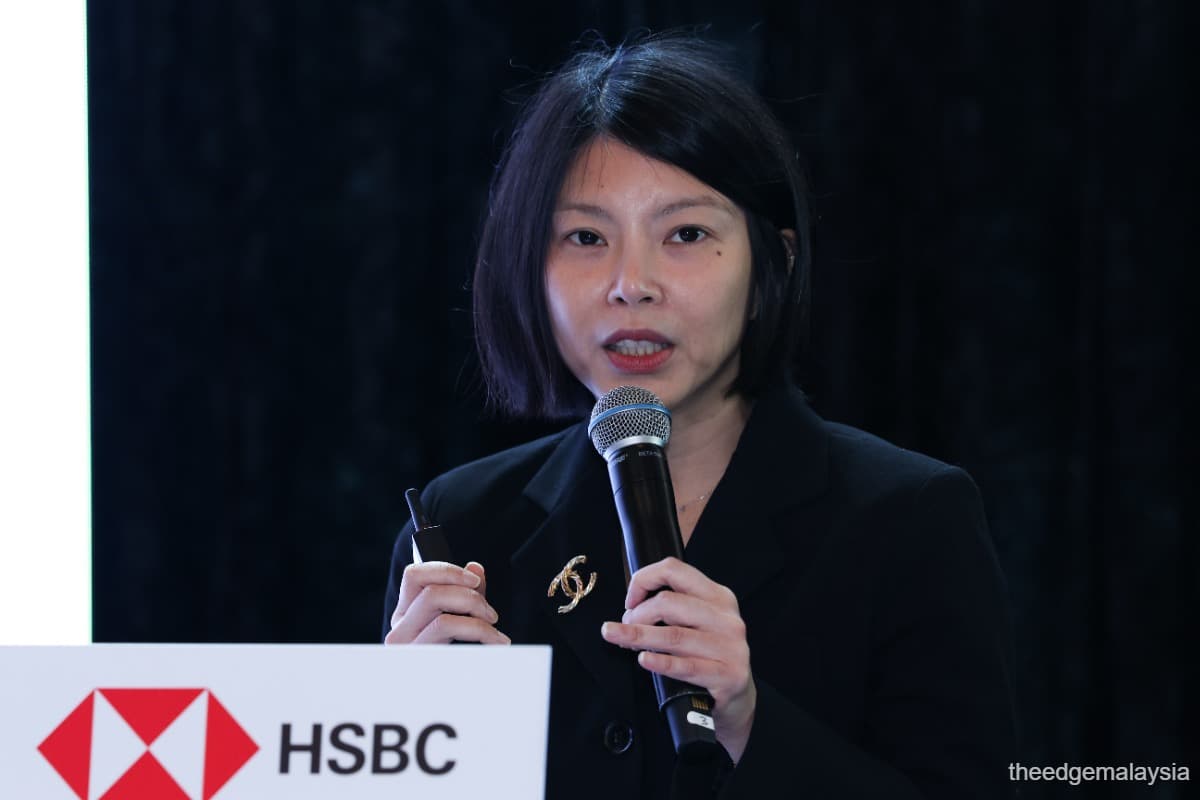
HSBC Global Investment Research head of Asia FX research Joey Chew said that while Malaysia's goods trade surplus has risen to multi-year highs, income outflows have also increased as multinational corporations transfer part of their earnings overseas.
Much of Malaysia's technology exports are produced by foreign-owned companies, meaning that not all the foreign currency earnings generated are converted into ringgit.
Although not disclosed, many of the major multinational companies that are based in Malaysia are Intel Malaysia, Western Digital, Micron Technology, Infineon Technologies, ams OSRAM, Dell Technologies and Hewlett-Packard (HP), to name a few.
"A lot of the trade revenue, the FX revenue, is also being repatriated by MNCs," Chew told reporters at HSBC's foreign exchange outlook briefing on Monday.
She said Malaysia's record FDI inflows are also being partly offset by outward investments, as companies expand their operations across neighbouring countries to support regional technology supply chains.
According to HSBC’s data, with as much as close to US$45 billion (RM183 billion) in FDI, there is as much as an estimated US$30 billion of outward direct investments recorded in 2026 alone. Leading to the outlook that the net contribution of trade and investment flows to the ringgit is less substantial than headline economic growth figures might suggest.
"Not everything can be made in Malaysia. Some of it has to be made elsewhere," she said, explaining that Malaysian-based companies are also investing abroad as the regional electronics manufacturing ecosystem expands.
Chew added that foreign inflows into Malaysian bonds do not necessarily translate into stronger demand for the ringgit, as some investors hedge their currency exposure.
At the same time, the prospect of higher US interest rates could encourage Malaysian residents to seek better returns in overseas assets, contributing to further capital outflows.
Against this backdrop, Chew cautioned that a potential correction in US technology stocks following the US midterm elections could pose additional risks to Malaysia's export and investment outlook.
She noted that global investors have built up significant exposure to US technology companies amid enthusiasm over AI, leaving markets vulnerable to a reassessment of valuations.
While a correction confined to equity valuations could initially weaken the US dollar, the implications for Malaysia would become more significant if it leads to reduced AI capital expenditure.
"If it spills over into what exports in Asia, including Malaysia, are doing because of what it means for AI, capex, capital expenditure, investments, all these data centre investments in Malaysia and the region...then actually the ringgit will also be affected negatively next year," she said.
Despite these risks, Chew expects the ringgit to remain relatively resilient against several Southeast Asian currencies, supported by Malaysia's economic growth and export performance.
However, she sees limited room for further appreciation after the ringgit recovered much of its previous undervaluation over the past few years.
HSBC expects the ringgit to trade between 4.10 and 4.20 against the US dollar in 2027, compared with the 4.05 to 4.10 range seen in recent months, as a firmer greenback and wider interest rate differentials weigh on the local currency.