

(Nov 2): Goldman Sachs Group Inc raised oil-price forecasts for the year-end and 2027 on elevated risks to supplies, joining other banks in hiking their outlooks after months of war in the Middle East.
Brent is now seen at US$105 a barrel in December, up from a previous estimate of US$90, and will average US$88 next year, 10% more than seen before, analysts including Daan Struyven and Yulia Zhestkova Grigsby said in a note, which also increased forecasts for US oil marker West Texas Intermediate.
“Substantial downside supply risks are likely to sustain a large, near-term risk premium,” the analysts wrote. The markets are assigning “increasing weight to escalation after the Nov 3 US midterms and subsequent potential weakness in Mideast supply,” they added in the Nov 1 report.
Global benchmark Brent rallied 14% in October, hitting a six-month high, even as crude supplies from the Middle East rebounded close to pre-war levels. The gains came on concern that hostilities between the US and Iran may flare up again after the midterm elections, with President Donald Trump repeatedly hinting that he may resume airstrikes. For his part, Iran’s Supreme Leader has ordered his top commanders to prepare for renewed confrontation.
Intensified shipping attacks and damage to infrastructure were among factors that could trigger further price gains, the analysts said, while also highlighting risks from Russia’s invasion of Ukraine. “With the timing and location of disruptions nearly impossible to predict, our base case now includes a one-million-barrel-per-day global supply disruption allowance in 2027.”
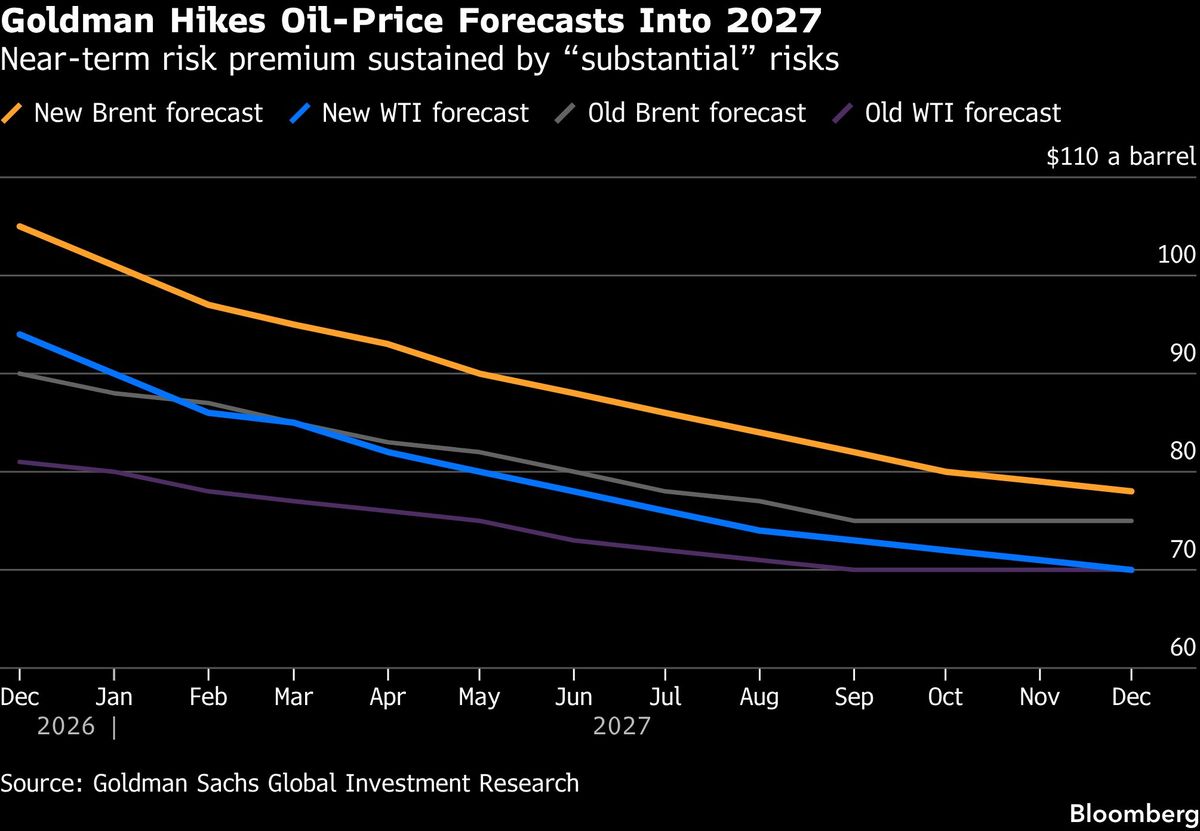
In recent weeks, Morgan Stanley raised its forecast for Dated Brent — a key physical price — to US$105 a barrel for the fourth quarter, while ANZ Group Holdings Ltd hiked its year-end outlook for Brent futures to the same figure. Most-active contracts last traded near US$110 after dropping in Monday’s trade.
Uploaded by Liza Shireen Koshy