

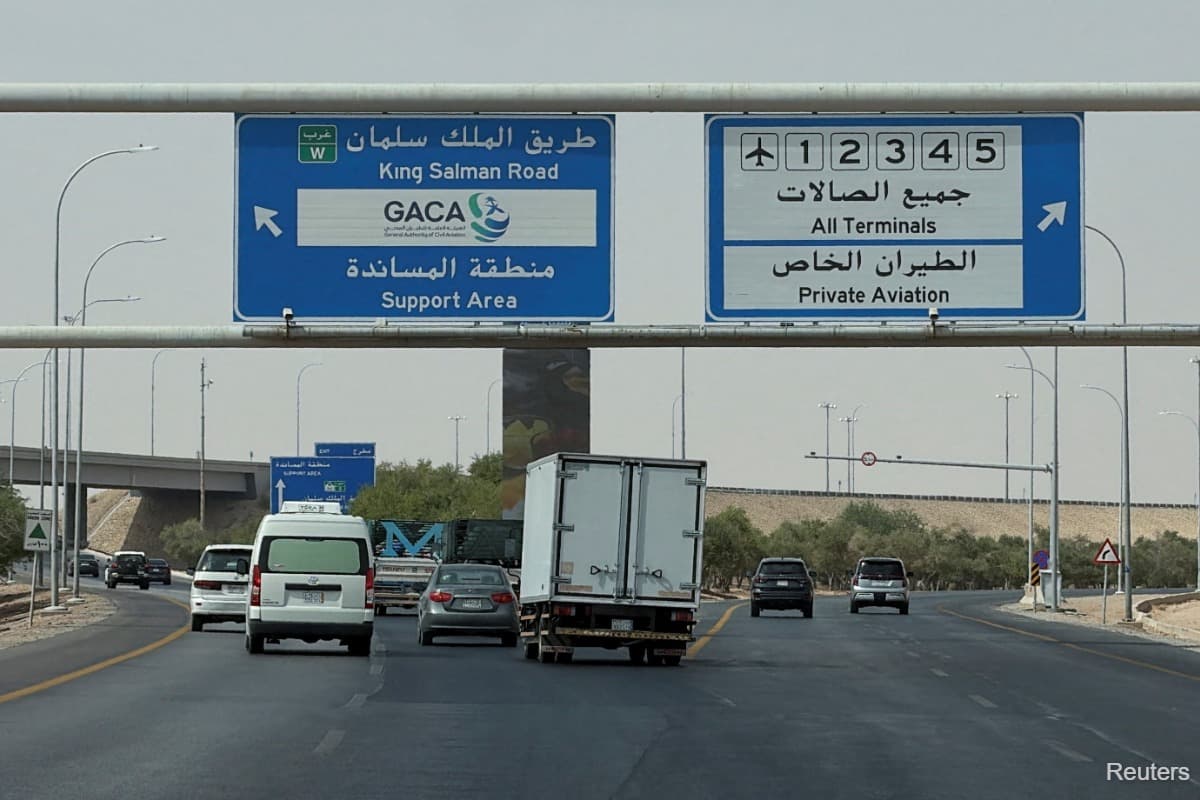
(Oct 31): What was already destined to be a bad year for Middle East airlines got even worse in October when missiles pummelled the Saudi capital’s airport, killing more than a dozen people and prompting authorities to suspend the hub’s operations.
From the deadliest bombing on Oct 10 through Oct 27, about 94% of the 4,345 flights scheduled to depart Riyadh’s King Khalid International Airport were cancelled, according to data provided by Cirium Ltd. That accelerated a trend instigated by the Iran war.
Despite decades of warfare in the Middle East, the Gulf’s aviation industry managed to cultivate a reputation for stability that turned the region into a major transit hub for long-haul fliers. The Iran war and the Houthi rebel attacks on Riyadh and elsewhere shattered that image, dragging airlines, airports and their supporting infrastructure directly into armed conflict.
“Regional developments during the past period have cast a shadow on the civil aviation sector, air transport traffic, demand levels and operational capacity of airlines,” Abdulaziz Al-Duailej, the president of Saudi Arabia’s civil aviation authority, said during a recent meeting in Doha with his peers.
The numbers show just how long that shadow is. From Feb 1 through Oct 27, a total of 26,561 flights were cancelled at three of the region’s biggest airports — Dubai, Doha and Riyadh. That’s a fivefold increase from a year earlier.
At the same time, the number of scheduled flights from King Khalid, Dubai International Airport and Qatar’s Hamad International Airport plummeted almost 21%, according to the Cirium data. That means there have been more cancellations of fewer services so far this year.
The attacks forced Riyadh Air, Saudi Arabia’s youngest airline, to move to another airport about 249 miles (400km) away and run a limited schedule until further notice, according to its website.
Air France recently extended its flight suspensions to Riyadh until Dec 12. KLM cancelled its services to the capital and Dammam through Nov 27.
Attacks on “airports bring a lot of visibility — the destruction they create — and that’s the strategy”, said Ameneh Mehvar, the Middle East regional expert for conflict monitor Acled. “It is not only about the specific costs that they inflict, it’s about the impact that will follow.”
A combination of windfalls from oil revenue, a strategic location between Europe and Asia and relative insulation from nearby conflicts strengthened the aviation industry’s development in the Gulf.
The results are impressive: Dubai’s airport usurped London’s Heathrow as the world’s busiest international airport in 2014, and carriers including Emirates, Etihad and Qatar Airways win global accolades for their services.
That momentum slowed considerably after the US and Israel attacked Iran on Feb 28 and the long-standing conflict between Saudi Arabia and the Houthi militants reignited.
“The Middle East is expected to record the sharpest deterioration in profitability among all regions,” the International Air Transport Association said in a June report, citing the region’s exposure to network disruption, fuel price volatility and changes in transfer traffic.
The Yemen-based Houthis targeted other Saudi facilities — in Abha, Jizan, Najran and Dammam — and warned airlines it would retaliate “airport for airport, blockade for blockade and escalation for escalation” in fighting.
The impact extends to airports throughout the region. Dubai Airport postponed its passenger target, foreign airline services were suspended from Hamad airport for about two months and transit trips via Kuwait International Airport remain halted.
“With the conflict persisting and renewed security incidents, the impact could extend into 2027,” said Rico Luman, a senior sector economist for transport and logistics at ING Groep NV.
Iran reported varying degrees of damage to more than two dozen airports from US-Israel strikes, Bahrain’s airport was reportedly hit early in the conflict and three private planes were damaged at Israel’s Ben Gurion Airport.
“For years, Gulf states have tried to diversify away from oil,” said Ziad Daoud, the chief emerging markets economist for Bloomberg Economics.
“Their biggest success has arguably been logistics — airports and ports,” he said. “Now, the war threatens not only their energy exports, but also one of their most successful efforts to move beyond oil.”
Uploaded by Tham Yek Lee