

(Oct 30): Britain was singled out for praise by the International Monetary Fund (IMF) this month for the boldest deficit-reduction plan of any Group of Seven nation. Bolder still is its decision to deliver the whole squeeze with higher taxes, as economists warn that Chancellor of the Exchequer John Healey is pushing the boundaries of what’s possible.
Over the five years of the current parliamentary term, the government plans to reduce borrowing by £76 billion (US$102 billion or RM413 billion). All of that and more, £107 billion in total, will be done through tax hikes, the Resolution Foundation said in its analysis of Wednesday’s budget.
In 2010, the then-Conservative chancellor, George Osborne, split his austerity programme 80:20 between spending and tax as he sought to repair the public finances in the wake of the financial crisis. His Labour predecessor, Alistair Darling, had planned for a 66:34 division.
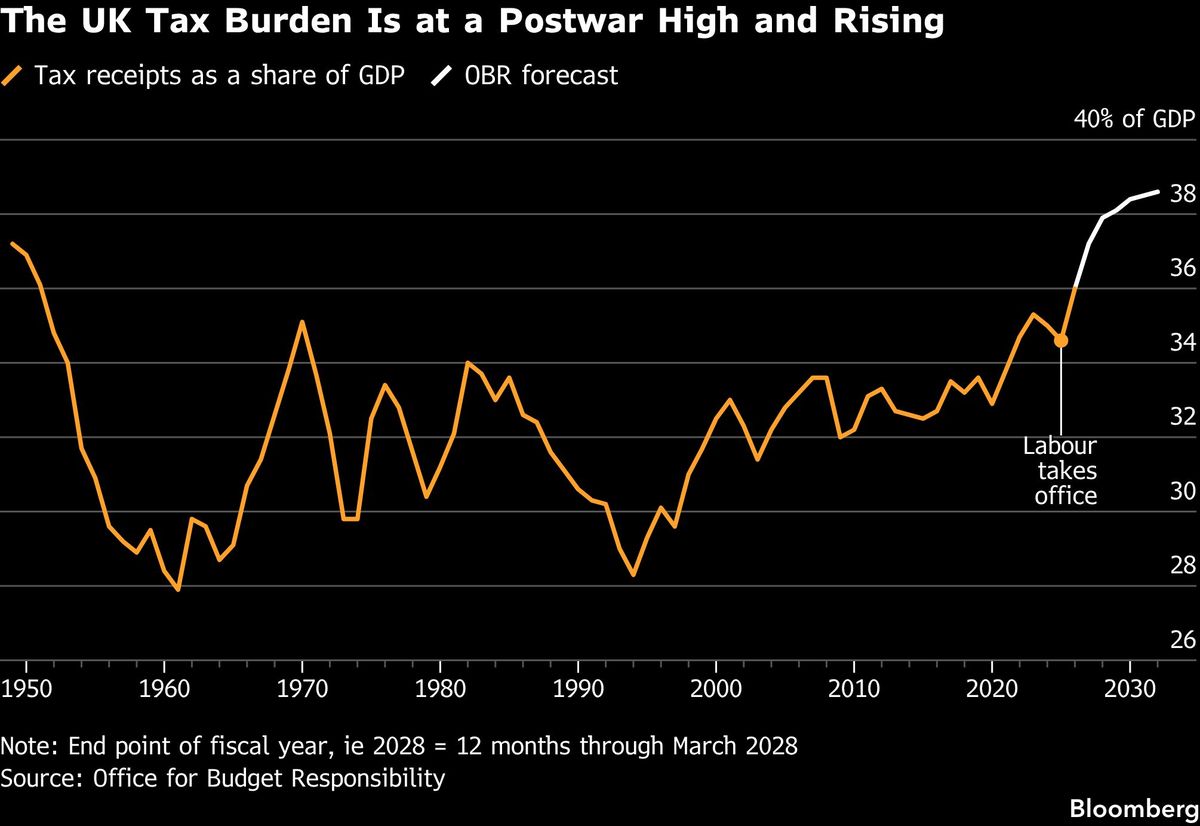
Healey is pushing the other way at a time when the tax burden is at its highest since the Second World War and living standards are under renewed assault, this time from the energy shock caused by the US-Iran conflict.
Analysis this month by Adam Slater, the lead economist at Oxford Economics, found that while all consolidation programmes have a high failure rate, “the evidence suggests that fiscal adjustments are more likely to succeed if they rely mainly on spending cuts rather than tax rises”.
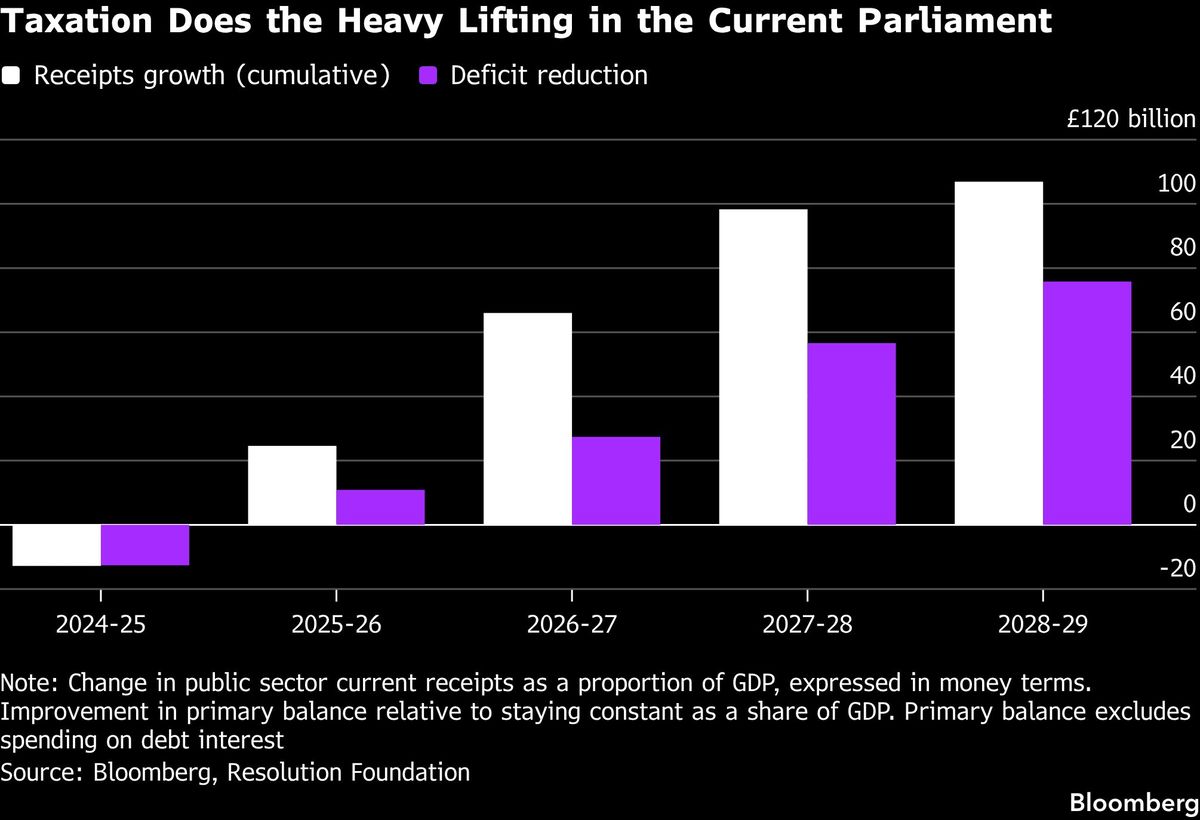
The budget raised taxes by roughly £6 billion a year from 2028 and topped up departmental day-to-day budgets by an average of £3 billion a year. On Thursday, Healey said there are no plans to bring down the hundreds of billions that Britain spends on welfare each year before the next general election, due in 2029.
The approach has opened up Labour to attacks from the opposition Conservative Party. “On the big challenges, what has this budget actually done? It does not reduce borrowing. Total debt has gone up. It does not properly fund defence,” said shadow chancellor Andrew Griffith. “It does not cut taxes to get the economy growing. Instead, they are putting up taxes again.”
His choice of tax levers suggested he is running out options. With his hands tied by Labour’s manifesto pledge not to raise any of the four main tax rates, much of the work was done through administrative tweaks, including powers to deduct funds directly from debtors’ bank accounts.
Additional taxes on savers, landlords and banks raised only £2 billion, and the increased bank surcharge is withdrawn after 15 months. Five of Healey’s measures have a “high degree of uncertainty”, the Office for Budget Responsibility (OBR) judged.
Rodrigo Valdes, the director of the IMF’s fiscal affairs department, said earlier this month that the UK has raised taxes so much there is little left that does not have side effects. “More revenues is not easy,” he said. “It distorts at the end of the day.”
“There is a limit to how much you can squeeze out of households and businesses before crimping economic growth,” said Paul Dales, the chief UK economist of Capital Economics. “We may have reached that limit.”
Tax receipts climbed to 36% of gross domestic product (GDP) last year and are on course for 38.6% of GDP in 2031-2032, the OBR predicts. Between 1997 when Labour last took power and the eve of the pandemic in 2020, the burden averaged 32.7%. The bulk of the increase is coming through frozen tax thresholds, which have dragged millions of people into paying more tax as their pay rises. A full-time worker on the national minimum wage earning £25,275 is now halfway to paying higher 40% rate of tax.
Tax hikes since 2020 by both the former Conservative government and the current Labour one partly explain the collapse in living standards this decade, Resolution chief executive Ruth Curtice said. Real household disposable incomes are forecast to rise just 1.4% this decade, just a tenth of the growth in the 2010s which itself was the worst decade since at least the 1960s.
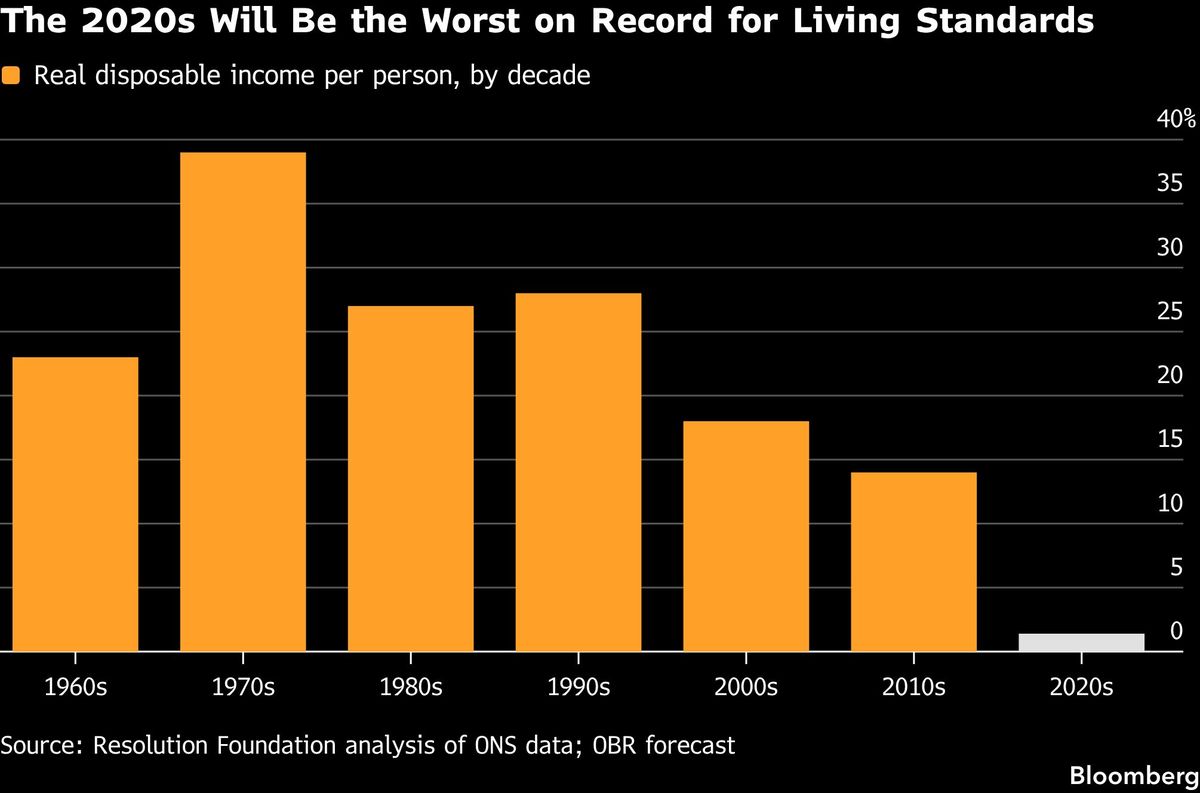
“The 2020s are on course to have the lowest growth in incomes of any decade on record,” Resolution’s post-budget report said, “because of rising taxes and import prices.”
Taxing the rich is no longer an easy option, with Bloomberg analysis last month showing that the share of total income tax paid by the highest earners in the UK has doubled in less than two decades — a hit of £100 billion. That comes on top of other raids targeting the wealthy on everything from private school fees and expensive houses to Britain’s long-standing non-domiciled regime.
Work by the Institute for Fiscal Studies in 2024 showed that the share of tax paid by the top 1% of income taxpayers rose from 25% in 2010-2011 to 28.5% in 2023-2024, while income and payroll taxes took a smaller fraction of the earnings of a single full-time median earner with no children than at any time for almost 50 years.
Uploaded by Tham Yek Lee