

(Oct 30): BYD Co’s latest earnings signal that this year’s surge in car exports won’t be enough to recapture lost momentum in Chinese auto stocks.
Its shares slipped as much as 2.4% in Hong Kong on Friday after the country’s biggest carmaker reported third-quarter profits and revenue that missed analysts’ estimates, overshadowing overseas sales more than doubling from a year ago. An export-led growth story didn’t help BYD’s nearest local competitor, Geely Automobile Holdings Ltd, either as its stock fell for a second day.
The two auto giants’ failure to reinvigorate enthusiasm bodes ill for a once high-flying industry that investors have soured on for more than a year. China’s car market, the world’s largest, continues to shrink and more recently some authorities abroad have stepped up efforts to slow down the flood of Chinese imports.
“Exports face new headwinds just as they have become a key profit driver for BYD,” said Joanna Chen, an analyst at Bloomberg Intelligence. Investors will focus on how fast BYD can ramp up overseas production, and how profitably it can make cars overseas compared with back in China, she said.
Some companies, particularly foreign brands, have been even worse off. Volkswagen AG, Europe’s largest carmaker, on Thursday reported a loss for the latest quarter, largely because of exposure to China.
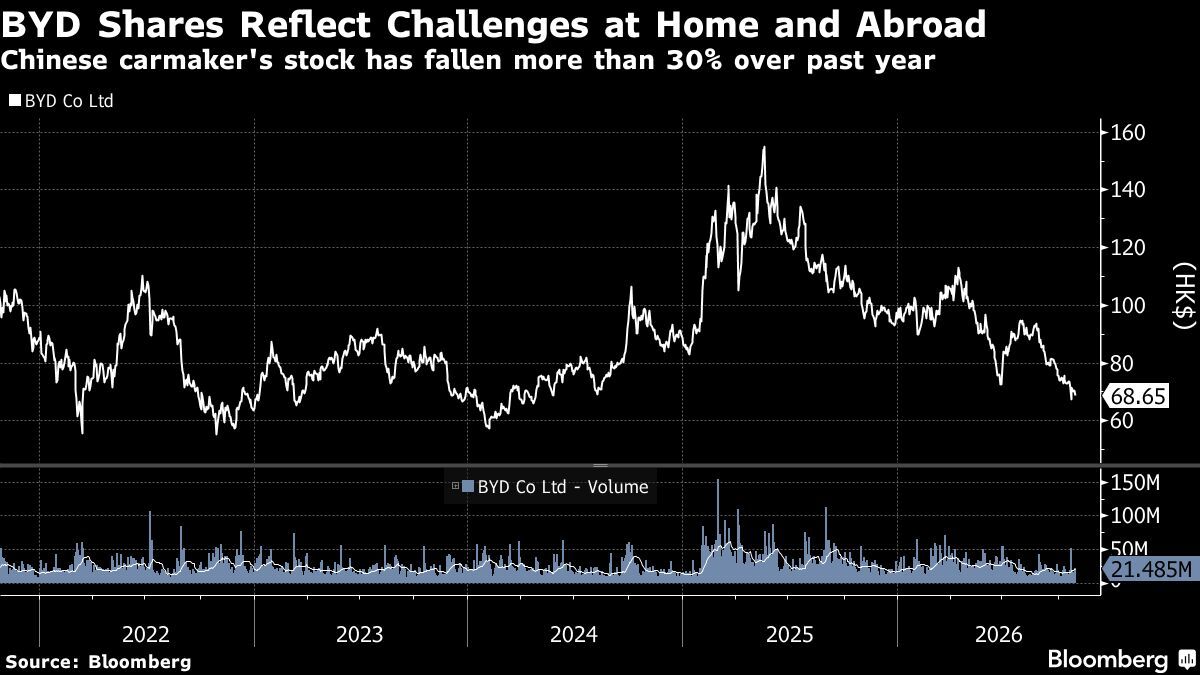
In the run-up to the earnings reports, signs emerged that some investors were turning more bullish on BYD as short sellers pared back bets against the stock, which has fallen nearly 30% in Hong Kong this year, heading for its biggest annual drop since 2011.
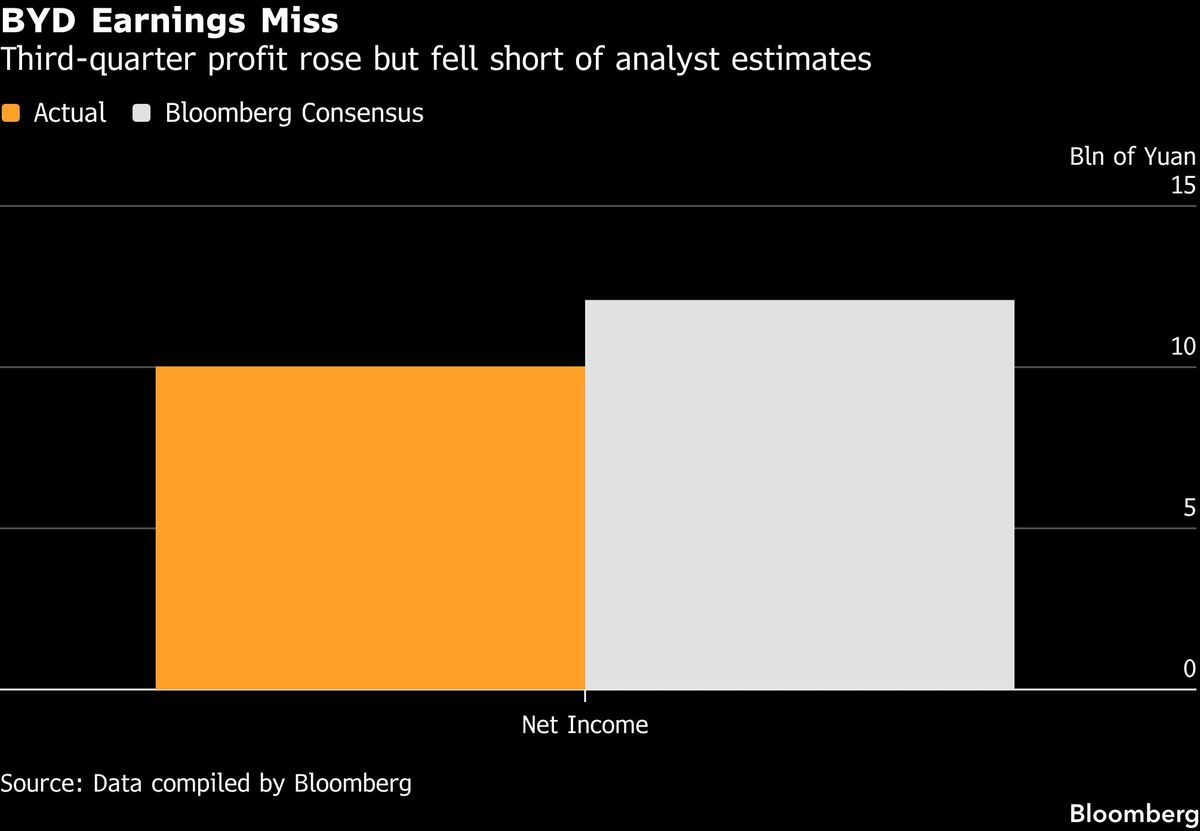
Profit climbed 28% from a year earlier but fell short of the average analyst estimate compiled by Bloomberg by 17%. Revenue was about 8% less than what analysts had estimated.
Scale gains were absorbed by cost pressures, according to a research note from analysts at Jefferies, who have a 'hold' rating on BYD shares.
The results also pointed to a build-up of inventory, currency-related losses amid the continued appreciation of the Chinese yuan and a big drop in income from financial investments, the Shenzhen-based carmaker disclosed.
BYD and other Chinese carmakers are facing slowing demand and intense price competition domestically, making a pivot overseas — where their budget-friendly, technology-focused models make more money — critical to survival.
But their popularity is creating new hurdles, particularly in Europe, where Chinese automakers outsold Japanese rivals for the first time ever for a full quarter. Registrations of Chinese-branded cars roughly doubled to make up 12.7% of total sales across the region, led by hybrids, according to market researcher Dataforce. Five years ago, Chinese brands accounted for barely 1% of European sales.
The European Union has already imposed extra tariffs on China-made battery-electric vehicles, and this month agreed in principle to curb fast-growing imports of hybrid cars from China. Plug-in hybrid vehicles have accounted for nearly half of BYD’s passenger car sales.
The restrictions are spurring BYD to spend billions of dollars to build a physical presence in Europe. Its first factory in the region, located in Hungary, is set to start mass production in the fourth quarter, Stella Li, the executive vice-president who heads the company’s overseas business, said this month. France and Spain are on the shortlist for future plants, and the carmaker wants to build a European workforce of about 40,000 employees by the end of the decade, she said.
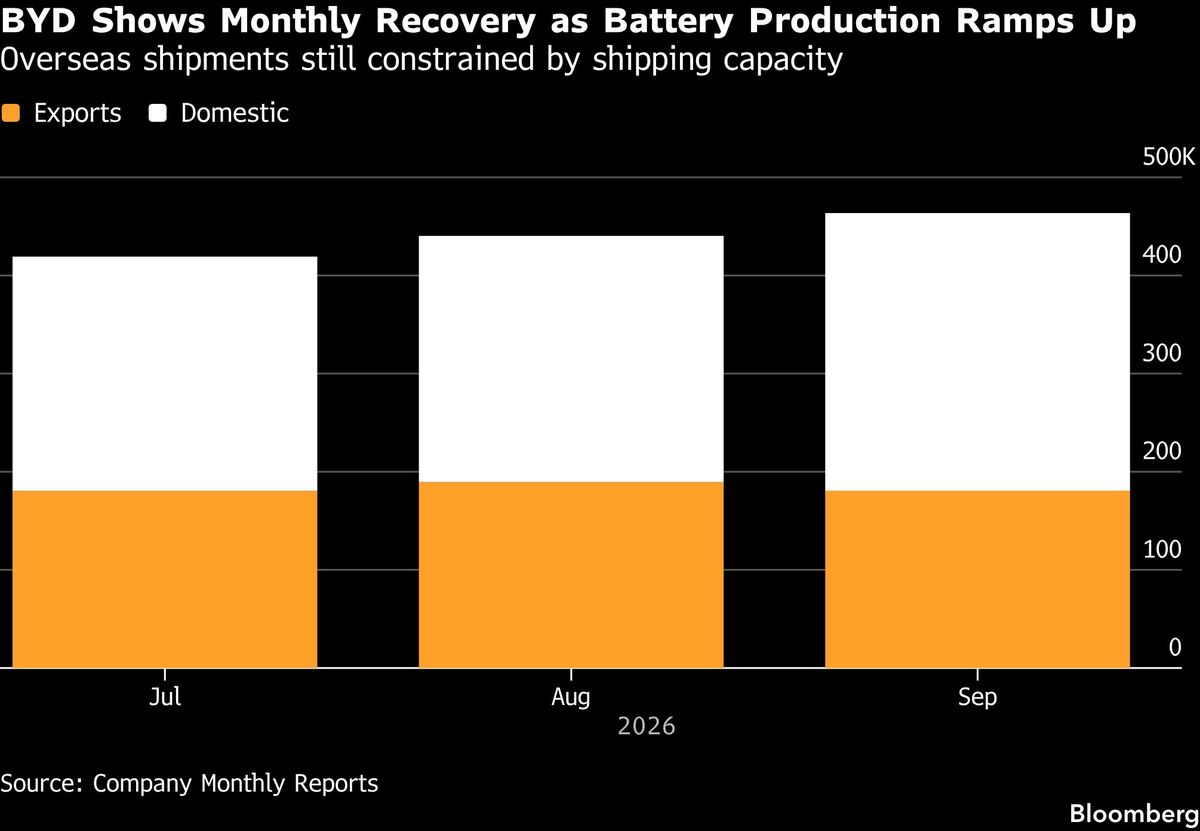
For the first nine months of the year, deliveries have lagged behind sales during the same period a year earlier, putting its annual sales target — five million to 5.5 million — further out of reach.
However, the company did see a recovery in deliveries at home as it ramped up production of its latest generation of Blade batteries, with August and September local shipments marking month-over-month increases.
The company is betting on the fast-charging system to further boost sales, and has brought the first sport utility vehicle equipped with the latest batteries to Europe during the Paris Motor Show. Li also confirmed earlier this month that BYD had ordered 10 more vessels, in addition to its operational fleet of eight cargo ships.
Yet domestic pressure is set to continue into next year. China’s total sales are set to tumble 22% this year to just 18.5 million vehicles, the Passenger Car Association estimates. The group expects average growth of 2% next year, a pace that it describes as a weak recovery rather than a strong rebound.
Uploaded by Tham Yek Lee