

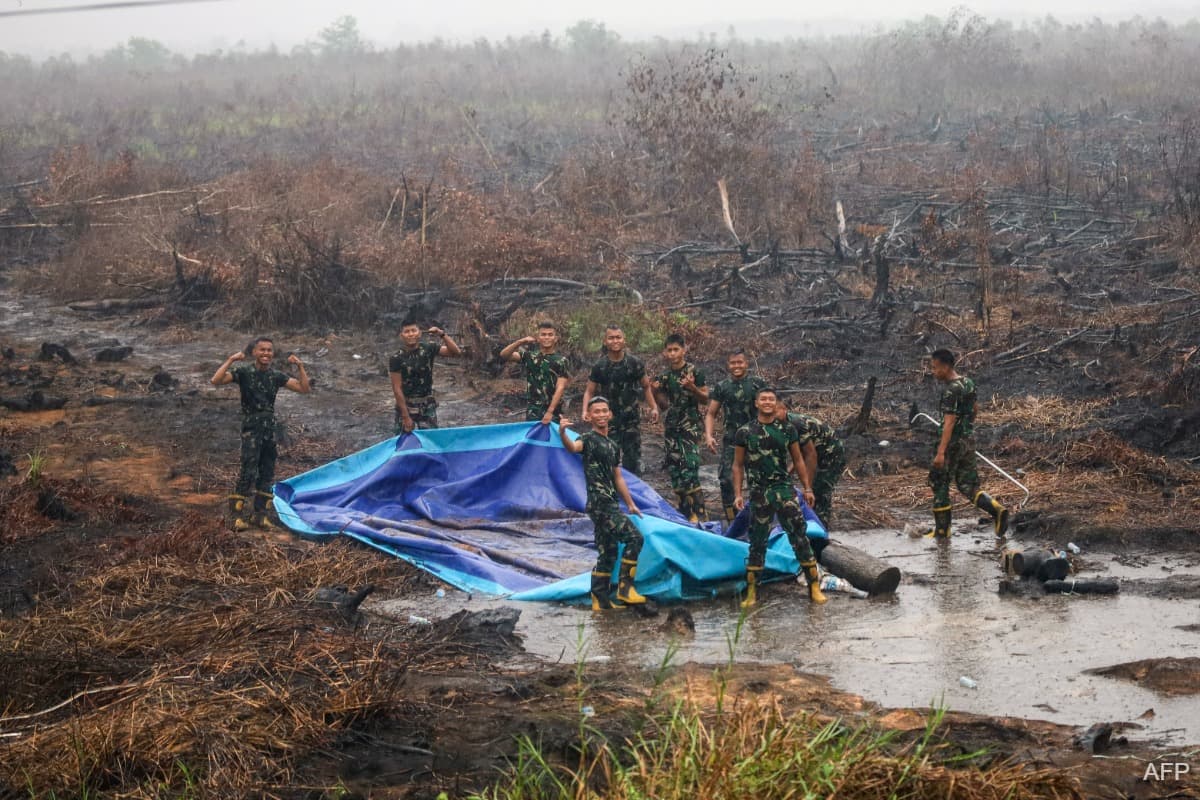
(Oct 29): Indonesia is set for more consistent rain next month, providing relief from wildfires that have spewed toxic smoke across Singapore and Malaysia, though widespread downpours are still weeks away.
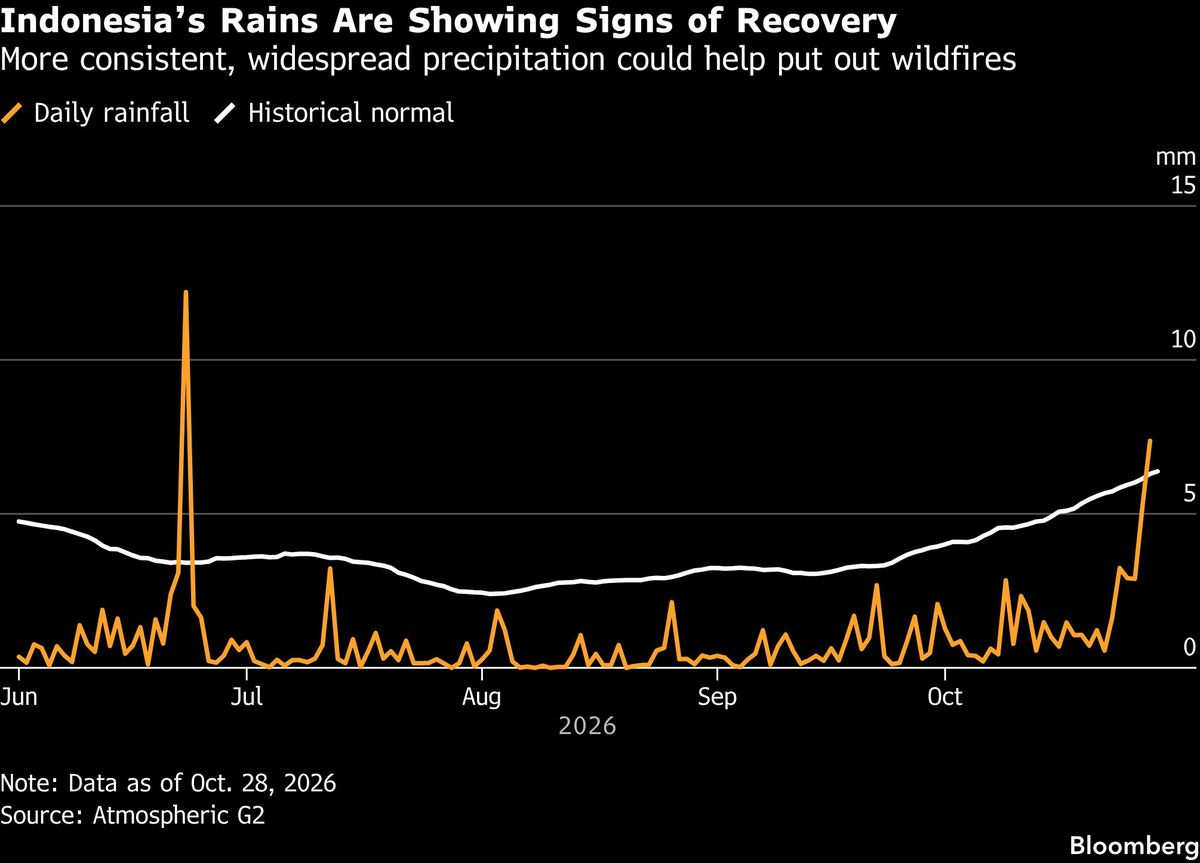
Rainfall has picked up across Indonesia in recent days, helping to replenish soil moisture after months of severe drought triggered by El Niño, according to weather data. While that’s offered some respite, heavier rain isn’t expected until at least early December in regions such as Kalimantan, where blazes have raged and most of the remaining fire hotspots are located.
The choking haze from Indonesia’s worst fire season in years has cloaked local towns and drifted across neighbouring countries for weeks, closing schools, driving demand for air purifiers and straining diplomatic ties. Singapore’s foreign minister visited Jakarta this week to ease widening tensions, with the two countries agreeing to establish a joint taskforce on forest fires.
Indonesia has received less than a quarter of its normal rainfall since June, according to Atmospheric G2, leaving the landscape bone-dry and making fires often linked to slash-and-burn agricultural practices harder to contain. Nearly 13,500 hotspots have been detected nationwide so far this month, the most since 2015, and adding to high counts in September and August, the forestry ministry’s SiPongi platform shows.
“Substantial rainfall should fall through November, generally increasing further in December and remaining significant into early 2027,” said Andreas Vallgren, chief science officer at weather intelligence firm Ignitia. “Whether this is sufficient to extinguish existing fires, particularly in peatlands, will depend on how consistently rainfall reaches the affected areas.”
Over recent weeks, Kuala Lumpur and Singapore have frequently topped the rankings of the world’s most polluted cities, according to data from IQAir. The city-state has flagged possible legal action against companies suspected of illegal burning, while more than 1,000 people protested in central Jakarta on Wednesday over the government’s handling of the fires.
Indonesia’s agricultural activity has been impacted. Smog from the wildfires is impairing the activity of weevils that pollinate oil palms in the world’s biggest grower, while haze is slowing harvesting at estates owned by major producer SD Guthrie Bhd (KL:SDG) in Kalimantan and Sumatra, and could weigh on productivity.
The combination of fires and dry weather has prompted the Indonesian Palm Oil Association to trim its production estimates for next year to 56.6 million tonnes, a two-year low, according to M Hadi Sugeng Wahyudiono, secretary general of the industry group. That compares with an earlier forecast of 59 million tonnes.
Still, forecasts point to improving conditions. Near-normal rainfall is expected next month, helping to prevent new fires from developing and curb the spread of existing blazes, according to weather forecasting startup Plannette AI. “Rains will ease fires in Borneo and Sumatra” by December, said chief executive officer and founder Hansi Singh.
Indonesian authorities are hopeful the fire crisis can be resolved in November, said Budi Harsoyo, a senior official at the country’s national weather agency, known as BMKG. Satellite monitoring suggests that the development of hotspots in three provinces hit hardest by fires may be letting up, he added.
There are rising chances of monthly rainfall exceeding 300mm in parts of South Sumatra, Central Kalimantan and South Kalimantan in December, BMKG said this week. Precipitation is expected to pick up in the first week of the month, according to an outlook from the European Centre for Medium-Range Weather Forecasts.
One wildcard risk, said Ignitia’s Vallgren, is that the persistence of fires and smoke can crimp rainfall, because the smog blocks sunrays and inhibits the convective process that forms storms and showers.
History offers a cautionary tale. In 1997, blazes that burned and grew during the prolonged dry season that year were briefly suppressed when rains finally arrived in December, weeks later than normal, but reignited in early 1998 as the rainy season ended prematurely due to a lingering El Niño.
“There is a feedback loop — more fires mean more smoke, which can act to suppress rainfall, which in turn can delay rainfall,” Vallgren said. On the other hand, “if some strong rainfall events make it, they do help to clean the air to some degree, which helps kick-start more frequent storms”.
Uploaded by Chng Shear Lane