

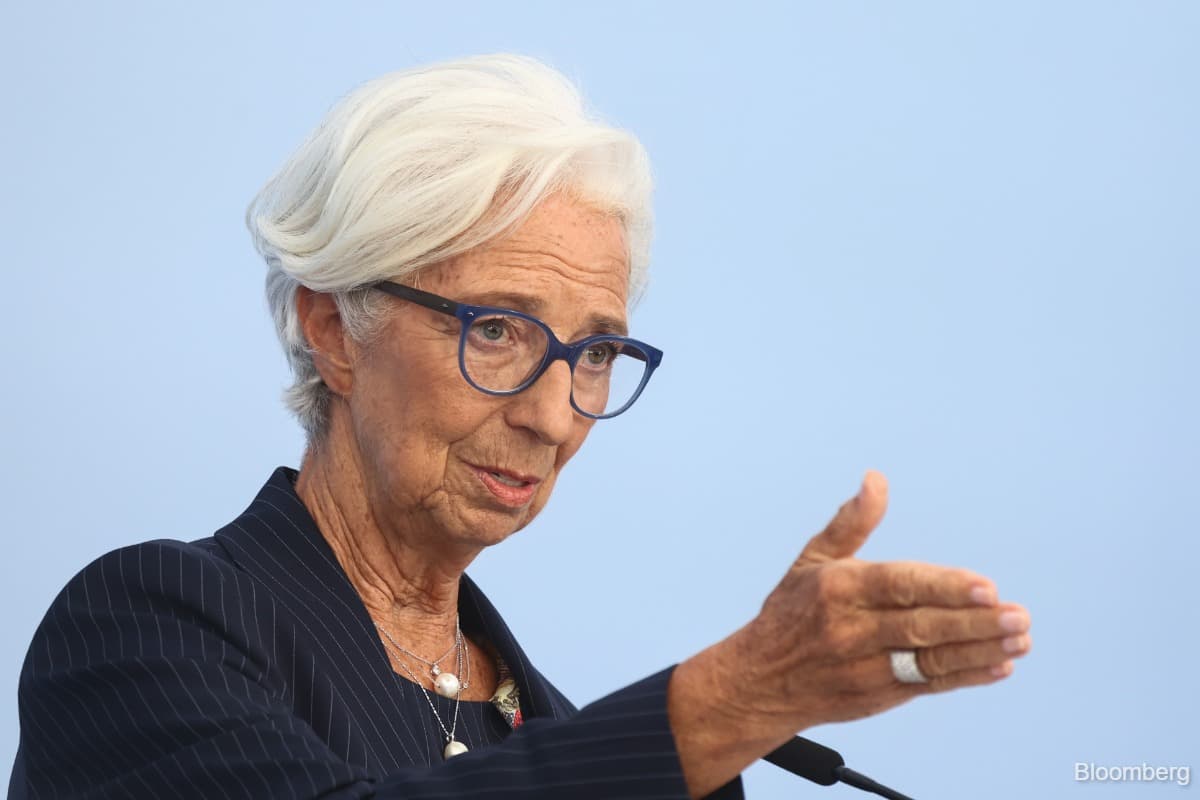
(Oct 29): President Christine Lagarde announced she will leave the European Central Bank (ECB) in early 2027, intensifying the struggle to replace one of the world’s most powerful monetary policymakers.
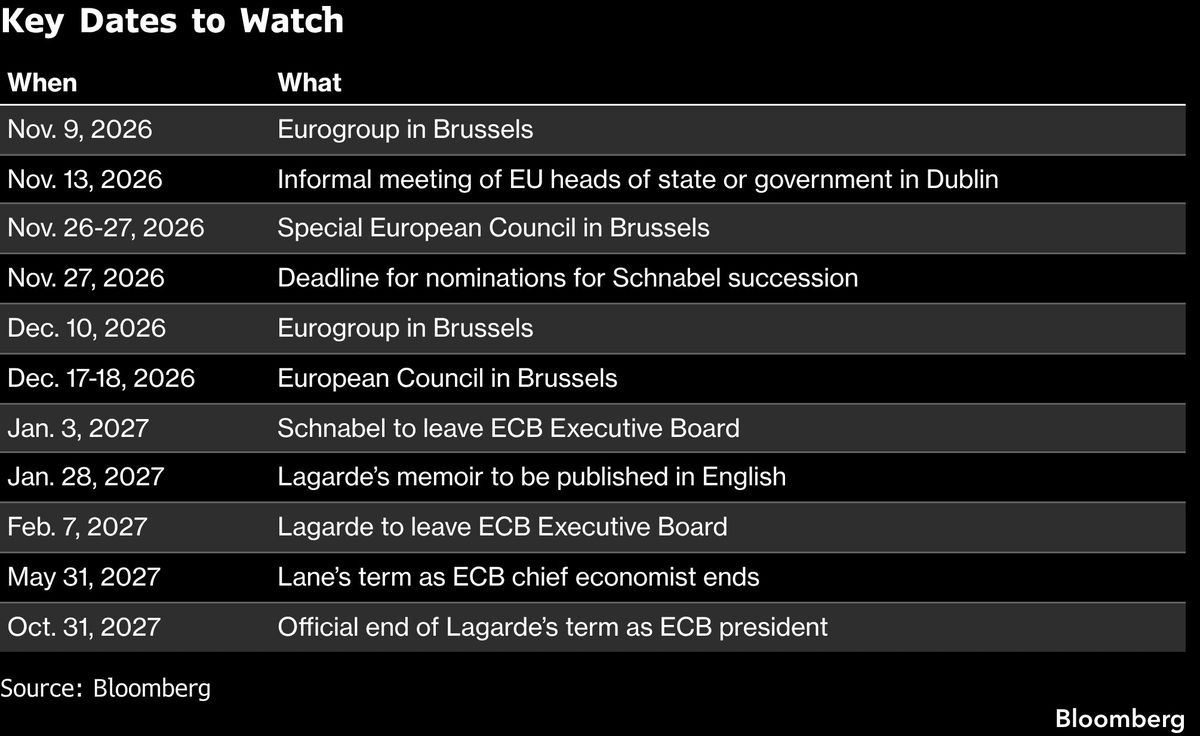
Lagarde will step down on Feb 7, according to an ECB statement on Thursday. She became the institution’s fourth leader, and the second from France, when she replaced Mario Draghi in 2019. Her term was due to end in October 2027.
“I leave this institution with a sense of good work done, and an ECB that is fit for the future,” Lagarde said in a video message. She is departing to be able to better engage in matters like events in France, according to people familiar with what she told the Governing Council on Thursday.
German bonds and their euro-area peers held small gains. The yield on 10-year German debt remained one basis point lower at 3.36%, while the premium on French bonds held steady at 154 basis points.
Lagarde’s departure sets up one of Europe’s most consequential leadership contests, with the winner to oversee interest rates for the eurozone’s 21 member states and their more than 350 million people.
“To ensure a smooth transition to the next leadership of the ECB, the process for the appointment of her successor will be initiated today (Thursday) and will proceed without delay, with a view to a timely decision by the European Council,” European Council president Antonio Costa said in a statement.
The Eurogroup will act swiftly to prepare the recommendation for the next ECB president, its head Kyriakos Pierrakakis said in a statement. A decision will be reached by the end of the year, German Chancellor Friedrich Merz said.
The move comes at a delicate time for the Frankfurt-based ECB, which is battling elevated inflation caused by the Iran war, against a backdrop of volatile geopolitics, nervy bond markets and massive European spending on defence and infrastructure.
Spain’s Pablo Hernandez de Cos and the Netherlands’ Klaas Knot are vying for Lagarde’s job. Economists surveyed by Bloomberg in October reckon De Cos, a former Bank of Spain chief who currently heads the Bank for International Settlements, is the favourite.
Talk about Lagarde’s exit had been building. She had repeatedly declined to commit to finishing her eight-year term. Speculation has been rife, meanwhile, that she wants to take over the World Economic Forum, the organiser of the annual Davos gathering.
Lagarde has also indicated she may like to play a role in campaigning for French presidential elections next spring, but ruled out running for the top job. The cryptic remarks have frustrated colleagues at the ECB, with some worrying it’s a bad look for one of the region’s most important economic institutions.
“Throughout its history, the ECB has successfully managed leadership transitions while continuing to fulfil its mandate,” Lagarde said in a memo to staff. “This situation is no different. I know that the ECB will continue to serve Europe with the same dedication during the period ahead.”
The announcement arrives with the US and Iran still failing to strike a lasting peace deal. The ECB lifted borrowing costs in June and September, and markets expect policy to be tightened further.
Bond yields, meanwhile, have spiked around the globe, with investors becoming particularly nervous about public finances in Lagarde’s home country of France. The premium they demand to hold the nation’s 10-year bonds compared with those of Germany recently hit its highest since 2011, leading to speculation of possible ECB intervention.
While Lagarde has argued that projections point to inflation returning towards target around the end of 2027, critics will accuse her of breaking promises to not abandon her post when “there are clouds on the horizon”.
Before Lagarde, the Netherlands’ Wim Duisenberg was the only president to not complete a full term. But his curtailed stint was agreed in advance to resolve a deadlock between France and Germany before the ECB’s inception in 1998.
European leaders have summits in November and December where they try to select a successor. Beyond the front runners, an outsider can’t be excluded, with Lagarde herself having only entered the frame at the last minute.
Governments must also select a successor for Isabel Schnabel, who’s cutting her term short by a year and will leave in early 2027 to join the the International Monetary Fund. With chief economist Philip Lane’s mandate also up in May, they will probably seek to strike a deal on all three positions.
Lagarde’s premature departure risks drawing accusations of political encroachment on the ECB’s independence, as the timeline now allows President Emmanuel Macron to help replace her before his final terms ends. Polls suggest far-right candidate Marine Le Pen could win the first round of elections for the Elysee.
France’s central-bank chief also resigned early, with Macron appointing Emmanuel Moulin, his chief of staff, to the position.
Uploaded by Tham Yek Lee