

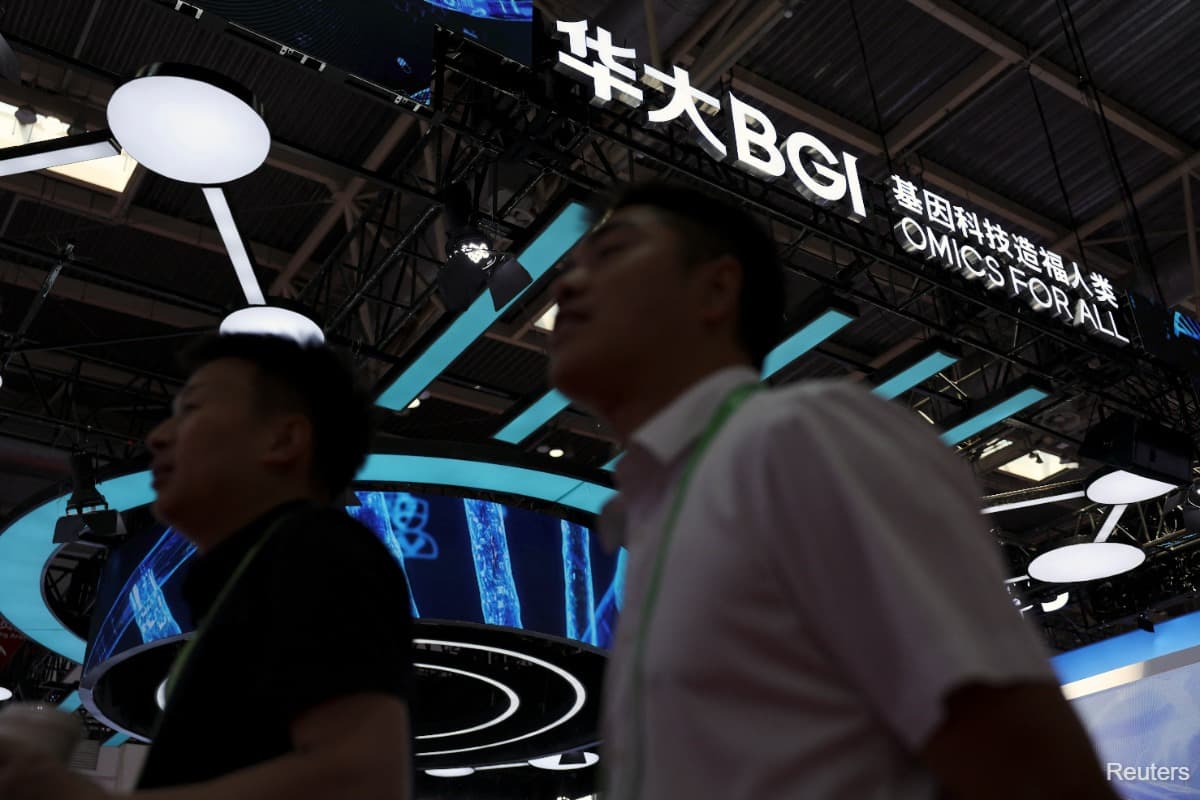
(Oct 29): The US placed an effective ban on imports from the Chinese genomics powerhouse BGI Group and two related entities, one of the most striking applications yet of a law seeking to block goods allegedly made by forced labour from entering the country.
The Department of Homeland Security added BGI Group, its publicly traded genomics-testing unit BGI Genomics Co, and the spinoff MGI Tech Co to the Uyghur Forced Labor Prevention Act Entity List, according to a Federal Register notice posted Wednesday. The designation creates a presumption that the companies’ goods are made with forced labour and can’t enter the US unless importers prove otherwise.
The department accused the companies of working with the government in China’s Xinjiang region to do genetic testing that facilitates “the monitoring, surveillance and repression of ethnic minorities by the government of the People’s Republic of China, including the abhorrent practice of forced labour”. It also cited a desire to protect economic and corporate interests.
“This is about enforcing our laws, protecting American businesses from unfair competition, and making clear that companies connected to forced labour will not get a free pass in this country,” said Homeland Security Secretary Markwayne Mullin in a statement. It described the three companies as collectively constituting “one of the largest advanced gene-sequencing and genetic-material collection enterprises in the world”.
While the companies already are on other US blacklists that restrict access to American technology and curtail their ability to contract with the government, barring imports represents the most aggressive action yet to wall off their operations. The move comes as the race to dominate in life sciences picks up pace, with Washington and Beijing increasingly playing a role.
China said the US action lacked a basis in fact, urged the government to stop its “attacks and smears” and said it would take the necessary steps to safeguard the interests of its enterprises.
“The US measures have seriously undermined the legitimate rights and interests of the relevant Chinese enterprises and severely disrupted the stability of global industrial and supply chains,” said Liu Chang, the Chinese embassy spokesperson in Washington, in a statement.
Last year, China put US industry leader Illumina Inc, an MGI rival, on the unreliable entity list and banned its sequencing machines from the market in retaliation for new tariffs ordered by US President Donald Trump.
BGI Group, BGI Genomics and MGI Tech in separate statements denied the allegations and said they respect internationally recognised principles concerning human rights and labour standards. They also both said their activities in the US represent only a limited part of their overall businesses.
BGI Group and BGI Genomics will “actively communicate with the relevant authorities and take appropriate measures as needed”, they said, while MGI Tech pledged to “challenge the designation” and seek the company’s removal from the list.
Beijing has denied US and Western countries’ allegations it has committed genocide against Uyghurs and other Muslim minorities in China’s Xinjiang region.
More federal restrictions could lie ahead for Chinese biotech firms, according to Kit Conklin, chief strategy and global affairs officer at Exiger, a supply chain AI company that works with the government to enforce trade laws like the Forced Labor Prevention Act. While that law bans imports, Conklin said he expects the administration to use other tools to target activities such as clinical trials, testing and modelling.
MGI makes a range of genetic sequencers and sells the equipment to researchers, biotechnology companies and hospitals. BGI Genomics offers genetic sequencing products and services, as well as other types of medical diagnostics.
Despite efforts to expand globally, the two companies have struggled to gain a foothold in the US. While neither breaks out US sales figures, BGI Genomics reported that the Americas region accounted for less than 2% of its 2025 revenue. While about 8% of MGI’s revenue comes from the Americas, it has warned that geopolitical pressures are weighing on its business. The company decided to divest its US subsidiary, Complete Genomics, in February, citing an “increasingly grim policy environment in the US market”.
The trio of genomics companies are among the highest-profile to be added to the list, which was created by a 2021 law and now includes 190 entities. To date none of the listed entities have been able to resume importing to the US by meeting the law’s standard of proof that their goods are not made with forced labour.
In response to a previous round of additions to the forced labour list in July that targeted lesser known firms, China sanctioned six US entities.
Uploaded by Chng Shear Lane