

This article first appeared in City & Country, The Edge Malaysia Weekly on October 26, 2026 - November 1, 2026
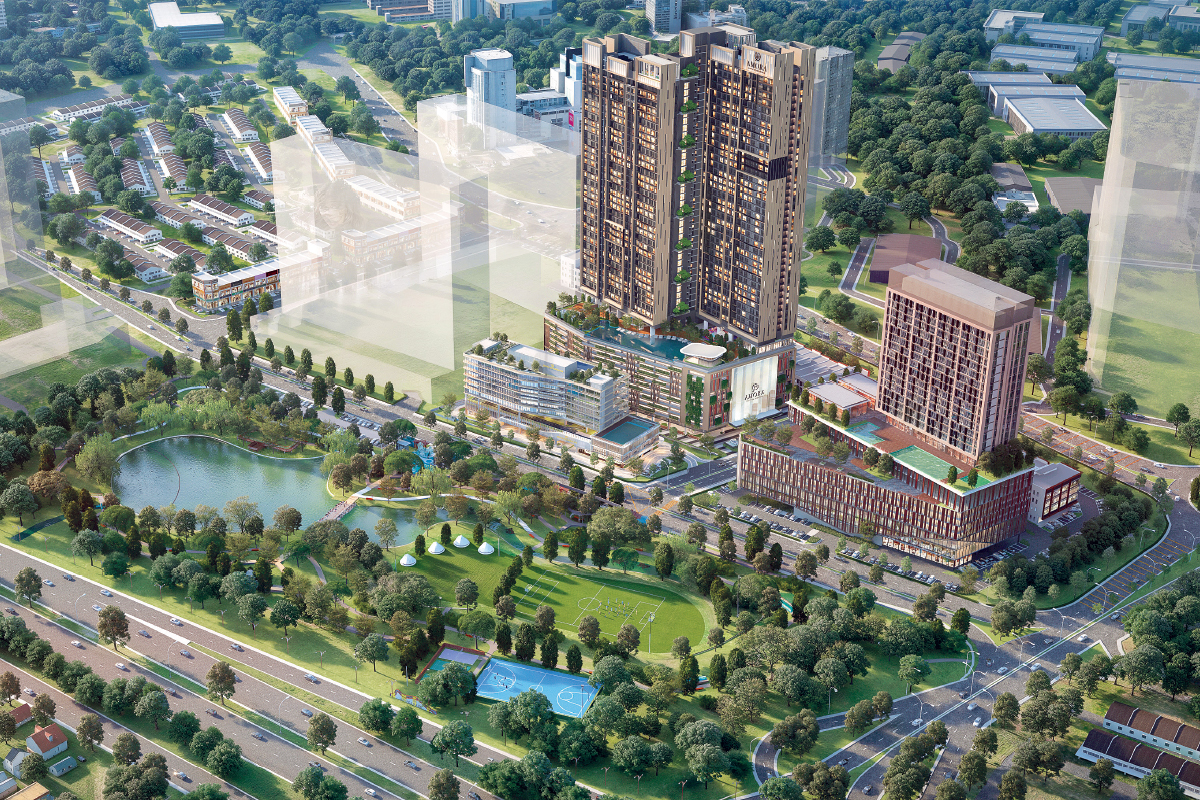
Johor-based Astaka Padu Sdn Bhd is taking an integrated approach to its latest development in Tampoi, Johor, combining residential, commercial, retail, hospitality and education components with a focus on wellness.
Known as Amora Park, the 11.76-acre freehold development will comprise four plots: commercial component Amora Boulevard, Amora Serviced Residence, Amora Wellness Mall and Amora Education Hub.
The development has an estimated gross development value (GDV) of RM930 million, with the serviced apartments contributing RM450 million; the mall, RM285 million; and the shopoffices, RM153 million. The entire development is targeted for completion by 2032.
Amora Park marks Astaka Padu’s first integrated development following Singapore Exchange-listed Astaka Holdings Ltd’s disposal of its entire stake in the company, completed in September.
Astaka Padu CEO Allen Khong says the development is intended to build on the growth potential of Tampoi while offering an alternative to the smaller, investment-oriented apartments that have become common in the city centre.
“We are a modern lifestyle property developer. After taking on the Tampoi land for development, we conducted market research and assessed our target buyers and market positioning, identifying opportunities in wellness, healthcare and education, alongside quality apartment living,” Khong tells City & Country in an interview.
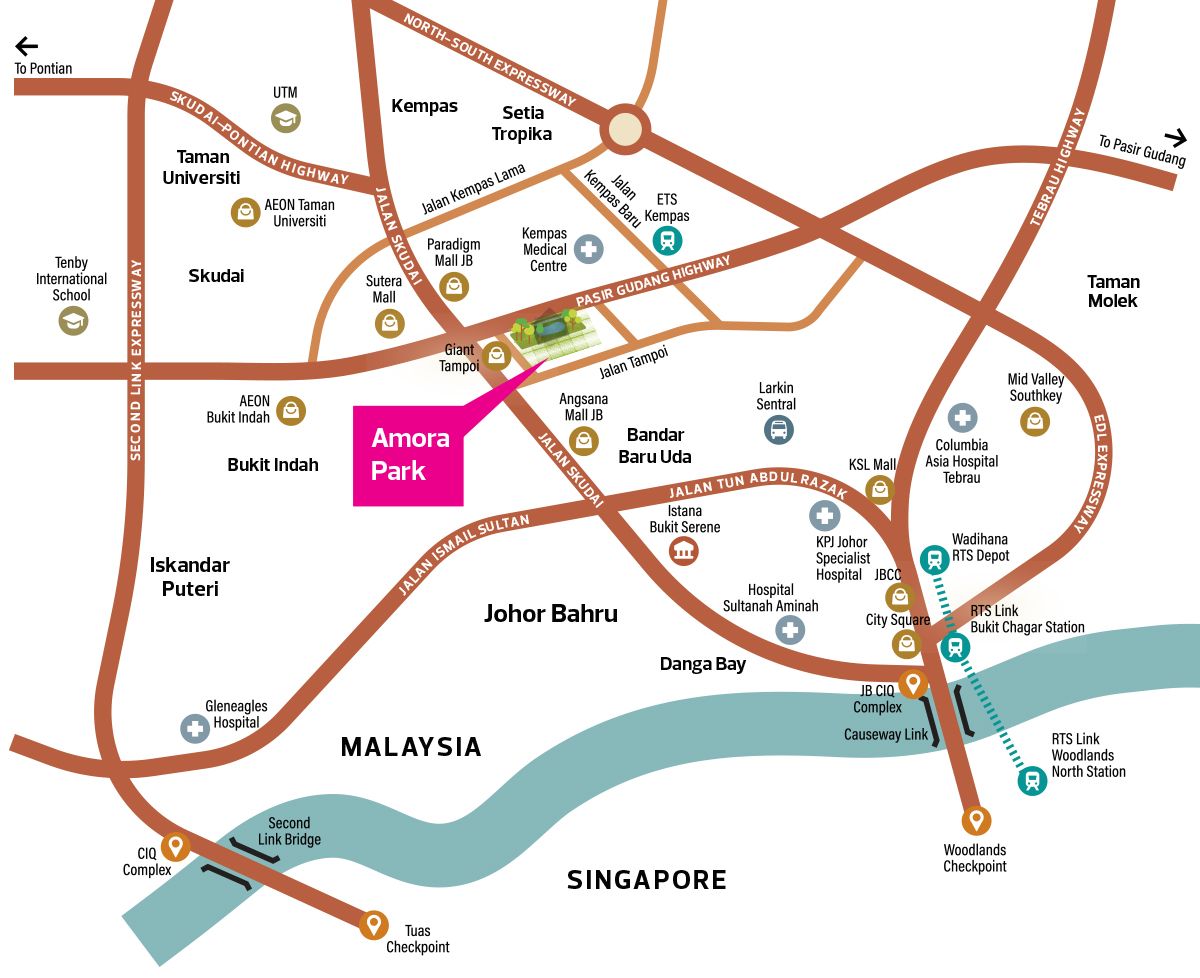
Amora Park is about 15km, or 15 to 20 minutes, from the Rapid Transit System (RTS) Link in Johor Bahru city centre. It is also adjacent to a 15-acre urban park owned by the Johor Bahru City Council (MBJB).
Astaka Padu is working with MBJB to upgrade and maintain the park.
“This is a park that’s important for the community and our development,” he says.
The public park forms part of the wider positioning of Amora Park, which the developer sees as a wellness-oriented development rather than simply a collection of residential and commercial components.

First phase fully taken up
The first component of Amora Park, the five-acre Amora Boulevard, comprises 44 three- to four-storey shopoffices and was officially launched in September, with all 44 units taken up within an hour, according to Khong.
The units at Amora Boulevard are priced from RM3 million for intermediate lots, with built-ups starting from 5,280 sq ft. Khong says sale and purchase agreements are now being signed, with several buyers on the waiting list.
The buyers are all Malaysians. He attributes the interest partly to the strength of the shopoffice market in Johor Bahru and the anticipated economic spillover from the RTS Link and the Johor-Singapore Special Economic Zone (JS-SEZ).
The RTS Link, in particular, is expected to influence property demand in the city, as the cross-border rail connection brings greater connectivity between the two cities, Khong says.
“We do expect to see more economic spillover after the completion of the RTS. Every time there is a milestone for the RTS, people come in and look for property,” he adds.
Amora Serviced Residence
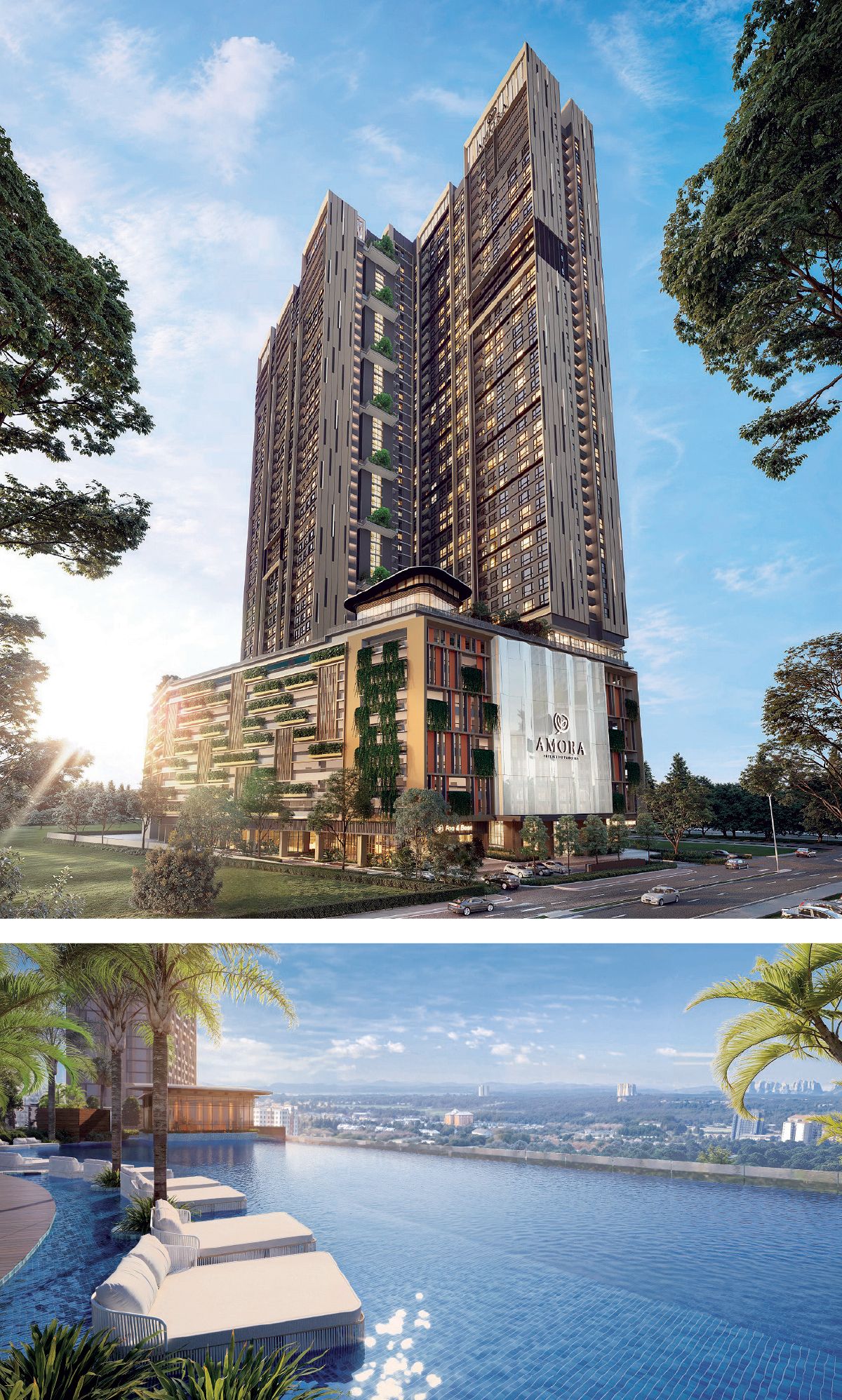
The next component to be launched is Amora Serviced Residence, a 51:49 joint venture between Astaka Padu and Kimlun Corp Bhd (KL:KIMLUN). Occupying 2.45 acres of the development’s freehold land, it comprises two towers — the 48-storey Tower A and 45-storey Tower B — with a total of 617 units. The development is slated for launch by the end of this year, subject to the relevant approvals, Khong says.
There are three layouts, with built-ups ranging from 990 to 2,230 sq ft. The units come in configurations of 3-bedroom, 2-bathroom; 3-bedroom, 3-bathroom; and 4-bedroom, 3-bathroom. Prices start from RM600,000.
There are 142 dual-key units with the 3-bedrooms, 3-bathroom configuration; and 14 penthouses with the 4-bedroom, 3-bathroom configuration.
Khong says such units appeal to buyers who want a more spacious apartment but do not want to pay the higher prices associated with landed homes.
“Landed property in Johor Bahru has become increasingly expensive. Gated and guarded terraced houses are already commanding at least RM1 million,” he says.
The target market spans local residents, Malaysians working in Singapore and selected foreign buyers, with a focus on larger households, holiday-home buyers and those seeking multi-generational living.
“The dual-key units are intended to provide further flexibility and can be used as a larger home, with the two portions combined, or as separate living spaces. Alternatively, one portion can be used by the owner while the other is rented out,” he says.
Offering short-term stays
One of the more distinctive features of Amora Serviced Residence is its hotel stay management concept, says Khong.
He recognises that the commercial title of a serviced residence makes it difficult to completely prevent short-term stays. Instead, it is taking an approach that seeks to regulate them through a dedicated operator.
Tower A will accommodate units for short-term stay, while Tower B will be reserved for permanent residents. Of the roughly 320 units in Tower A, about 220 may eventually be used actively for short-term stays, although not all owners are expected to participate in the programme.
“Owners who opt into the hotel stay management scheme will be able to place their units with the operator when they are not using them. They will also be able to block out dates through an app when they want to stay in their own units,” he explains.
The arrangement is intended to appeal particularly to buyers who live or work in Singapore and may use their Johor Bahru property as a holiday home rather than a full-time residence.
To minimise disruption to permanent residents, short-term stay guests in Tower A will have a dedicated lobby and lift access. They can also use selected facilities on the common facility level, but access to bookable amenities, including the karaoke room and multipurpose hall, will be restricted.
The sky facilities in Tower B, such as the executive lounge as well as halal and non-halal live kitchens, will be accessible only to residents.
“We have designed the entire building from the beginning with the hotel stay management concept. We try to separate the activity and flow for residents and short-term stay guests,” Khong says.
Facilities at the serviced residence include a 50m infinity pool, gym, yoga rooms, children’s pool and play areas, an entertainment lounge, a games room, karaoke rooms, barbecue areas as well as outdoor and indoor co-working spaces.
The multipurpose hall can be configured for sports such as pickleball and badminton.
“The MCO (movement control order) made us rethink lifestyle needs. People want bigger rooms and more activities within their residential developments,” he says.
The developer is aiming for the serviced residence to achieve Green Building Index (GBI) certification.
While units do not come fully furnished, Khong says buyers can opt for a renovation package, choosing to customise their kitchens and interiors or opting for a standardised finish.
A wellness-oriented development
Beyond the residential component, Khong sees wellness, medical services and education as key elements of Amora Park’s longer-term positioning.
The planned Amora Mall, which has a gross floor area of 400,000 sq ft, will be focused on neighbourhood retail, food and beverage, wellness and selected medical services. He expects the mall to include a major grocer, home appliances, F&B outlets and a food court, alongside beauty and wellness services such as hair and beauty salons, manicure and pedicure services.
Medical-related uses could include health check-up centres, aesthetic services, traditional Chinese medicine and rehabilitation activities.
A wellness hotel is also planned, with potential uses including confinement and rehabilitation, step-down care, active living and assisted senior living. The developer believes the ageing population and growing demand for senior living, wellness and healthcare services could become important opportunities for Johor Bahru.
“The wellness mall is what really makes this development different. We strongly believe that the ageing population or senior living market will still be one of the biggest trends or opportunities for Johor Bahru to capture after the opening of the RTS,” he says.
The fourth component, Amora Education Hub, will be developed at a later stage. Astaka Padu is in talks with international and private school operators to establish a hub for children aged six to at least 13, potentially extending to 18. The facility is expected to accommodate about 300 students.
Looking beyond the city centre
Amora Park also reflects Astaka Padu’s strategy of looking beyond the city centre.
Khong says the market has seen a proliferation of smaller apartments geared towards investment. Amora Park, meanwhile, is intended to appeal to buyers seeking larger homes for their own stay, retirement, holiday use or medium- to long-term stays.
“Holiday-home buyers and those purchasing for their own stay may not need to be so close to the city centre. They may prefer a less congested area for retirement, wellness or a home for their children while they study in Johor Bahru,” he adds.
He sees the RTS Link and JS-SEZ as key catalysts for the city’s next growth phase, albeit via different channels.
The RTS Link is expected to boost cross-border movement between Johor Bahru and Singapore, while the JS-SEZ could attract businesses, investment and more workers to the region. Khong notes that activity in the latter extends beyond data centres, with manufacturing also growing. Together, these developments could drive housing demand among those moving to the zone.
Ultimately, Astaka Padu sees the project as part of the wider evolution of Johor Bahru — not just as a residential market linked to Singapore, but as a place where people can live, work, study and spend more of their time.
“We hope our development will give people more reasons to visit Johor Bahru for short-, medium- and long-term stays,” says Khong.
Save by subscribing to us for your print and/or digital copy.
P/S: The Edge is also available on Apple's App Store and Android's Google Play.