


This article first appeared in The Edge Malaysia Weekly on October 26, 2026 - November 1, 2026
A common criticism of nature-based carbon projects is that they could erode the rights of indigenous communities who live on the land and rely on the forests for farming, hunting and gathering forest produce.
There are allegations of failure by project developers to engage with indigenous communities or obtain their permission before imposing limitations on their access to the forest.
This is where benefit sharing agreements are important, because they determine what affected communities receive when a project restricts activities, affects livelihoods or requires their participation in protecting the forest.
However, this cannot be done without clear land tenure and rights for the indigenous community — an evident gap in the country’s legislations governing and protecting rights of the indigenous. This issue was also flagged by the Human Rights Commission of Malaysia (Suhakam) in their “The rights of indigenous peoples in Malaysia” research report published in 2022.
The difficulty arises when the state, a project developer and a community disagree on who holds rights over the same land. An area may be treated as state land for a carbon project even though an indigenous community claims it as customary territory.
Edmund Bon, head of chambers (civil) at AmerBON Advocates and Malaysia’s representative to the Asean Intergovernmental Commission on Human Rights, says land rights must first be sorted out to determine who holds the rights to the carbon credits generated from the land: the state, a legal landowner or an indigenous community.

He says determining who owns the carbon credits is necessary before deciding who may access it, what rights and permits are required, and how benefits should be shared. “If it’s indigenous land, assuming it is customary indigenous land that is already recognised, then you own the tree and what is in the tree, because the tree is capturing the carbon.
“So, if you ask the indigenous community, they will say, ‘We own the carbon’. And theoretically, from a human rights perspective, we take that position.”
Bon says communities claiming that a project was authorised over their customary land without consent could also take legal action to invalidate the relevant agreement, licence or permit. However, litigation is costly, time-consuming and places the burden of producing evidence on communities.
Colin Nicholas, founder of the Center for Orang Asli Concerns, adds that the absence of a registered title does not by itself prove that a customary right does not exist. Communities may lack title because the state has not surveyed or formally recognised their land.
No single framework for benefit sharing
Malaysia currently has no single national standardised framework governing how carbon project revenues are distributed. Arrangements vary by state, project and carbon standard.
For instance, Sarawak’s Forests (Forest Carbon Activity) Rules 2022 require a proposed carbon project to set out benefit-sharing measures where the rights and interests of native communities may be affected. These measures are intended to secure the communities’ consent and support.
The rules also require a carbon licence holder to resolve native customary rights (NCR) claims over land covered by the licence at its own cost. Where a native community’s rights or interests may be affected, the licence holder must secure its consent.
Bon says the Access to Biological Resources and Benefit Sharing Act 2017 could provide a model for a national carbon legislation. The Act, which currently applies in Peninsular Malaysia, regulates access to biological resources and traditional knowledge associated with those resources.
The Act applies when a party seeks access to a biological resource or associated traditional knowledge for commercial purposes. Commercial access requires a permit and a benefit-sharing agreement setting out mutually agreed terms and a fair and equitable share of the benefits.
When an indigenous or local community is involved, prior informed consent must be obtained when the resource is accessed on land over which the community has rights established by law, or when the community’s traditional knowledge is used. The benefit-sharing agreement must then be entered into with that community.
The Ministry of Natural Resources and Environmental Sustainability (NRES) says the 2017 Act provides a strong precedent for ensuring prior informed consent and equitable benefit sharing.
“While carbon credits fall under a different domain [ecosystem services rather than biological resources per se], several principles such as prior informed consent, mutually agreed terms, and benefit sharing are covered under various mechanisms that govern carbon projects,” says the ministry in an email response to ESG.
It says the Forest Carbon Offset, which is to be operationalised by Malaysia Forest Fund, will recognise benefit-sharing arrangements and community involvement and the principle of free, prior informed consent.
NRES acknowledges that benefit sharing should be used as a fair, transparent and equitable mechanism to ensure that state authorities, landowners, and local and indigenous communities receive appropriate returns from the generation of carbon credits.
Monetary benefits can include direct revenue sharing from carbon-credit sales. Non-monetary benefits can include infrastructure, education and healthcare, livelihood programmes and capacity building.
These arrangements must be clearly documented and agreed upfront, with transparency, accountability and inclusivity, says NRES.
The ministry also agrees that benefit sharing is most effective and credible when land tenure and rights are clear.
Legal recognition is crucial in determining the form of benefit a community receives. A recognised landowner may be able to negotiate a direct financial share of revenue or profits from the credits generated from the land.
On the other hand, communities that use the forest but do not have recognised land rights may receive livelihood or development support instead of a direct financial share.
However, land and forests fall under state jurisdiction. States are the ones that determine how carbon rights are recognised and managed within their jurisdictions.
“The owner of a carbon credit is typically an entity that holds the legal title to the carbon right, which is determined by state law or private contract,” says the ministry.
Project developers are granted a right or licence to conduct a carbon project, says the ministry. This can include the right to sell the carbon credits, subject to provisions such as royalties and fees.
SaraCarbon excludes NCR land unless owner keen to participate
For instance, the 25,675ha Marudi Peat Swamp Forest Conservation and Restoration Project in Sarawak has excluded land that has already been surveyed, gazetted and titled as NCR from the carbon project.
If land within the boundary is later surveyed and titled as NCR land, the owner will be given a choice, says Francois Blignaut, Sara Carbon Sdn Bhd’s carbon lead, overseeing the Marudi project. The land can be removed from the project or it can remain under a separate financial benefit-sharing agreement.
If the owner chooses to participate, the company says it will explain how many credits the land could generate and what the landowner would be required to do. It will also disclose the cost of managing the project and the financial share the owner would receive.
“It will totally be up to the community in terms of whether they want to be part [of the carbon project] and if they have chosen to be a part, then that benefit, what will be shared in terms of monetary value, will be negotiated and agreed upon with that community,” says Blignaut.
For communities without a recognised title, SaraCarbon currently provides livelihood and development benefits rather than a share of carbon revenue.
“It will come from the discussions with the community, with the heads of the villages. We will talk to them and ask what the need is, what projects they would like us to initiate in their area, and then work with the community and set up these projects,” says Blignaut.
SaraCarbon has started pilot livelihood programmes for communities around the Marudi project, says Blignaut. These include pig and chicken farming, handicrafts and community nurseries.
He says the company also recognises that communities have traditionally used parts of the forest. They may continue subsistence hunting, fishing and collecting non-timber forest products. Forest clearing, peat drainage and other forms of development are restricted.
However, land claims remain unresolved in parts of the project. SaraCarbon’s public grievance register lists several objections and NCR claims as open or ongoing. These include requests for claimed customary land to be removed from the licensed boundary.
Currently, the project has yet to generate carbon-credit revenue. Blignaut says it plans to use part of future carbon revenue to expand community programmes, although it has not fixed a percentage.

“We’re in the final stages of the validation process. Even though we’ve not been validated yet and have not done any verification or sold any credits, we have started doing projects with the community, because we feel it is important to get this going. It is such an integral part of a carbon or conservation project. We need to get the communities involved and give back to them,” says Blignaut.
“Currently, funding for these projects is coming from our sister companies, because we haven’t reached the stage of verification and selling credits. People need to be clear that anything we’re doing at this stage is funded by the company, because there is no income from the carbon project yet.”
Once the company gets to the verification stage and sells the credits, funds from those credits would be used to start up these projects with the communities, he adds.
Permian Global aims to support surrounding communities
For Permian Global, developer of the 83,381ha Kuamut Rainforest Conservation Project in Sabah, the appropriate model depends on what communities want or need and how they want to participate.
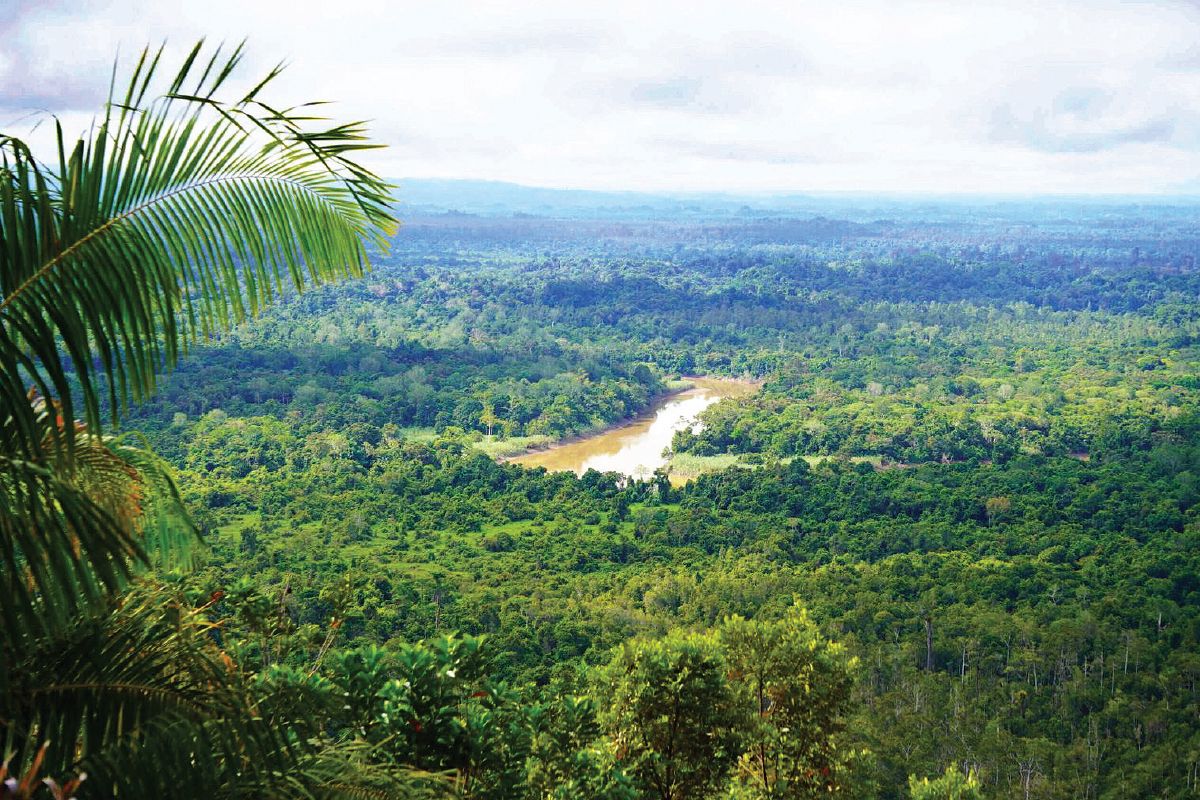
No communities live within the Kuamut project area, says Ivy Wong, CEO of Malaysia at Permian Global. Eight villages are located nearby and the project is already generating and trading carbon credits.
Wong says fair benefit sharing requires deliberate, documented architecture built into a project from the very beginning, not retrospectively applied once credits start selling.

“For consent to be genuinely informed, communities must understand what they are consenting to, including the governance arrangements and the specific benefits on offer. Seeking consent without that information would make the process performative rather than meaningful,” says Wong.
She says the villages are outside the project area and Permian Global does not have contracts with them. It nevertheless chose to work with the communities, because the conservation project provided an opportunity to support people in the wider region.
The support given includes gravity-fed water systems, medical transport, employment and training. Wong says revenue from carbon-credit sales is reinvested across the project, including its community programmes.
The communities identify their priorities through workshops facilitated by Pacos Trust. The Sabah-based organisation has worked with indigenous communities for decades and focuses on indigenous rights and self-determination.
Pacos facilitated consent and community development plan workshops in Bahasa Malaysia and local languages. It also meets the communities regularly and acts as a communication link with the project, according to Wong.
Communities as rights holders
June Rubis, co-founder of Building Initiatives in Indigenous Heritage, suggests that indigenous communities whose customary territories and livelihoods are affected be treated as rights holders and governance actors, rather than simply as beneficiaries of a project.
As rights holders, communities should be able to negotiate the terms of their participation, decide what benefits they want and remain involved in decisions affecting them throughout the project.
Rubis says communities need clear information about the project’s duration, risks and restrictions. They need to know how existing forest use could be affected and what rights or future options they may be giving up.
They also need to understand the commercial arrangement. This includes how credits will be generated and sold, the expected revenues and costs and how benefits will reach the community.

“The community cannot meaningfully assess whether the benefits are fair if they don’t fully understand the rights, the flexibility or even future options that they may be giving up,” says Rubis.
Project developers must engage with local communities to understand what they need. In this regard, the programmes at Kuamut and Marudi largely involve infrastructure and livelihood support due to demand from the local communities.
For instance, Kuamut’s gravity-fed water system happened because communities identified clean water as their most urgent need through the development plan workshops.
Rubis says communities may similarly choose healthcare, roads or support for long-term community plans.
However, Nicholas cautions that kindergartens, roads and other public facilities should not be treated as the community’s sole share of a commercial carbon project. Many of these are services the government should already provide, he says.
Where a community holds customary rights, Nicholas says it should be treated as a landowner and project partner. This means communities should also receive a financial share of the project’s profits.
“If you are a rights holder, if you are a landowner, you have rights over the forest; for example, the area you call your traditional lands, which the courts have recognised. Then the developer should enter into a joint-venture agreement with them,” he says.
“And the benefit is not kindergartens and roads or projects. It’s the cash benefit from the carbon sequestration. It’s a joint venture, and they are part of the profit sharing and so on.”
Bon adds that communities should also be able to see the revenue generated by credit sales and receive a transparent percentage or another agreed share.
Anonymous grievance mechanism needed
A benefit-sharing agreement also needs a grievance mechanism that communities can use.
At Kuamut, Wong says complaints can be made anonymously. They may be submitted in writing, by email or through WhatsApp. The available channels are displayed in the villages.
Pacos acts as an escalation point between village-level concerns and the developer. An external auditor also assesses whether the project has met the social commitments in its project documents.
Meanwhile, SaraCarbon publishes an online grievance form, a conflict-resolution process and the public register of complaints. Its process begins with the community liaison officer and project management. Unresolved matters may be taken to the village development and security committee and relevant government agencies.
If a developer fails to honour a benefit-sharing agreement, communities can seek enforcement through civil legal action, adds NRES. However, access to legal support can be a challenge for rural and indigenous communities.
“Since land matters fall under state jurisdiction, relevant state authorities may intervene depending on the nature of the project, licensing conditions or breaches of local regulations,” says NRES.
Communities can also lodge complaints with relevant government agencies or pursue judicial review or public-interest litigation where applicable.
For projects operating under international voluntary carbon standards, communities may use the project-level grievance mechanisms required under those standards.
“These provide a more immediate and accessible channel for complaints, though their effectiveness can vary,” says the ministry.
Save by subscribing to us for your print and/or digital copy.
P/S: The Edge is also available on Apple's App Store and Android's Google Play.