

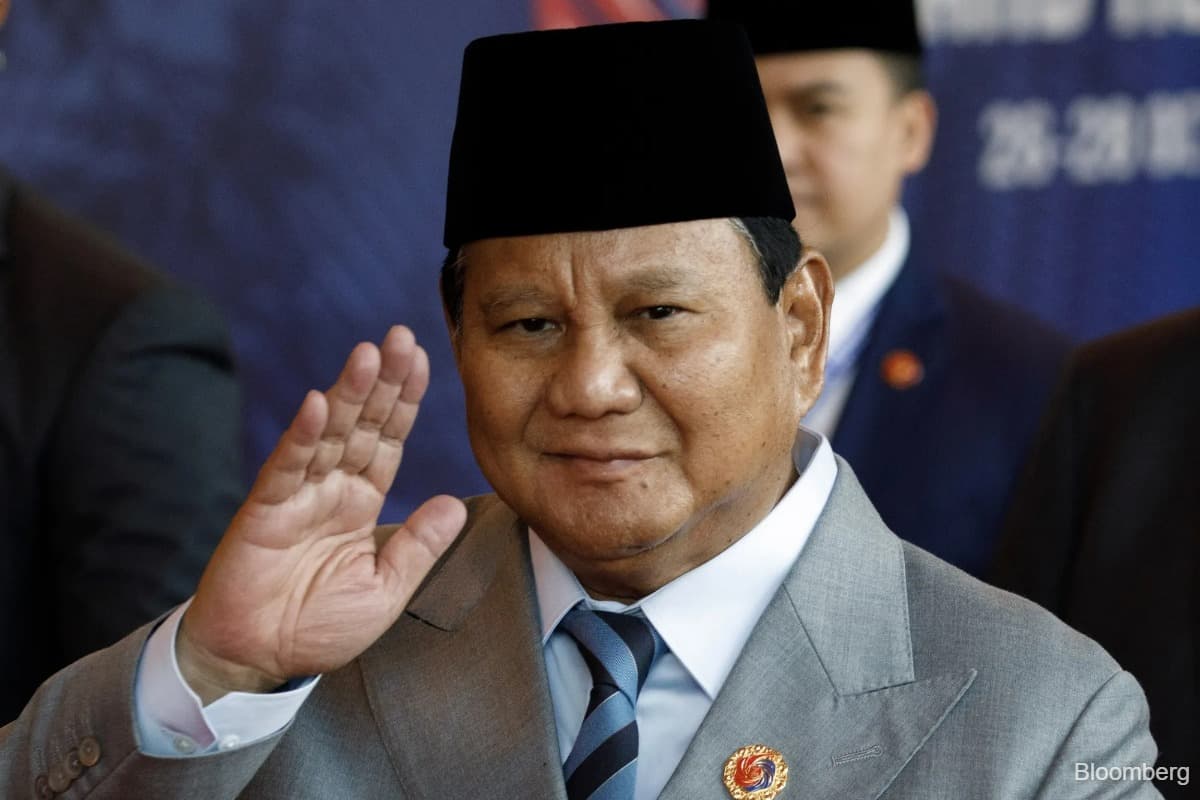
(Oct 28): Singapore’s top diplomat got to Jakarta so fast this week that his hosts described the visit as unexpected.
The flight between the two Southeast Asian capitals takes less than two hours, and Foreign Minister Vivian Balakrishnan was on a mission to quickly soothe relations that had frayed in recent weeks.
Tensions came to a head over the weekend, when Indonesia suddenly cut natural gas supplies to Singapore. The volume involved was manageable, but the abrupt move — coupled with comments by President Prabowo Subianto and members of his cabinet — appeared to send a clear message.
For Singapore, it was key to speak face-to-face. “When things happen, especially transboundary events, there’s a need for high-level direct communication between governments,” Balakrishnan told reporters Wednesday. “You can’t conduct diplomacy just by the phone or through the media.”
Officials in the city-state arranged the trip with their counterparts in Jakarta before frustrations escalated or the situation could be exploited for political purposes, according to people familiar with the matter, who asked not to be identified.
The Singapore envoy met Prabowo on Wednesday afternoon, a day after holding talks with Indonesian Foreign Minister Arrmanatha Nasir. While declining to detail the conversations, Balakrishan said that Singapore Prime Minister Lawrence Wong and Prabowo had been in communication.
“It sets the political commitment on both sides to do what is necessary, and now we will have to implement those plans, execute that commitment,” he said, adding that during his visit he had “good conversations, honest conversations, sincere conversations”.
At a joint press conference with his Indonesian counterpart on Tuesday, Balakrishnan stressed in Indonesian that “we may sometimes have differences of opinion, but what matters most is how we understand these differences and work together to overcome challenges”.
The conciliatory tone contrasted with increasingly pointed comments from some Indonesian officials and former officials, particularly on social media.
Former trade minister Muhammad Lutfi earlier accused Singapore’s Temasek Holdings Pte Ltd and GIC Pte Ltd of pressuring MSCI Inc to consider downgrading the country’s stocks, an allegation both state-owned funds deny.
He later released a lengthy video laying out how Singapore is a conduit for Indonesia resource firms to avoid paying Indonesian taxes — the kind of resource “leakages” that Prabowo has railed against.
Communications and Digital Affairs Minister Meutya Hafid posted what appeared to be a veiled threat that Singapore could lose 80% of its internet service if connections were cut from Indonesia “whether by accident or design”.
Cabinet Secretary Teddy Indra Wijaya earlier said Balakrishnan’s had arrived “unexpectedly” and “pleaded” to meet Prabowo.
The angst followed weeks of tension over severe haze that had blanketed the region, caused mainly by land-clearing fires in Indonesia worsened by El Niño. Singapore had stepped up scrutiny of locally listed companies it said were involved.
After the two foreign ministers met Tuesday, they announced a joint taskforce to address the issue.
That outcome was important to show that both sides wanted the same things: clean air, accountability for the companies involved, and steady energy supplies, according to the people familiar with the matter. Singapore also sees Indonesia’s messaging as directed towards its domestic audience, they added.
That pressure was on display Wednesday, when about 1,000 demonstrators gathered in separate groups around Jakarta’s Hotel Indonesia Roundabout, with some pushing through police barricades. Students protested over the forest fires, government spending priorities and civil liberties, while similar demonstrations were held in other Indonesian cities.
Back in Singapore, officials met with senior executives from 10 companies identified by the National Environment Agency as having possible links to the wildfires. Local media reported that attendees included Wilmar International chairman Kuok Khoon Hong and Franky Widjaja, a member of the family behind the Sinar Mas conglomerate, whose businesses include Asia Pulp & Paper and Golden Agri-Resources.
“We need to make sure that the companies here conduct their operations in a manner that doesn’t affect Singapore or the region,” Senior Minister K Shanmugam told reporters after the meeting. “I told them we expect full cooperation from the companies. And in the meeting, the companies said they will cooperate fully.”
Golden Agri-Resources and Asia Pulp & Paper separately confirmed that senior company representatives met with Singapore government ministers regarding transboundary haze matters.
Sustainability and Environment Minister Grace Fu, who also attended the meeting, said Singapore’s government will propose amendments to the Transboundary Haze Pollution Act at the next parliamentary sitting. The changes will give the current framework the force of law, and “companies that do not comply will be committing an offence”, she said.
The Monetary Authority of Singapore also said it expects banks to engage with clients that may be linked to activities contributing to the haze and obtain enough information to understand their role. “Clear breaches of environmental laws would warrant stronger measures, including limiting exposures or exiting the relationship,” it said in a statement.
Uploaded by Chng Shear Lane