

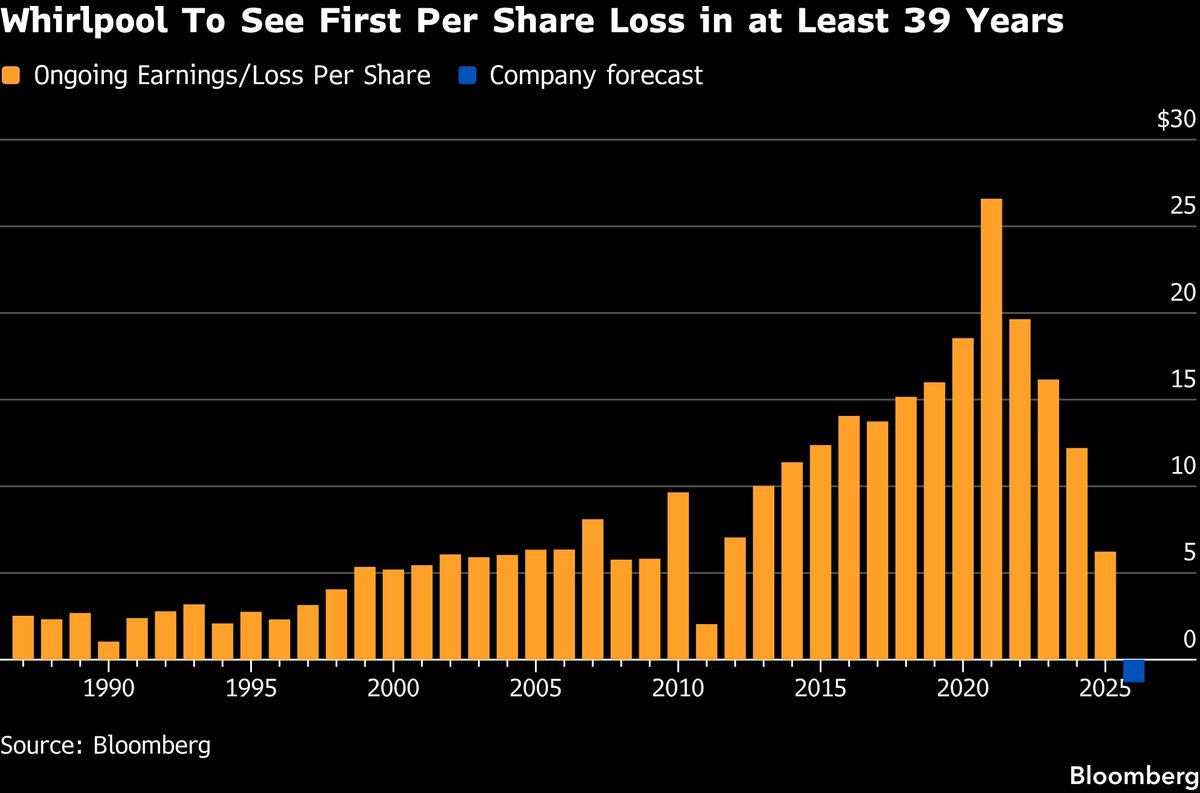
(Oct 27): Whirlpool Corp slashed its full-year outlook for the third time this year and forecast its first annual loss in decades, citing a sluggish consumer environment and high commodity prices.
Whirlpool now expects ongoing loss per share of US$1.30 (RM5.31) for 2026, down from its previous forecast of ongoing earnings per share of US$2.50 to US$3. The original guidance provided in January was for ongoing EPS of US$7.
Sales declined for a fourth straight period in the third quarter, dragged by “softer industry demand” in North America and economic challenges “that undoubtedly intensified over the last three months,” Chief executive officer Marc Bitzer said on Tuesday morning’s earnings call.
Whirlpool shares dropped as much as 16% in postmarket trading on Monday, before bouncing back as much as 6.6% on Tuesday morning in New York.
The fridge and microwave maker is cutting costs and increasing prices to improve margins, but higher steel, resin and base metal costs, as well as tariffs, countered these gains, chief financial officer Roxanne Warner said on the call.
“While we made progress on our pricing and cost takeout actions, this progress was partially offset by higher raw material, fuel, and logistic costs,” Bitzer said.
Consumers are still holding back on replacing their appliances, according to Bitzer, though new premium products launched this year are doing well even in a soft discretionary market.
While “outsized” price increases are needed to offset higher costs, they could lead to share losses, RBC Capital Markets analyst Mike Dahl wrote in a post-earnings note. The outlook also does not account for potential disruption from Brazil’s election, creating further risk for its Latin America business.
Whirlpool has been working to lower its leverage, but those efforts have been complicated by a depressed US housing market and gloomy consumer sentiment as affordability concerns continue to weigh on spending for home appliances.
Whirlpool now aims to reduce net debt to under US$4.5 billion by the end of the year, a US$500 million improvement from its target announced last quarter.
Uploaded by Felyx Teoh