


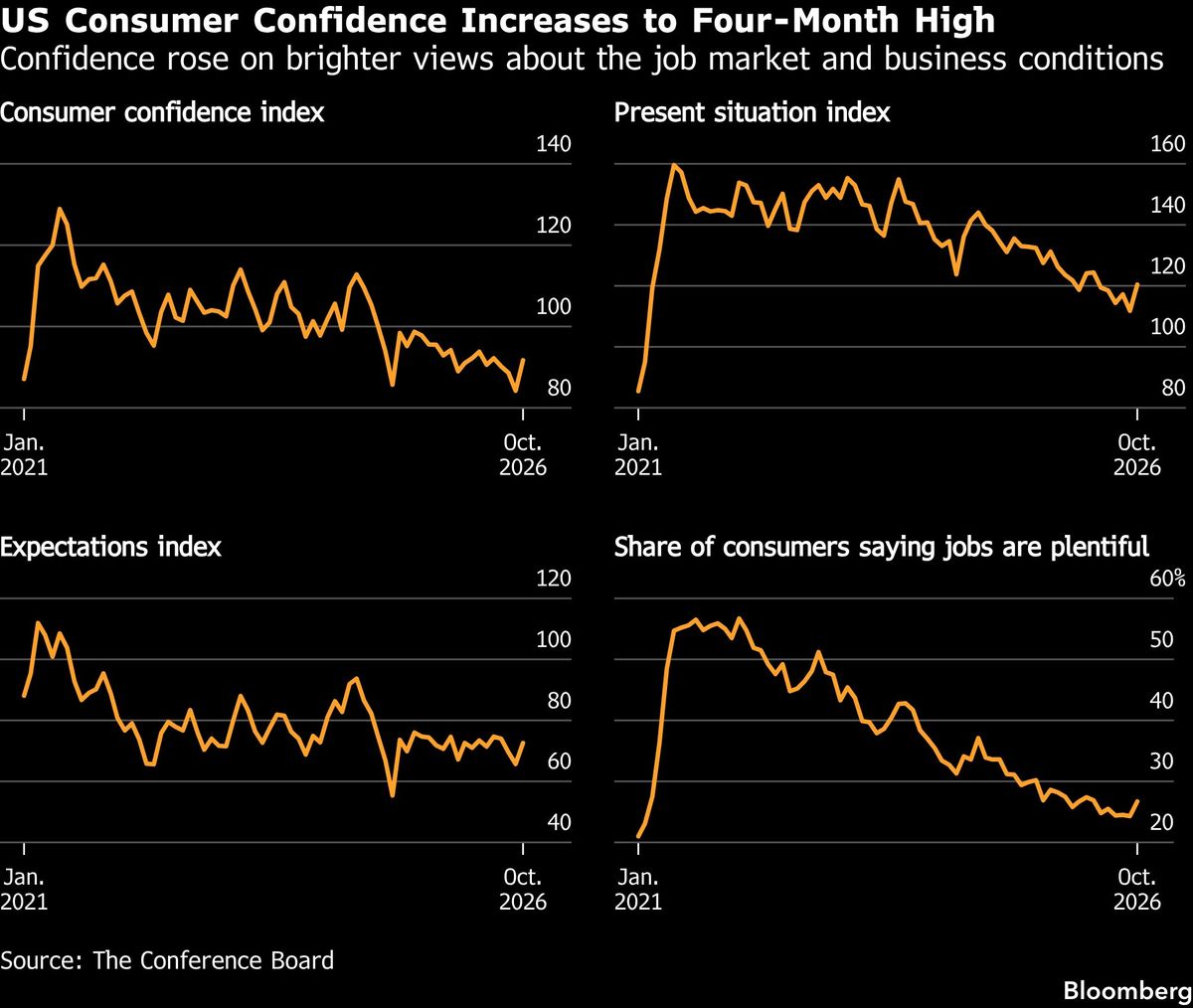
(Oct 27): US consumer confidence unexpectedly rose in October for the first time in four months on brighter views about the job market and business conditions.
The Conference Board’s gauge increased 7.5 points to 91.7, the highest since June, data released on Tuesday showed. The figure topped all projections in a Bloomberg survey of economists.
A measure of expectations for the next six months rose nearly seven points in October to 72.6, while a gauge of present conditions increased to the highest since April.
“The recovery was in line with retail gasoline prices easing from September to October,” Fergus McCormick, a senior economist at the Conference Board, said in a statement. “Yet, despite the increase in October, consumer confidence remained on the long-term downward trend that’s persisted over the past few years.”
The survey showed more Americans see business conditions as good rather than bad, while the share who see jobs as plentiful rose to a six-month high.
Despite the increase in confidence this month, consumers remain troubled by the impact of higher prices on their budgets and on wage growth that is lagging behind inflation. Borrowing costs have also climbed more recently, making homes, vehicles and other big-ticket purchases less affordable.
With the midterm elections a week away, affordability remains a defining issue for voters and their assessment of the economy. However, Americans are more sanguine about the job market as lay-offs remain historically low.
The confidence survey showed the difference between those saying jobs are plentiful and those indicating they are hard to get — a metric closely followed by economists to gauge the job market — improved.
Buying plans
Plans to buy big-ticket items were mixed, while vacation intentions edged lower. However, sentiment has been a poor indicator of personal spending, which has been resilient and continues to underpin economic growth.
“The labor market remains supportive of spending activity,” Ben Ayers, a senior economist at Nationwide, said in a note. “The trend in consumer surveys remains soft but that hasn’t stopped households from maintaining a solid pace of purchases.”
Over the past six months, consumers younger than 35 and those making US$100,000 (RM408,800) or more expressed greater confidence. In October, sentiment improved across all political groups, particularly Republicans.
The survey period for the report was Oct 1-21.
The Conference Board’s confidence index generally focuses on labor market conditions, whereas a separate metric of consumer sentiment from the University of Michigan emphasises views about personal finances and the cost of living. Still, they have largely tracked each other in recent years.
The University of Michigan’s consumer sentiment index, released last week, edged down to a five month low as high prices and rising interest rates depressed morale.
Uploaded by Tham Yek Lee