

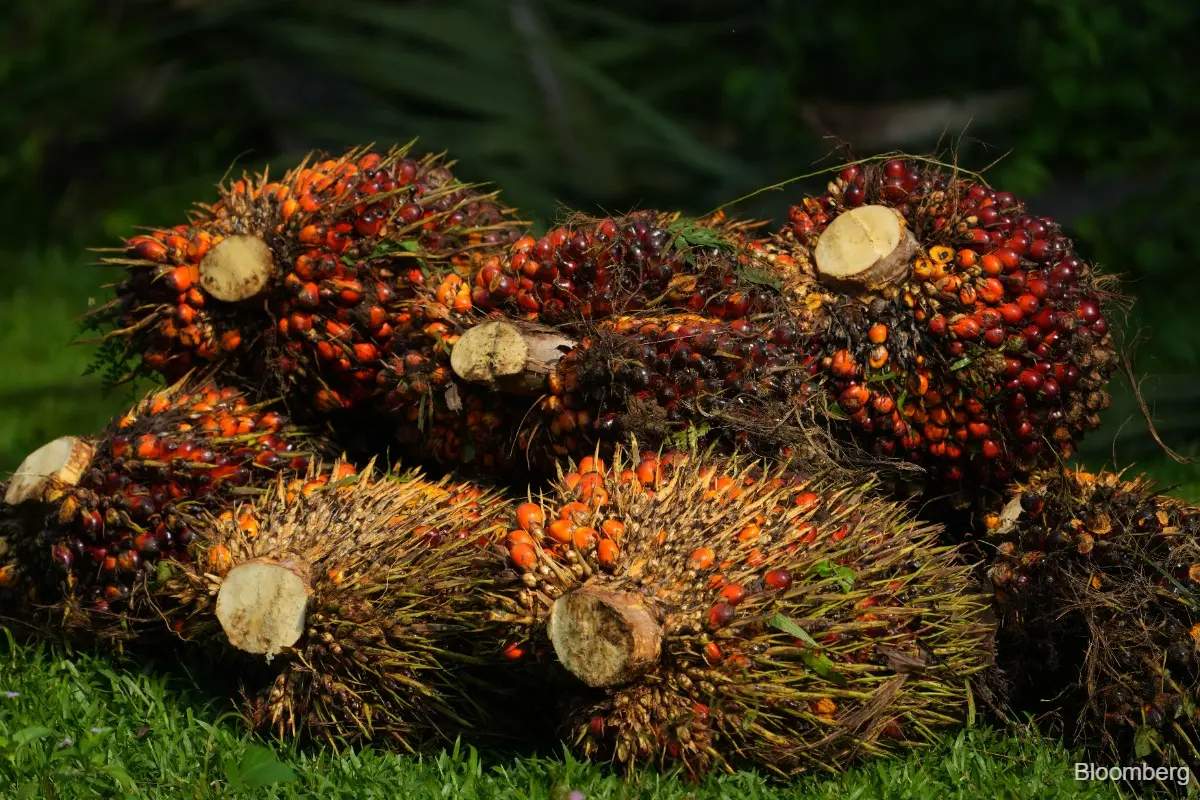
(Oct 27): Malaysia’s swelling palm oil inventories are straining storage capacity in the country’s top-producing state, as a bumper harvest piles pressure on the government to clear excess supplies.
Tanks in Sarawak on the island of Borneo are nearing capacity after a bigger-than-expected harvest and soaring freight costs slowed shipments, according to industry executives and planters. The state accounts for more than a fifth of Malaysia’s palm oil output. Most of that moves through Bintulu Port, which handles more than 90% of Sarawak’s exports, concentrating the glut at a crucial gateway as production surges.
Inventories across Malaysia, the world’s second-biggest palm oil producer, hit a record 3.51 million tonnes in September, when production also reached an all-time high — even before the seasonal output peak that typically arrives in October. The mounting glut is adding urgency to government efforts to draw down stockpiles, including a potential waiver of export taxes on crude palm oil to spur overseas sales.
The oversupply is already weighing on prices. Benchmark palm oil futures in Kuala Lumpur fell as much as 2.2% on Tuesday, the steepest drop in more than a month, and are hovering near a four-month low reached earlier in October. The decline has widened palm oil’s discount to rival vegetable oils, helping spur exports this month. Still, bloated inventories are keeping a lid on any sustained price recovery.
Government and industry officials met last week to discuss ways to tackle the swelling stockpiles, including measures to move excess supplies overseas, as concerns grow that storage tanks are running out of space, according to SD Guthrie Bhd (KL:SDG) president and group chief executive officer Mohd Haris Mohd Arshad.
The government is reviewing proposals from the industry to address the glut, Plantation and Commodities Minister Datuk Seri Dr Noraini Ahmad said. “At this stage, it is still under consideration and requires further discussion.”
A prolonged shortage of tank space could eventually force mills to slow processing, disrupting the flow of fresh fruit from plantations and smallholders at the height of the harvesting season.
“We don’t want to jeopardise the supply chain,” Haris said in an interview on Friday, adding that the government must act quickly to give the industry time to plan and prepare. “The last thing we want is for farmers not to be able to sell their fruit.”
Sarawak is seeing its strongest production surge in years, while high diesel prices and freight costs have added to the logistical strain, according to planters operating in the state. Some companies have brought additional mills online, while authorities are exploring the use of other Sarawak ports to ease the bottleneck, a senior planter said.
Uploaded by Chng Shear Lane