

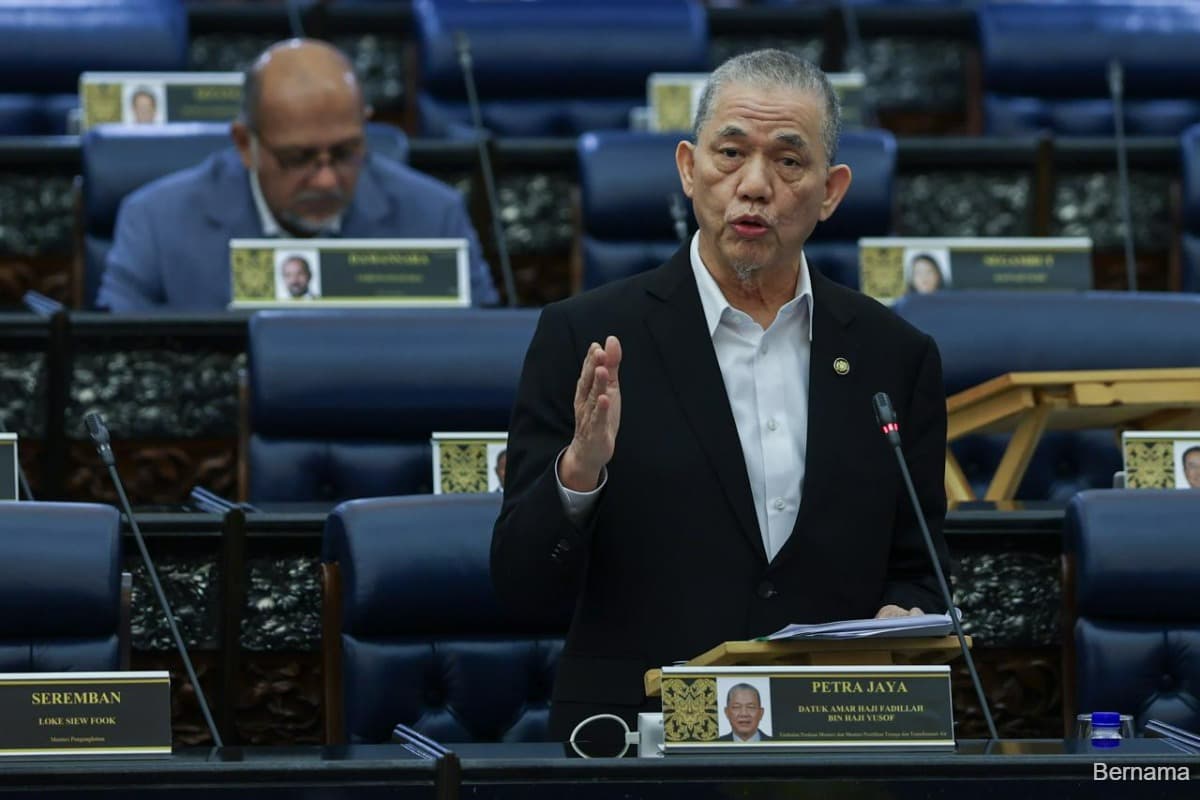
KUALA LUMPUR (Oct 27): The government has approved a requirement for data centres to use at least 30% renewable energy, Deputy Prime Minister Datuk Seri Fadillah Yusof said on Tuesday.
Fadillah, who is also energy transition and water transformation minister, said the requirement is based on the total capacity or energy consumption of data centres.
Data centre operators are also encouraged to generate their own electricity through solar power to prevent the cost of meeting the industry's growing energy demand from being shifted to other consumers.
“The Energy Commission is developing a comprehensive framework and guidelines on self-generation facilities and the requirement for data centres to use at least 30% renewable energy,” he told the Dewan Rakyat when winding up the Budget 2027 debate on Tuesday.
Fadillah said every application for electricity supply for a data centre development undergoes a comprehensive technical assessment.
The assessment takes into account the power system's ability to meet data centres' projected electricity demand, as approved by the National Energy Council, as well as the capacity of transmission and distribution networks and the infrastructure investments required.
He said the government prioritises system security, sufficient capacity and reserve margins, grid stability and continuity of electricity supply to all consumers amid rising demand from the data centre industry.
CRESS grid access charges
Meanwhile, Fadillah clarified that the system access charge for the national grid, payable by renewable energy developers under the Corporate Renewable Energy Supply Scheme (CRESS), remains at 14 sen per kilowatt-hour (kWh).
Green electricity users pay a separate charge of four sen per kWh, which was already in effect before the announcement, he said.
The two charges should therefore not be combined and reported as an 18 sen per kWh fee, Fadillah said.
CRESS allows renewable energy developers to sell electricity directly to corporate customers through the national grid.
Fadillah said the developer charge was initially set at 20 sen per kWh following industry engagement before being reduced to 14 sen.
The charge covers three components: operations and regulatory costs, market development, and system augmentation.
He added that the Energy Commission had discussed the charges with industry players, who had accepted the rates.
For more Parliament stories, click here.