

This article first appeared in The Edge Malaysia Weekly on October 26, 2026 - November 1, 2026
THE Lees of IOI Corporation (KL:IOICORP), with its sprawling plantation and property interests, are a high-profile family in Malaysia. Until recently, IOI Properties Group (IOIPG), the conglomerate’s Bursa-listed property arm, had remained relatively unknown in Singapore.
Just as elusive was group CEO Datuk Lee Yeow Seng, who had spent years in Singapore for his secondary education. He returned some years later, armed with his law degree from King’s College London, and worked at the UK and Singapore offices of an international financial services group for around two years.
“He was so low-profile and down to earth. He didn’t tell anyone he’s from the IOI family,” recalls Martin Goh, who worked with Lee when the latter was an intern at ING Asia Private Bank’s Singapore office more than 20 years ago.
Much has changed since. IOIPG has in the last few years made a series of big acquisitions and bold land bids to own a portfolio of prime Singapore office assets, rapidly emerging as one of Singapore’s biggest commercial landlords. Lee, meanwhile, has been gaining a bigger public profile.
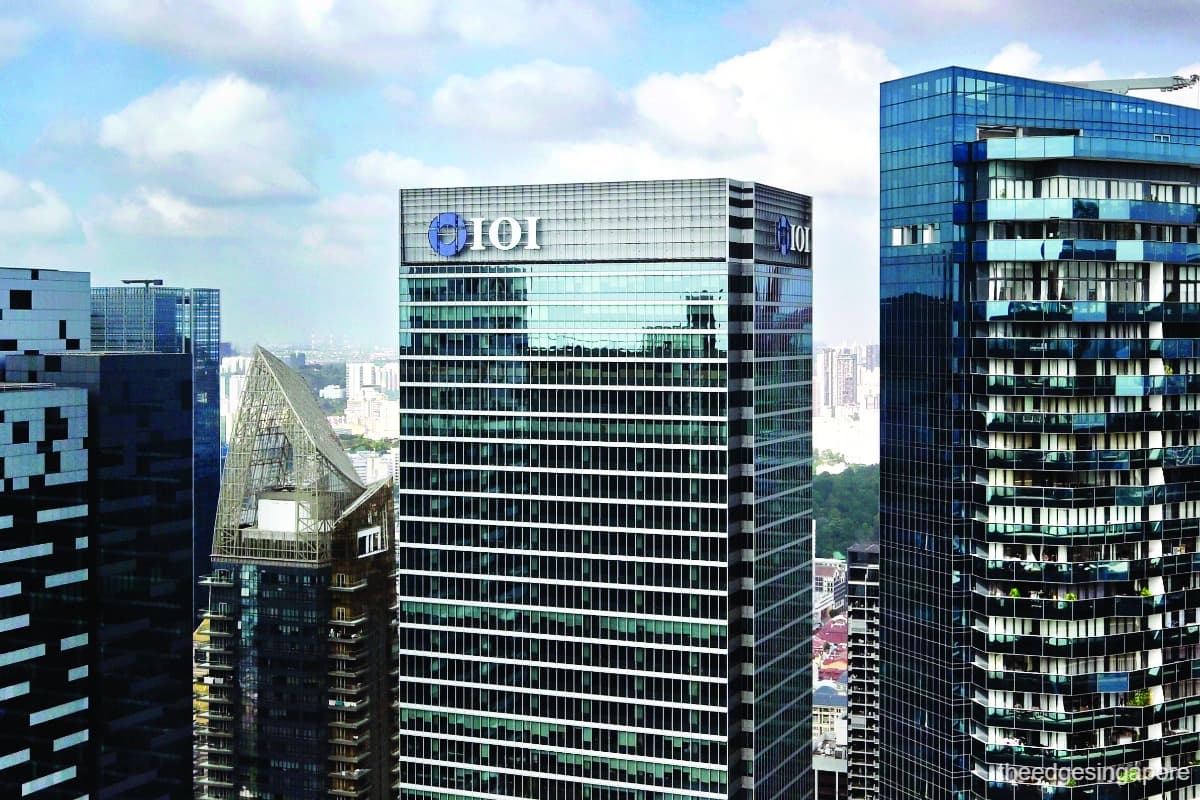
The recent streak started with the completion of IOI Central Boulevard Towers, which stands between Shenton Way and Marina Bay; then by buying out City Developments’ share of South Beach Tower; and later acquiring Asia Square Tower 2 (AST2) from CapitaLand Integrated Commercial Trust (CICT).
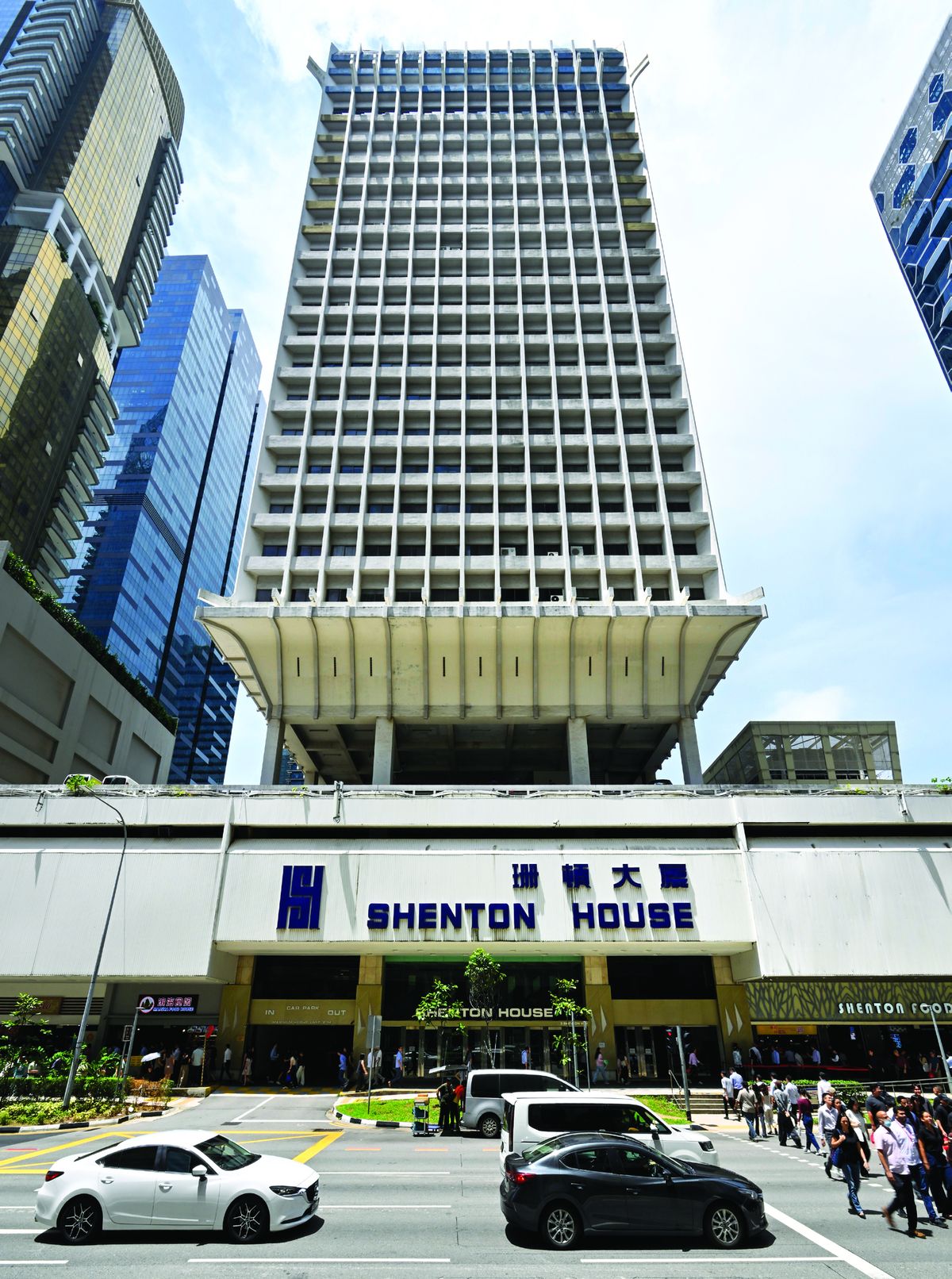
Earlier this month, IOIPG agreed to acquire Shenton 101, which owns Shenton House, from Lee for a nominal S$1. With this, IOIPG now holds close to S$12 billion (RM38.4 billion) worth of prime Singapore office space.
Now, IOIPG is in talks for a secondary listing on the Singapore Exchange (SGX), Lee tells City & Country.
In Singapore for a week of meetings along with his appearance at the Forbes Global CEO Conference on Oct 7, Lee says he has met SGX CEO Loh Boon Chye, who is “very open” to the idea. “We have started something on that front,” adds Lee.
IOIPG, listed on the Main Market of Bursa Malaysia since January 2014, has a market capitalisation of some RM18.23 billion as at Oct 12.
All three of IOIPG’s business segments surged in revenue and underlying profit before tax (PBT) in 4QFY2026 ended June 30, with underlying PBT from its property investment segment nearly tripling year on year (y-o-y) to some RM272.8 million during the quarter. In total, the group’s underlying PBT nearly doubled y-o-y, rising 98% to RM424 million in 4QFY2026.
In an interview with City & Country, Lee says “it’s about time that we actually have more presence in Singapore”. “I think our listing in Singapore would receive a very positive response from the investment market.”
A secondary listing on SGX can be completed very quickly, according to Lee, with many compliance requirements already in place thanks to IOIPG’s Bursa listing. “The Singapore government is very proactive and very business-friendly.”
Fund first, then REIT
According to Lee, IOIPG has appointed DBS Bank and Jefferies as advisers for an upcoming private fund, which will be seeded with assets such as IOI Central Boulevard Towers and the office component of South Beach Tower. AST2, acquired only earlier this year, is “not so mature yet”, adds Lee.
A private fund is “the best way of monetising your assets”, says Lee. “First of all, you don’t have to worry too much about valuation; everything is done very transparently. All you need to do is to hire consultants [and] advisers to help you to come up with the framework. Secondly, you need valuers [and] lawyers to look at the legal aspects of things, then you are ready to launch within two to three months.”
Even potential investors from the private equity and sovereign wealth funds are easy to come by in Singapore, adds Lee. “In Singapore, you are not short of these kinds of international investors.”
After launching the private fund, exploring a REIT “is a natural progression”, says Lee. “What we want to do is to monetise our assets in Singapore. So, whether you do a private fund or a REIT, it’s actually the same outcome.”
Still, a private fund “gives you more leeway because it’s not so regulated”, notes Lee. “REITs are so highly regulated, and the turnaround time is so much longer; you’ll need at least two to three years before you can actually launch a public REIT, whereas a private fund takes between three to four months.”
Lee mentions fellow property giant Hongkong Land’s Singapore Central Private Real Estate fund (SCPREF) as an example. Announced in December 2025 and launched in February this year, SCPREF’s initial S$8.2 billion portfolio included Asia Square Tower 1 (AST1), One Raffles Link, a one-third stake in Marina Bay Financial Centre Tower 1 & Tower 2 and Marina Bay Link Mall, and a one-third stake in One Raffles Quay.
Lee sees parallels between SCPREF and his upcoming private fund. “[We are] quite similar in the sense that both of us own prime assets in the downtown area… But the only difference is they own one-third [of certain assets], whereas we have full ownership of [our] assets.”
Could the two groups join forces? “Definitely, we can work together. I mean, both of us are good friends, and I’ve known Hongkong Land for many years,” says Lee. “Back in 2016, after we won the bid for the IOI Central Boulevard Towers site, they wanted to come in as a partner. In the end, unfortunately, the timing wasn’t right. But we have always been in touch and we have always been trying to see how we can collaborate.”
Already, the two giants are a dominant force in Singapore’s prime Central Business District office market. “Between [the] both of us, we probably command a market share of about 70% of Marina Bay’s office space. So definitely, there are a lot of things we can work on together,” says Lee. “For example, AST1 is owned by Hongkong Land now, and AST2 is owned by us, so we are neighbours; in fact, we share the same strata title. So, there are a lot of areas we can collaborate on.”
Buying One Raffles Place
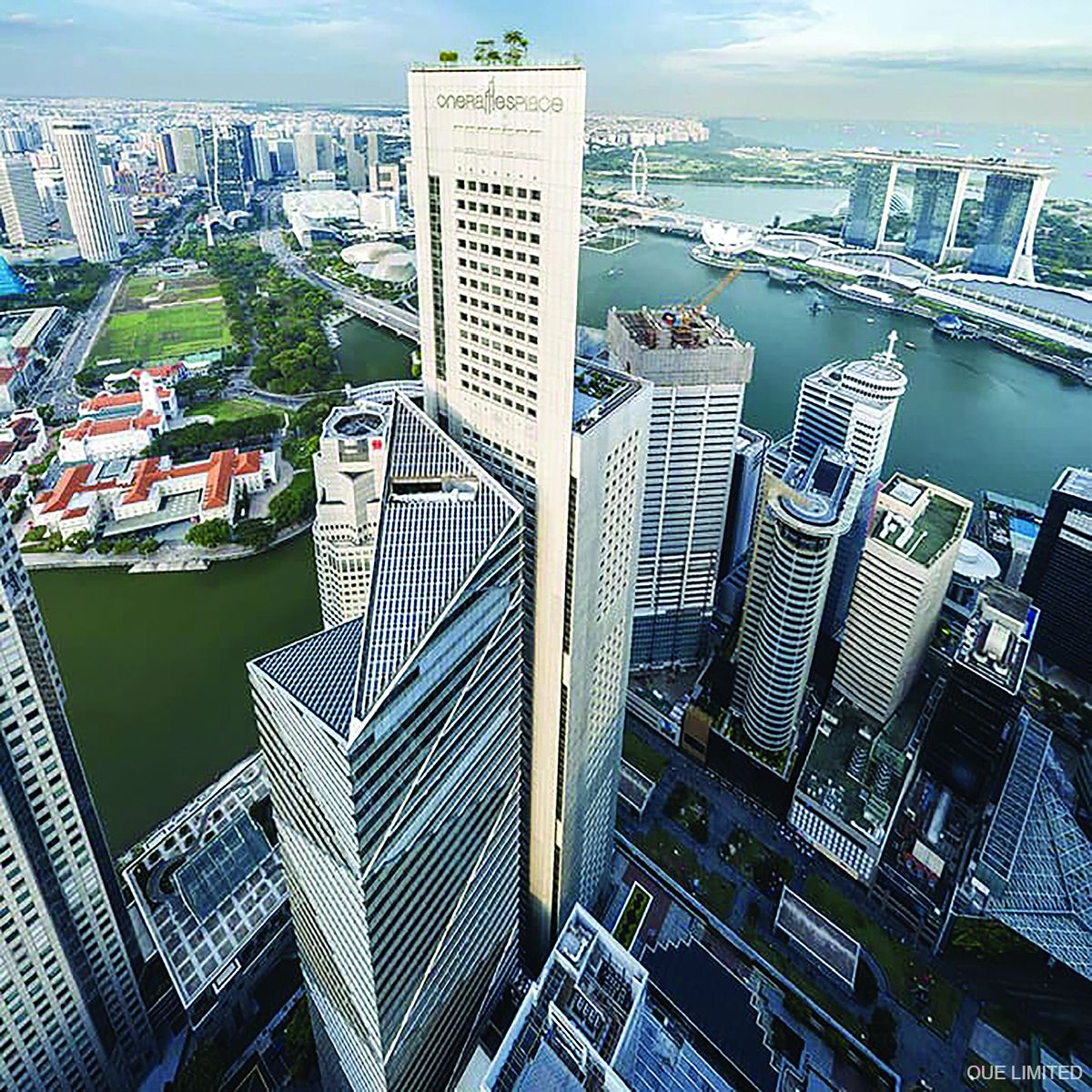
IOIPG and CapitaLand Investment (CLI) are also in exclusive talks to buy One Raffles Place. The development is estimated to be valued at between S$2.3 billion and S$2.4 billion.
OUE REIT, whose indirect subsidiary OUB Centre holds a 81.54% interest in the property, confirmed the news in an Oct 8 bourse filing, saying: “Negotiations between the parties and due diligence by the purchasers are currently still ongoing, and parties have yet to enter into any binding agreement for the sale.”
United Overseas Bank (UOB) holds the remaining 18.46% stake in the prime asset, which comprises a 62-storey office tower, a 38-storey office tower and a six-level retail podium.
“We are waiting to close the deal,” says Lee, adding that he is “attracted” to the property’s location. “It’s probably the second-best [location] after Marina Bay because it’s linked to Raffles Place MRT Station below… It has all the right attributes, [such as] the footfall [and] the population.”
While Lee is confident the sale will be complete by the year-end, he notes that the 40-year-old One Raffles Place is in need of a refresh. “It may look a bit jaded, a bit tired, but definitely, we’ll need to put in some money to revitalise it.”
IOIPG will first go after the “low-hanging fruit” of updating the retail offering at One Raffles Place. “No one has done a real statistic on it, but my guess is that there are tens, if not a hundred thousand people working in this vicinity. Yet, there are not enough dining options around there, so we can definitely improve the retail component very quickly.”
IOIPG is “very experienced” on this front, adds Lee, pointing to the 12-year-old IOI City Mall in Putrajaya with some 2.5 million sq ft of net lettable space. “We own the third-largest mall in the world. It’s not difficult to manage 50,000 sq ft of retail space compared to what we have done in Malaysia.”
Some portions of the space could be set aside for medical suites, which may fetch almost twice the average rent psf, according to Lee. “Rental at Paragon’s medical suites averages around S$20 psf… We can possibly talk to the likes of Raffles Medical Group; they are very keen to have a presence in this part of the city centre.”
IOIPG could also further its relationship with CapitaLand and reintroduce serviced apartments managed by The Ascott into the vicinity, says Lee. “The serviced apartment is doing very well at CapitaSpring.”
CICT, CapitaLand Development and Mitsubishi Estate sold the 299-unit Citadines Raffles Place Singapore to BlackRock and Bursa-listed YTL Corporation for S$280 million last year. Located within CapitaSpring at 88 Market Street, the five-star Oakwood Premier Raffles Place Singapore hotel reopened in April this year and continues to be managed by The Ascott.
“The chemistry is there,” says Lee of IOIPG’s fledgling partnership with CapitaLand. The two firms interacted during the sale of AST2 but Lee says the 50:50 joint offer for One Raffles Place is “not linked at all” to the initial deal.
It could be the first of many deals to come. “We have the same agenda, same motivation to try and uplift the assets that we own,” says Lee.
Ultra-luxury hotel ‘vacuum’
Throughout City & Country’s 90-minute chat with Lee at the start of the Formula 1 Singapore Grand Prix 2026, the property magnate bemoans the lack of top-tier hospitality names in the city. Singapore, he believes, can do much more to entice big spenders — especially during the hottest weekend of the year for tourism.
“Singapore hasn’t had an ultra-luxury hotel for a long time. The only names you can probably think of are Raffles [Hotels and Resorts] and also Capella [Hotel Group],” says Lee. “The rest are probably, at best, five-star [hotels].”
The likes of Armani Hotels & Resorts and Bvlgari Hotels & Resorts have yet to reach Singapore’s shores, Lee notes, while Aman Singapore will only welcome guests at The Skywaters in Shenton Way in 2028. “Key international cities, such as Tokyo, Hong Kong, London and Paris, have all these kinds of ultra-luxury brands.”
Lee sees a “vacuum” in the most luxurious tier of hotels, one that he hopes to fill. “Just this week alone, we have the Forbes Global CEO Conference, Milken Institute Asia Summit, and TOKEN2049… I, myself, feel frustrated. We want to cater to people who really appreciate luxury. This is a totally unserved segment; there aren’t any such offerings at all in Singapore.”
Redeveloping Shenton House, now under IOIPG ownership, could produce the “ultra-luxury hotel” Lee is searching for. An Oct 1 bourse filing by IOIPG states that Shenton House will be redeveloped into a 35-storey mixed-use landmark featuring 12 floors of Grade-A offices, a 10-storey luxury hotel with 165 keys, a retail basement and three carpark levels.
This will expand its total net lettable area by 80% to 393,185 sq ft. The underlying land tenure, which has a remaining lease of about 42 years, is expected to be renewed to a fresh 99-year term.
Lee himself had acquired Shenton House for S$538 million in November 2023, with the purchase completed in June 2024. He then attempted to sell the property to IOIPG, but non-interested directors rejected the proposal in August 2024, citing heavy capital commitments from several acquisitions at the time.
In an about-face, IOIPG announced on Oct 1 that it had agreed to acquire the holding company owning the property for a nominal S$1. IOIPG will also settle S$217.06 million worth of shareholder advances that Yeow Seng injected into Shenton 101 — the vehicle he incorporated to acquire the property. IOIPG will also consolidate the vehicle’s S$376.23 million borrowings into its accounts upon completion of the deal.
ASBD ‘really unfair’
Despite IOIPG’s dominance in commercial assets, its high-end residential project W Residences Marina View Singapore has struggled to move units since its public launch in October 2025.
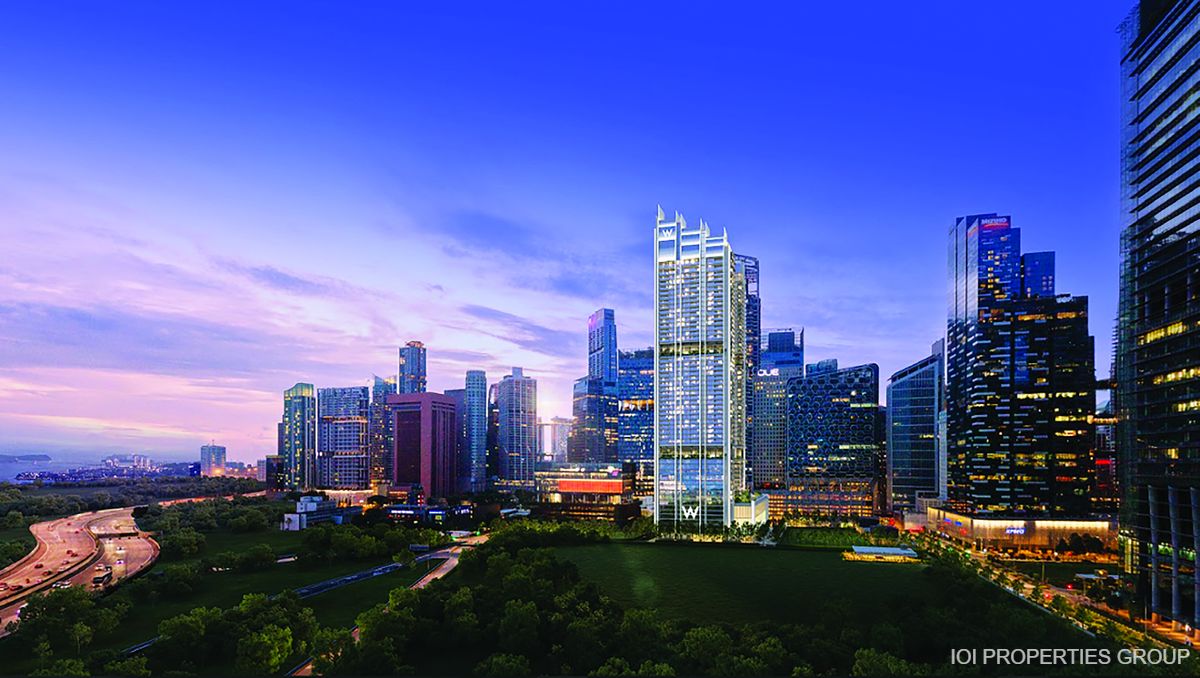
Priced from S$3,230 psf, IOIPG has sold only about 20 luxury apartments from the 683-unit branded residence project.
“That’s also because of the government’s policy,” says Lee, referring to the additional buyer’s stamp duty (ABSD) levied on foreign homebuyers. “It’s really unfair; when it comes to a point, I really need to come and appeal to the government. The policies that have been set are totally unfair. It’s very oppressive on genuine businessmen like me.”
IOIPG acquired the white site at Marina View in September 2021 for S$1.508 billion, or S$1,379 psf per plot ratio, after triggering the release of the plot from the government land sales (GLS) Reserve List.
In December that year, the Singapore government announced a round of property cooling measures, raising ABSD on Singapore citizens purchasing their second residential property from 12% to 17%. Permanent residents (PRs) purchasing their second residential property saw ABSD rise from 15% to 25%, while foreigners buying any residential property in Singapore faced ABSD of 30%, up from 20%.
In April 2023, another round of cooling measures doubled the ABSD on foreigners to an eye-watering 60% — which remains unchanged today.
“Foreigners would never think of paying 60%. Nobody in their right mind would want to pay 60% ABSD,” says Lee.
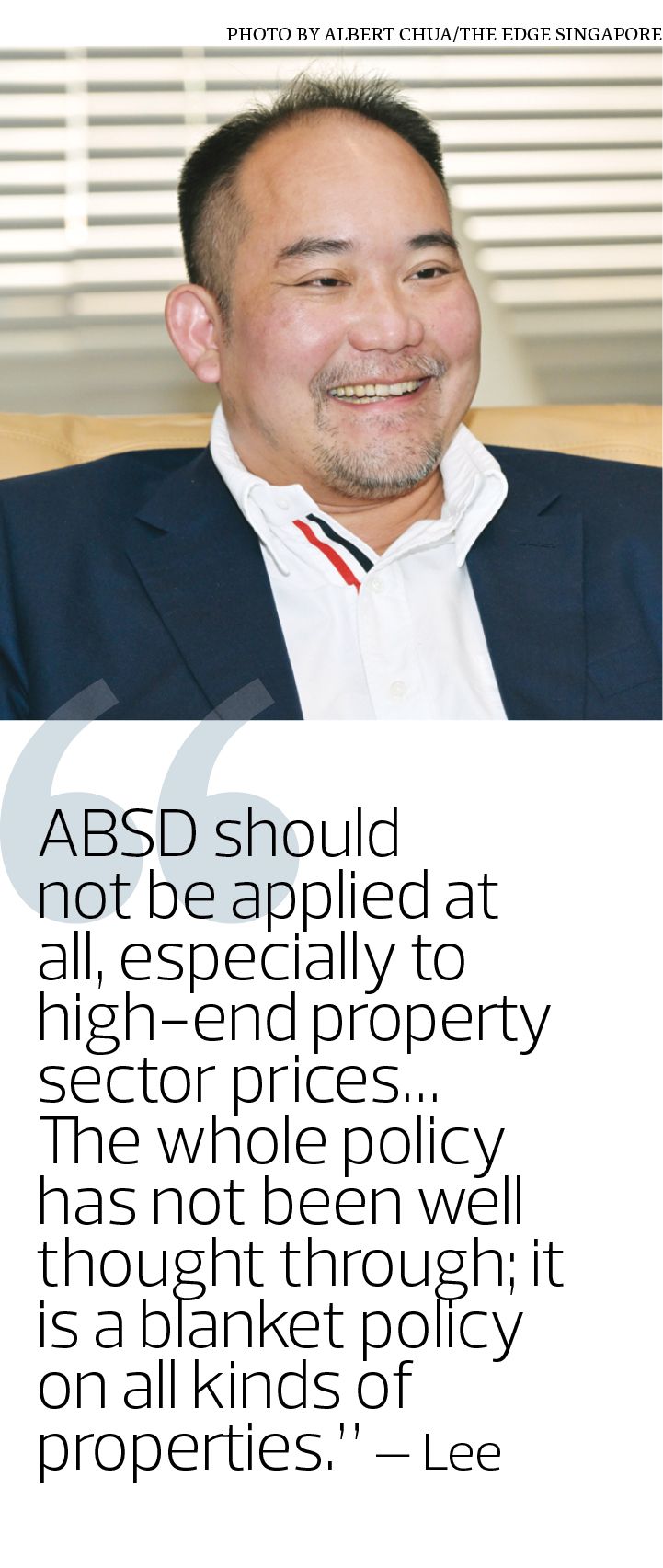
He believes ABSD is too blunt a tool for the residential property market. “ABSD should not be applied at all, especially to high-end property sector prices. I know the rationale behind ABSD is to cool the market to make sure that property prices are still accessible to locals. However, the whole policy has not been well thought through; it is a blanket policy on all kinds of properties.”
Lee thinks the cooling measures have proven ineffective in recent years. “Prices in suburban areas, which should be lower, have exponentially increased to a level that’s very unhealthy. On the other hand, in the high-end, central areas, prices have not moved and sales have been very subdued, mainly because of a policy that actually does not encourage or welcome foreign investors. That has caused a lot of anomaly and distortion in the market.”
According to the Urban Redevelopment Authority’s private property price index, non-landed residential property in the Rest of Central Region rose from 186.7 points in 4Q2021 to 226.7 points in 3Q2026 flash data, up 21.4%.
Over the same period, non-landed residential property in the Outside Central Region rose from 199.7 points to 277.1 points, up 38.6%.
These represent larger price increases than those seen among non-landed residential property in the Core Central Region, which rose 16.3% from 138.7 points in 4Q2021 to 161.3 points in 3Q2026 flash data.
IOIPG “came in with our eyes wide open” in 2021, says Lee. “ABSD was only at 20%, then the goalposts were subsequently moved. That is totally unacceptable to an investor like us.”
Although the five-year ABSD remission deadline for W Residences Marina View Singapore came due in September this year, Lee clarifies that IOIPG was “fortunate” to receive the remission.
IOIPG is still “holding up” prices at the branded residences to “about S$4,000 psf”, says Lee. “We are not desperate; we have the holding point. If we can’t sell [all the units], we’ll probably hold on to it and pivot towards renting it out.”
City living
IOIPG’s Malaysian developer peers have been drawn to Singapore’s robust residential property market, with prices of new launches continuing their uptrend in recent quarters.
In September, Bursa-listed Eco World Development was awarded the tender for the Lorong Puntong/Sin Ming Avenue GLS site, marking the Malaysian developer’s maiden entry into the Singapore residential property market.
EcoWorld beat out six other bidders with its first-ever bid for a GLS site, including fellow Malaysian developer Sunway Property. Sunway MCL, which represents Sunway Property in Singapore, had placed the third-highest bid, at around S$185.4 million.
At just under S$208.1 million, EcoWorld’s Singapore-incorporated subsidiary had placed the highest bid for the relatively small 99-year leasehold site, which is expected to yield an estimated 140 residential units.
Sunway MCL, so named following Sunway Group’s acquisition of MCL Land in 2025, has also been racking up projects in Singapore, including Pinery Residences, Elta, Nava Grove, Tembusu Grand, The Continuum, Piccadilly Grand, Terra Hill, Leedon Green and Parc Esta.
But Lee “doesn’t see where the attraction is”. “Whenever there’s a land tender in suburban areas, it’s very competitive. With land prices at this kind of level, how much margin can be made? Why should we do this kind of business? It’s not healthy and not sustainable, so it’s something we won’t touch.
“I don’t want to comment on why other people are doing things that don’t make sense. To me, I wouldn’t do things that are not sensible.”
More well-heeled residents would see the appeal of living in downtown Singapore, says Lee. “For me, I live in the city centre. I have a penthouse unit in South Beach [Residences]. I appreciate the convenience. You have shopping malls like Raffles City and Suntec City. These are big shopping malls, so you can get everything within a stone’s throw away. You have so many MRT stations: Orchard, City Hall, Raffles Place; and IOI Central Boulevard [Towers] — all these are 10 minutes away.”
Value is “definitely in the city centre”, adds Lee, again highlighting the perks of living at W Residences Marina View Singapore. “My advice to Singaporeans is to look at the price difference between suburban and city centre [homes]. It doesn’t make sense at all to pay close to S$3,000 psf in places like Changi [or] Woodlands. That is really ridiculous.”
In key gateway cities, “only the super-rich” get to live in the city centre, says Lee. But prices at W Residences Marina View Singapore are friendly for some residents here. “There’s nowhere more convenient than living in the city centre, so they should look at things with a different perspective. What we are offering at Marina View is not just city living, but branded residence living, where you are offered almost the full [suite of] facilities available to hotel guests in a five-star setting.”
Jovi Ho is the editor of City & Country at The Edge Singapore. This article was first published in City & Country on Oct 19, 2026.
Save by subscribing to us for your print and/or digital copy.
P/S: The Edge is also available on Apple's App Store and Android's Google Play.