

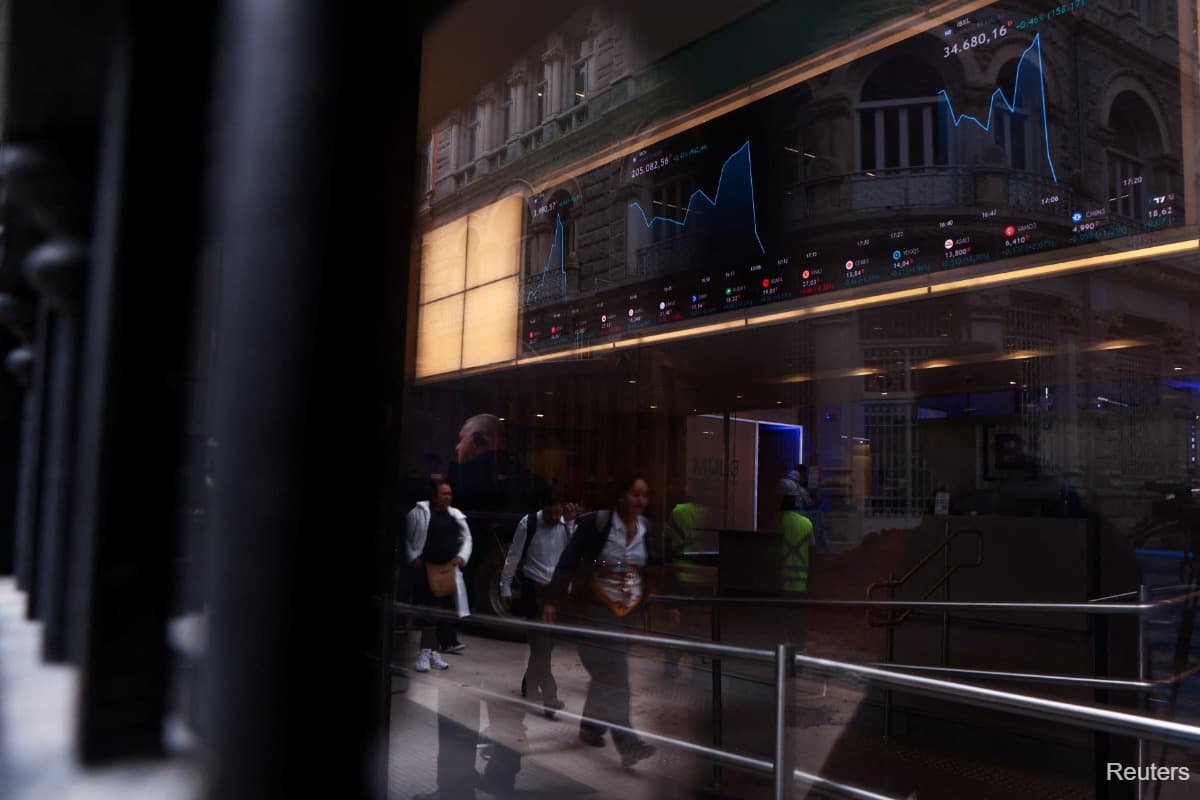
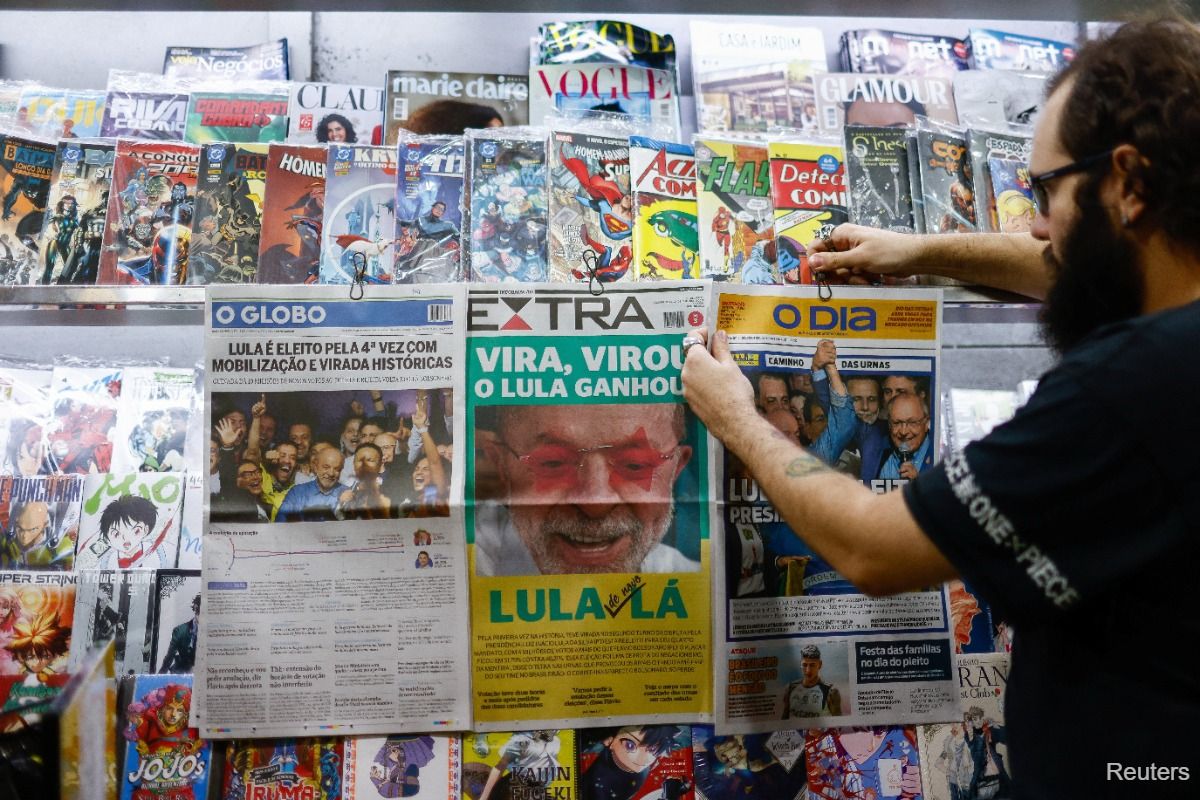
NEW YORK/BRASILIA (Oct 27): Brazilian stocks and the real currency posted historic losses on Monday after the surprise reelection of President Luiz Inacio Lula da Silva reversed recent market bets on a right-wing ascent to power.
Brazil's real tumbled over 11% against the US dollar in early spot trading, one of its biggest daily declines on record, while the benchmark Bovespa stock index was down more than 15% in its largest daily percentage drop since 1998.
The selloff also hit sovereign debt, with longer-dated bonds hit hardest and the 2054 maturity down 2.5 cents to yield 7.45% as Brazil's fiscal path came into focus.
"Lula’s victory triggered a sharp market selloff as investors reassessed the fiscal outlook under his fourth term,” Mauricio Monge, senior Latin America economist at Oxford Economics, said in a report.
His biggest challenge, Monge wrote, "will be to convince markets that he can deliver a credible, sustainable fiscal adjustment while prioritising real wage growth and employment."
Violent volatility
Trading on Brazil's stock exchange was halted for 30 minutes after the Bovespa index fell 10% from its last close, triggering the market's circuit breaker mechanism, stock exchange operator B3 said in a statement. The move came after B3 initially expanded the daily trading limits for Bovespa stock index futures, dollar futures and interest rate futures in response to heightened market volatility.
Brazil's five-year credit default swaps, a measure of the cost of insuring against sovereign default, jumped to 151.67 basis points from Friday's close of 120.21, S&P Global Market Intelligence data showed.
As markets tumbled, the Brazilian Treasury cancelled its regular auctions of inflation-linked and fixed-rate government bonds scheduled for Oct 27 and Oct 29, respectively.
The local real was down 8.3% to the dollar at 5.4274 per greenback. Prices of raw sugar, of which Brazil is a major exporter, slid 5.6% on the collapsing exchange rate.
The plunge is a sharp reversal from the rally seen earlier this month, when markets soared on expectations of a shift to the right after Senator Flavio Bolsonaro, the son of former president Jair Bolsonaro, unexpectedly finished first in the opening round of Brazil's presidential elections.
The Bovespa closed on Friday almost 7% above its level before the first-round vote, while the real currency had been nearly 5% stronger against the US dollar over that period. Interest rate futures had also reflected expectations that tighter fiscal policy in the event of a Bolsonaro government would make room for lower borrowing costs.
Senator Bolsonaro's refusal to concede and his pledge to seek an annulment added to investor uncertainty.
"Important for local financial markets will be how quickly Bolsonaro accepts the result, or at least allows the constitution to run its course," said Chris Turner, strategist at ING in London.
Challenges ahead
Attention will now turn to Lula's choice of finance minister and what it signals about his fiscal approach.
"The key signal for markets will be the next Lula administration's commitment to fiscal discipline, starting with the appointment of a new finance minister in coming weeks," said Graham Stock at RBC BlueBay Asset Management.
Lula faces the challenge of slowing the rise in Brazil's debt while protecting social programmes and investment, with investors looking for signs his gradual fiscal approach can bring borrowing costs down.
"[The] Lula administration will have no choice but to do some fiscal consolidation too, but most investors doubt it will be enough to put debt sustainability back on track," said Thierry Larose, portfolio manager at Vontobel.
Without confidence that Lula can deliver, lenders could demand higher interest rates, adding to Brazil's debt burden and making credit more expensive for businesses and households.
"Investors want a clear and credible commitment to fiscal discipline," said Alejo Czerwonko, chief investment officer for emerging markets at UBS Global Wealth Management.
"We expect the rally that followed the first round to be largely priced out, and sentiment to stay weak until a clear fiscal plan emerges," Czerwonko said, adding that investors wanted a believable path to stabilise public debt.
The reelected president's team has said it aims to produce a budget surplus of about 1.3% of gross domestic product by 2030.
"Lula's policies have talked about spending cuts," said Divya Singaravelu, head of research at Meridian 1305 Capital, "but he has not gone into the details of how that is going to look."
Uploaded by Felyx Teoh