


(Oct 26): Wall Street strategists are warning that declines in shares of artificial intelligence (AI) cloud-computing providers will spill into other corners of the tech trade, potentially dragging the US stock market down to its June lows.
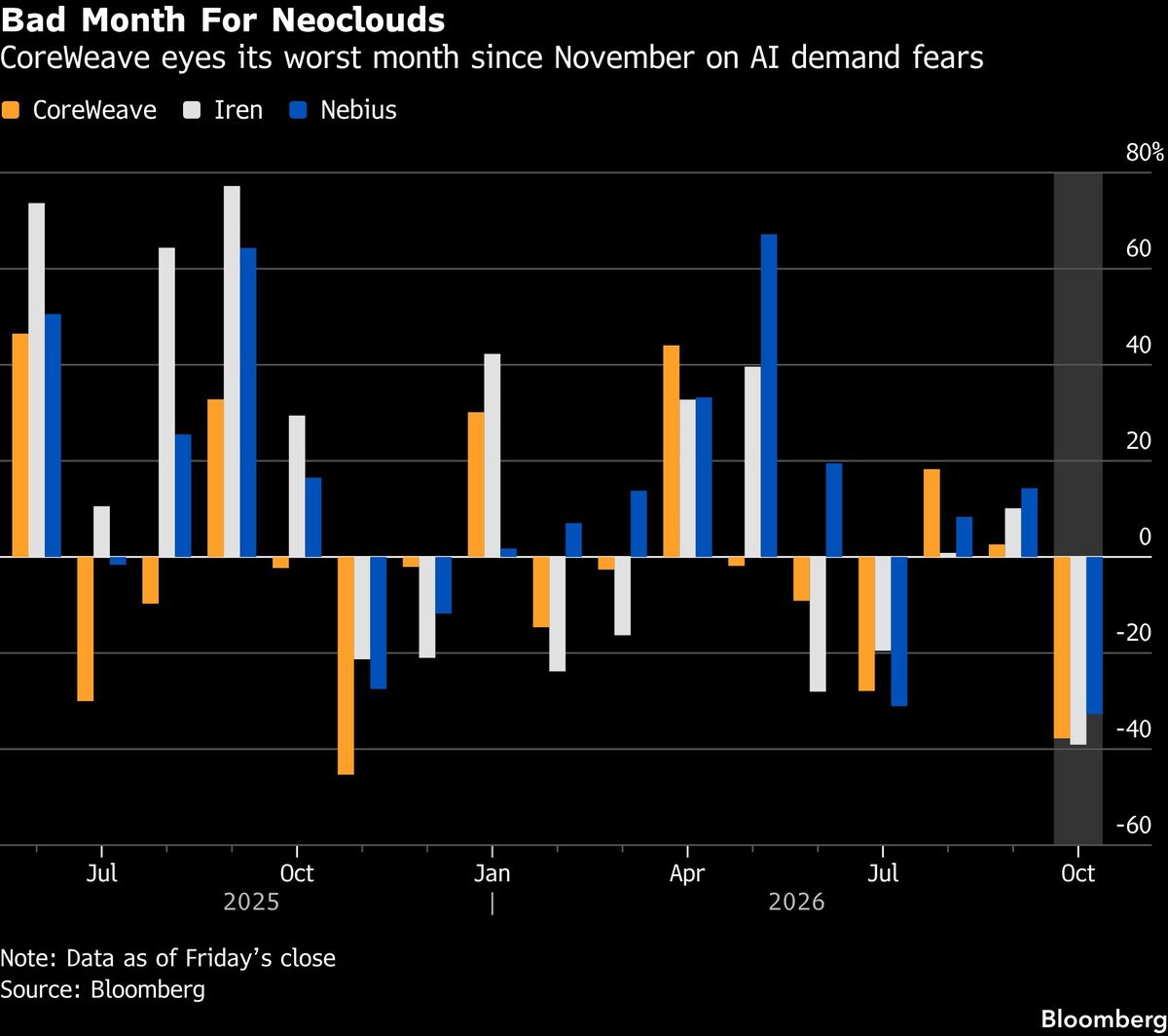
CoreWeave Inc, the company at the centre of the tumult after its bonds plunged to distressed levels this month, saw its shares drop 41% since Oct 6 as of Friday’s close, when major US equity indices hit a fresh record. Shares of other neoclouds — companies that provide computing power to firms building and running AI models — have also posted double-digit declines during that time. Iren Ltd is down 40% while Nebius Group NV has dropped 36%.
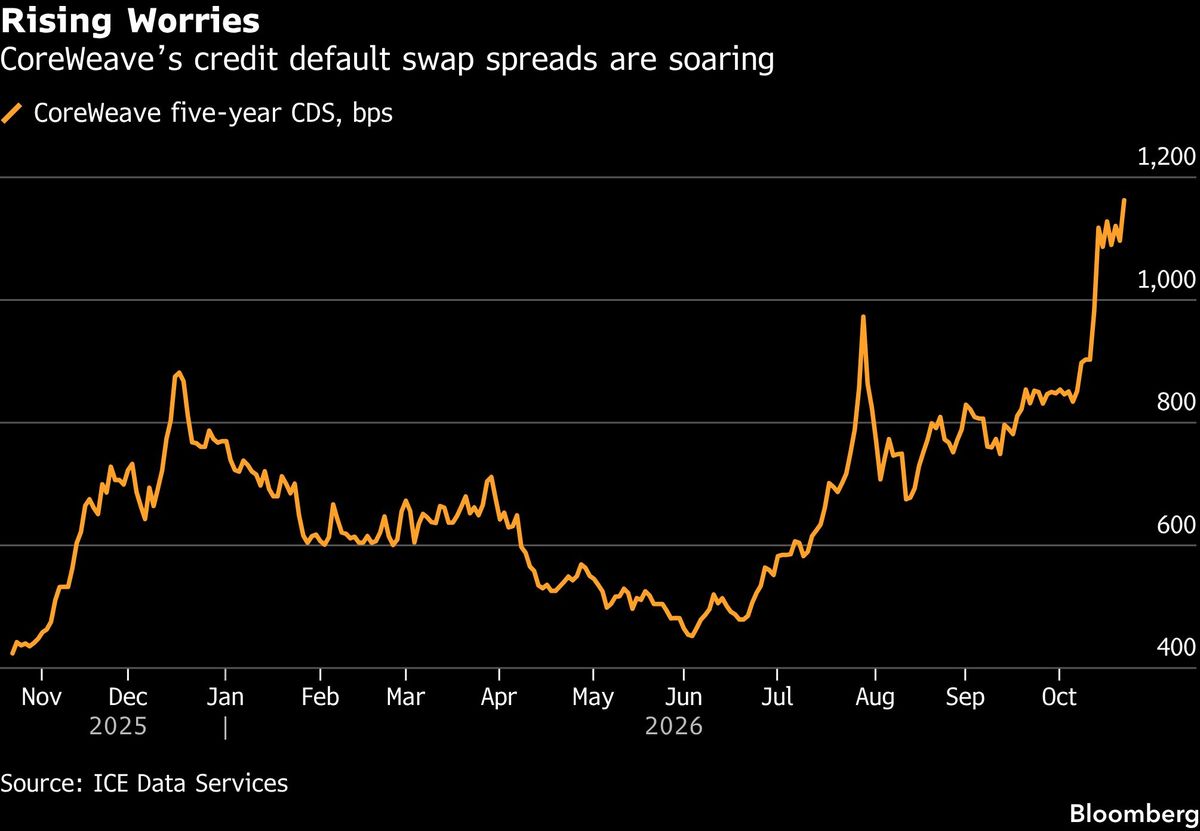
Investors are concerned about the amount of debt companies involved in the AI build-out have borrowed and are worried about how much more they’ll take on after reporting earnings. These fears pushed measures of credit risk for some of the biggest technology companies spending on AI developments to new highs last week.
After a bruising Thursday during which the Nasdaq 100 declined nearly 3% and the S&P 500 had its worst day since late July, strategists see the impact on the equity market deepening.
“It’s now transitioning from being a micro event to a macro event,” Brian Reynolds, chief market strategist at Reynolds Strategy LLC, said of the selloff in neoclouds. “In other words, it’s not just impacting the neoclouds, but the entire credit market and then the stock market.”
Reynolds expects additional selling that could push the S&P 500 back down to its lows of early June. That would mean a 4.7% drop from where the benchmark closed on Friday.
Neoclouds are massively reliant on issuing bonds to fund their spending. But with US Treasury yields climbing and inflation remaining entrenched, the cost of financing is rising. Ohsung Kwon, chief equity strategist at Wells Fargo & Co, said that if neoclouds cut future capital expenditure plans to assuage investor concerns, that would be a major headwind to semiconductors, whose revenue comes directly from data-centre developers paying huge sums of money for chips.
“If they start to see risk around their financing and the market pushes back on their capex a lot more than what we’re seeing today, and if they cut capex next year, that’s going to be a risk to semis,” Kwon said in an interview.
Those fears could come to reality, with Elon Musk warning that the “debt markets have almost entirely shut off access to money for any company that doesn’t have substantial revenue independent of AI data centres.”
“That means the 200+ neoclouds are going to see guppy-level death and consolidation,” Musk wrote in a post on X on Sunday, referring to guppy fish, which can go in to shock during a change in environment. “Some will make it through, but not many.”
Concerns over neocloud woes have weighed on the Philadelphia Stock Exchange Semiconductor Index, which has dropped more than 13% so far in October.
More than just tech, multiple Wall Street strategists have now warned the meltdown in neoclouds is offering the broader market a reality check at a time when investors are anxious about an AI bubble.
“If the AI bubble is going to burst, it’ll likely start as a credit event as neocloud and risky AI debt defaults, creating a cascade of devaluations, reduced spending and contraction [in multiples and growth],” Sevens Report founder Tom Essaye wrote in a note last week. He added that he’s continuing to watch for signs of stress in the credit markets.
Neocloud stocks are currently showing “asymmetric” responses to credit stresses, according to Barclays plc strategists led by Venu Krishna.
“Widening spreads prompt outsized declines, while tightening provides limited relief, underscoring skepticism around the neocloud business model’s durability,” they wrote in a note last week.
While Krishna said he was looking for “signs of contagion” in the equity market, he’s not seeing evidence the issue has spread beyond tech and growth stocks just yet. Investors have been rotating out of high-flying technology stocks and into defensive sectors, signalling uncertainty around the AI trade rather than indiscriminate selling when everything gets hit simultaneously.
Still, selling in the market’s largest sector by weight has dragged indices lower. On Thursday, for example, the S&P 500 fell more than 1% even though it had more gainers than decliners.
Reynolds said the US benchmark, which broke below its 50-day moving average on Thursday, may fall all the way to its June lows, at which point he would be a buyer.
“I want to be defensive in the very near term, for a few weeks,” Reynolds said. “I really want to buy at that low 7,200 area.”
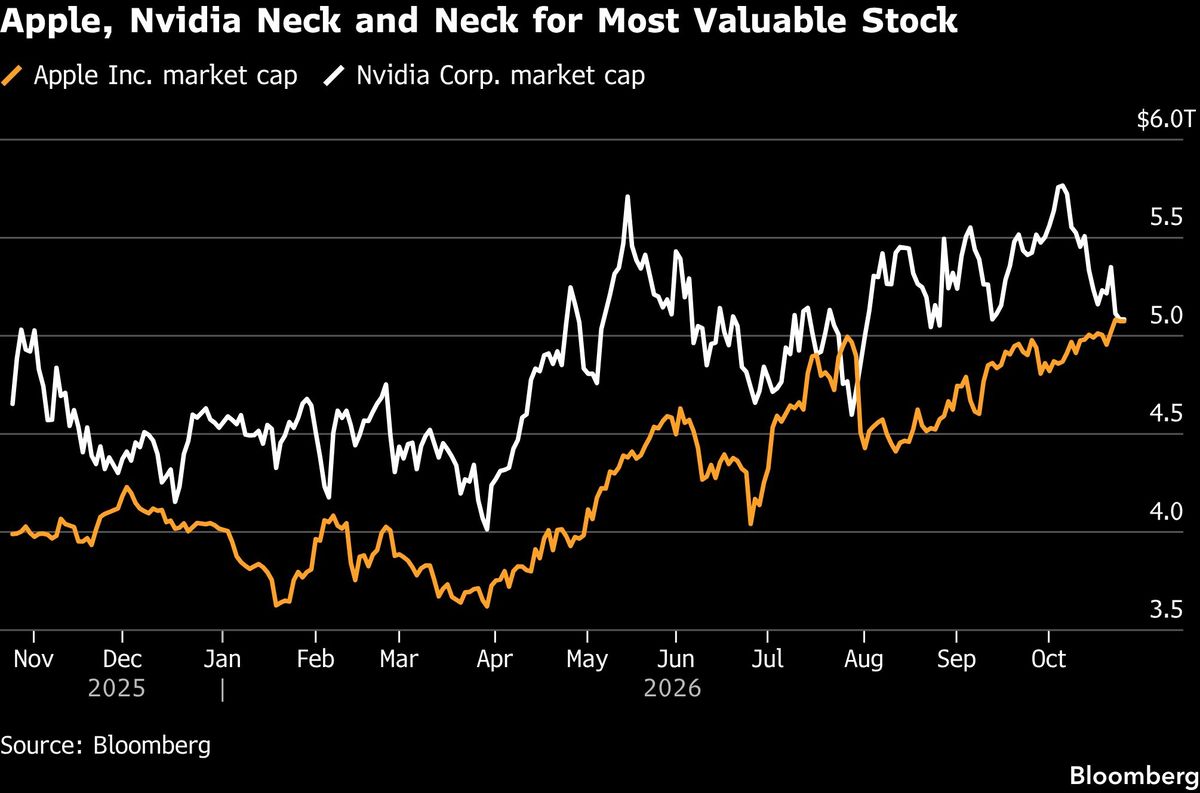
Tech chart of the day
Uploaded by Felyx Teoh